Roasting coffee at home unlocks fresher flavor and control over roast profiles. Below is a quick comparison of five small-batch roasters suitable for hobbyists and serious home roasters. The picks range from simple manual units to programmable sample roasters with precise controls.
| Model | Type | Batch Size | Key Feature |
|---|---|---|---|
| Fresh Roast SR800 | Convection Home Roaster | 6–8 oz (170–226 g) | Variable heat & fan, digital display |
| Kaffelogic Nano7 | Countertop Sample Roaster | 50–200 g | PID control, programmable profiles |
| NIASIA 500g Automatic Roaster | Automatic Drum Roaster | Up To 500 g | Automatic profiles, smoke filter |
| JIAWANSHUN 1.1lb Roaster | Electric Stir-Rod Roaster | Up To 800 g (recommended 300–500 g) | Non-stick, thermostat control |
| TOWIUOA 800W Roaster | Stir-Motor Home Roaster | About 1.1 lb | Adjustable temp 32–464°F, glass cover |
Fresh Roast SR800 Coffee Roaster

The Fresh Roast SR800 Is A Compact Convection Roaster Designed For Fast, Small Batches. It Lists a 6–8 oz (170–226 g) batch capacity and offers nine power settings with a precise real-time temperature display. The unit emphasizes speed roast for even results and includes variable fan control to shape development.
- Features: Digital temperature display, nine-level heat control, convection fan control.
- Best Fit: Users who Want Quick, Repeatable Small Batches And Manual Adjustment.
- Considerations: Batch size is optimized for household use; roasting style favors convection-driven development.
Kaffelogic Nano7 Home Roaster
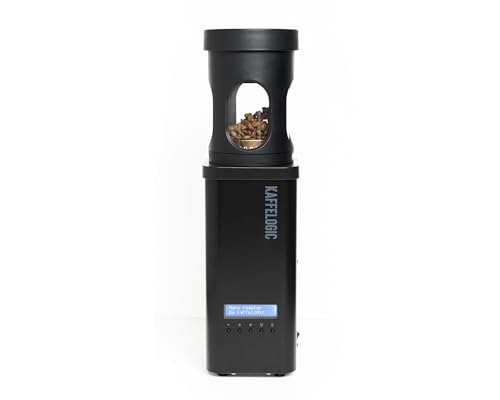
The Kaffelogic Nano7 Is A Professional-Grade Sample Roaster With PID Temperature Control And User-Programmable Profiles. It Supports 50–200 g batches and ships with pre-loaded recipes plus software for creating and saving custom roast curves.
- Features: Programmable profiles, PID control, compact footprint.
- Best Fit: Enthusiasts Seeking Precise, Repeatable Sample Roasts And Profile Sharing.
- Considerations: Smaller batch size Suits testing and specialty workflows rather than daily large-volume brewing.
500g Automatic Coffee Roaster (NIASIA)

The NIASIA Model Is An Electric Drum-Style Sample Roaster With Both Automatic And Manual Modes. It Offers nine built-in roasting profiles that cover light to dark roasts and specific processing methods. The unit Includes a smoke purifier and optional exhaust pipes for heavier roasts.
- Features: Automatic profiles, 500 g capacity, chaff collector, smoke exhaust options.
- Best Fit: Home Roasters Who Want Automated Programs And Larger Small-Batch Capacity.
- Considerations: Recommended effective batch is 350–400 g; heavier use may impact component life.
JIAWANSHUN Electric Coffee Roaster

The JIAWANSHUN Is A High-Power Home Roaster With A Non-Stick Drum And A Built-In Stirring Rod To Promote Even Roasting. It Lists A Large Nominal Capacity (Up To 800 g) While Recommending 300–500 g For Best Results, And Offers adjustable temperature control up to 240°C.
- Features: Non-stick chassis, stirring rod, thermostat control, 1200W power.
- Best Fit: Users Who Need Larger Small-Batch Capacity And Easier Cleanup.
- Considerations: Size And Power Make It Suitable For Frequent Home Use; follow manufacturer batch recommendations for longevity.
TOWIUOA 800W Coffee Roaster Machine

The TOWIUOA Unit Is A Stirring-Rod Style Roaster With An Adjustable Temperature Dial From 32–464°F And A Tempered Glass Cover For Real-Time Observation. The Design Emphasizes even rotation via an internal stir bar and a honeycomb heating base for uniform heat distribution.
- Features: Adjustable dial, tempered glass cover, integrated stir bar.
- Best Fit: Home Roasters Who Want Visual Monitoring And Wide Temperature Range.
- Considerations: Construction Is PP-Based; review ventilation and capacity based on desired batch sizes.
Buying Guide: Choosing The Right Small Batch Roaster
This guide highlights the most important factors to weigh when selecting a small-batch coffee roaster for home use. Compare across capacity, control, smoke management, and intended use to find the best match.
Batch Size And Frequency
Batch Capacity Determines how much coffee you can roast per run. Sample roasters (50–200 g) are ideal for testing beans and dialing profiles, while drum or electric roasters (300–500 g or higher) suit daily household use.
Control And Repeatability
Manual Versus Programmable: Manual convection or stir-roasters allow tactile control and quick adjustments. Programmable roasters with PID control or saved profiles (e.g., Nano7, NIASIA) provide repeatability and profile sharing.
Heat Source And Roast Style
Convection roasters emphasize airflow and quicker development. Drum or contact roasters provide different heat transfer characteristics that affect crust development and sweetness. Match roast style to desired flavor outcomes.
Temperature And Airflow Control
Precise temperature control and adjustable airflow let you manage Maillard reactions and development time. Look for clear displays and reliable control methods if you plan to replicate profiles.
Smoke And Chaff Management
Roasting produces smoke and chaff. If you plan darker roasts indoors, choose models with smoke filters, exhaust options, or chaff collectors to protect indoor air quality and simplify cleanup.
Build Quality And Materials
Stainless drums, tempered glass observation windows, and non-stick interiors affect durability and cleaning. Consider serviceability and parts availability for units used frequently.
Ease Of Use And Learning Curve
Some units are plug-and-play; others require manual adjustment and monitoring. Programmable options reduce the learning curve for consistent results, while manual roasters provide hands-on control for experimentation.
Software And Profile Sharing
For roasters interested in precision and community workflows, devices with software support and profile export/import enable advanced tweaking and collaboration.
Space, Noise, And Ventilation
Assess available counter space and ventilation options. Drum and higher-power units may require more room and better ventilation. Noise level can vary by fan and motor type.
Multiple Comparison Perspectives
- Hobbyist Testing: Choose small sample roasters (Kaffelogic Nano7) for precise profile development.
- Daily Household Use: Mid-size electric roasters with 300–500 g effective capacity (JIAWANSHUN, NIASIA) balance volume and convenience.
- Quick Manual Batches: Convection units like Fresh Roast SR800 provide fast turnarounds and direct manual control.
- Visibility And Learning: Models with glass covers (TOWIUOA) help new roasters learn by watching bean color changes.
When selecting, prioritize the combination of batch size, control level, and ventilation that matches your routine and space. Testing small batches before scaling helps refine profiles and ensures equipment choices align with your flavor goals.