Choosing the right machine can transform daily coffee into cafe-quality beverages. Below is a concise comparison of the top picks selected from the product list, followed by detailed reviews and a practical buying guide.
| Product | Key Feature |
|---|---|
| Breville Barista Express | Integrated Grinder for dose control |
| Ninja Luxe Café Premier (ES601) | 3-in-1 System: espresso, drip, cold brew |
| Ninja Espresso & Coffee Maker (CFN601) | 19-bar pressure with fold-away frother |
| Electactic Espresso Machine With Grinder | Built-in conical burr grinder with 30 settings |
| Gevi Commercial 20 Bar Espresso Maker | 20-bar pump, steam wand, stainless steel housing |
Breville Barista Express Espresso Machine BES870XL

The Breville Barista Express integrates an adjustable conical burr grinder with the espresso system to deliver freshly ground doses on demand. It uses a low-pressure pre-infusion followed by full pressure extraction to promote even flavor development. The machine targets users who want control over grind, dose, and extraction without separate devices.
Key features include dose-control grinding, an integrated grinder, and a pressure control system that supports balanced extraction. The combination of grinder and espresso group reduces variables between grinding and extraction time, which benefits consistency for single-operator home setups. Maintenance involves regular descaling and burr cleaning to preserve performance.
Ninja | Espresso Machine And Drip Coffee Maker ES601

The Ninja Luxe Café Premier ES601 is a versatile all-in-one system that handles espresso-style shots, drip coffee, and rapid cold brew. It features an integrated burr grinder and Barista Assist technology for guided grind and dose recommendations. This model is aimed at households that want multiple brew styles without multiple machines.
Notable specs: 3-in-1 functionality, weight-based dosing, and adjustable grind settings. The assisted features reduce guesswork for users new to tamping and extraction. The machine’s flexibility supports different beverage sizes and strengths, and the built-in storage for accessories helps streamline counter setup.
Ninja Espresso & Coffee Maker & Barista System CFN601
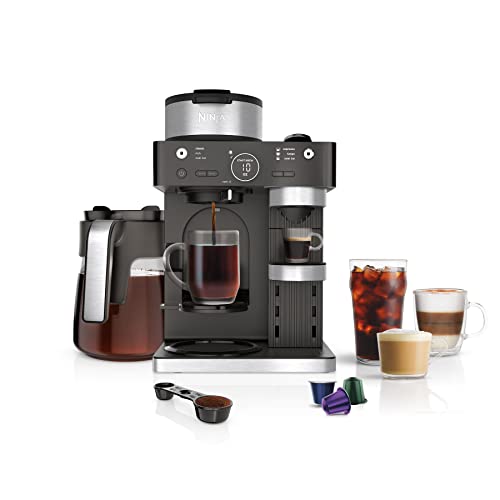
The Ninja CFN601 focuses on simple operation with a 19-bar pressure system and a fold-away frother for milk-based drinks. It supports single-serve espresso styles, including Espresso, Lungo, and Over Ice, with compatibility for capsules in addition to ground coffee options.
Features include 19-bar pressure for extraction and a built-in frother that creates microfoam. The compact footprint suits kitchens with limited counter space. The CFN601 is positioned for users prioritizing convenience and a combination of quick espresso-style shots and single-serve coffee flexibility.
Espresso Machine With Grinder, Electactic

The Electactic unit pairs a 20-bar Italian pump with a built-in precision conical burr grinder offering 30 grind settings. The package is designed for users who want granular grind control and a single integrated platform for espresso extraction and milk steaming.
Highlighted capabilities: 1500W motor, adjustable grind textures, and a steam wand that doubles as a hot water source. The extensive grind settings allow tailoring to bean origin and roast profile. Regular grinder cleaning and calibration of grind-to-dose are recommended to maintain extraction quality.
Gevi Commercial Espresso And Coffee Makers 20 Bar

The Gevi Commercial 20 Bar emphasizes a professional-grade pump, NTC temperature control, and a pre-infusion feature. Its stainless steel housing and pressure gauge target users who value durability and visual feedback during extraction.
Key elements include a 20-bar pump, removable froth nozzle for easier cleaning, and a steam wand for microfoam. The pre-infusion and temperature control support consistent flavor extraction. The compact stainless design suits a variety of kitchens and offers a balance of functionality and footprint.
Buying Guide: How To Choose The Right Coffee Or Espresso Machine
Selecting a machine depends on brewing preferences, kitchen space, and how much control you want over variables like grind and extraction. Below are core considerations with comparative perspectives.
1. Brew Styles And Versatility
- Single-purpose Espresso Machines (semi-auto/automatic): Best if you prioritize espresso shot quality and are comfortable with manual steps like dosing and tamping.
- All-in-One Systems (e.g., Ninja ES601): Offer espresso-style shots plus drip and cold brew; suitable for households with diverse preferences.
- Grinder-Integrated Machines: Reduce the gap between grinding and extraction for freshness; ideal when counter space limits multiple devices.
2. Pressure, Temperature, And Extraction Control
- Bar Pressure: Pumps rated at 15–20 bar are common; real extraction relies on pump stability and boiler/thermostat control rather than bar number alone.
- Temperature Control: NTC sensors or PID systems support consistent brewing temperature, which affects flavor clarity and crema.
- Pre-Infusion And Low-Pressure Profiles: Help ensure even extraction and reduce channeling for more balanced cups.
3. Grinder Quality And Grind Control
- Conical Burr Grinders provide uniform particle size and are preferred over blade grinders.
- Adjustable Settings let you match grind size to bean roast and brewing method; more settings = finer control.
- Integrated vs. Separate Grinders: Integrated units save space and time but may limit upgrade paths; standalone grinders often yield superior, consistent performance for enthusiasts.
4. Milk Frothing And Steam Wand Usability
- Professional Steam Wands allow microfoam for latte art; power and ergonomics matter.
- Automatic Frothers or fold-away frothers simplify use but may limit advanced milk texturing.
- Cleaning Access such as removable nozzles or accessible wands reduces maintenance time and prevents milk residue buildup.
5. Capacity, Footprint, And Convenience
- Water Tank Size affects refill frequency; larger tanks suit shared kitchens or frequent use.
- Counter Space: Compact machines fit small kitchens but may compromise features like larger portafilters or integrated grinders.
- Accessory Storage and removable drip trays enhance usability for different cup sizes.
6. Build Quality, Materials, And Maintenance
- Stainless Steel Housings improve durability and heat stability; plastic components can reduce weight but may age faster.
- Descaling And Cleaning cycles should be straightforward; removable parts and accessible drains simplify upkeep.
- Replacement Parts And Service availability is important for long-term use, especially for pumps and grinders.
7. User Skill Level And Automation
- Beginner-Friendly Models offer guided features, automatic frothers, or preset buttons to reduce trial and error.
- Enthusiast-Oriented Machines provide manual controls for grind, dose, and steaming to shape the final beverage.
- Balance: Consider machines that provide guided assistance but allow manual overrides as skill grows.
8. Performance Trade-Offs And Priorities
- Convenience vs. Control: Integrated and automated systems favor convenience; separate components (grinder + espresso machine) favor precision.
- Versatility vs. Specialization: Multi-purpose machines serve multiple drink types but can compromise elite-level espresso capability.
- Budgeting For Longevity: Investing in better materials and serviceable components often reduces long-term ownership costs.