Finding the right 12-cup espresso maker balances capacity, material, stovetop compatibility and ease of cleaning. Below is a quick comparison of top stovetop moka pots that brew up to twelve demitasse servings. Detailed reviews follow to help you choose the best fit for your kitchen or travel needs.
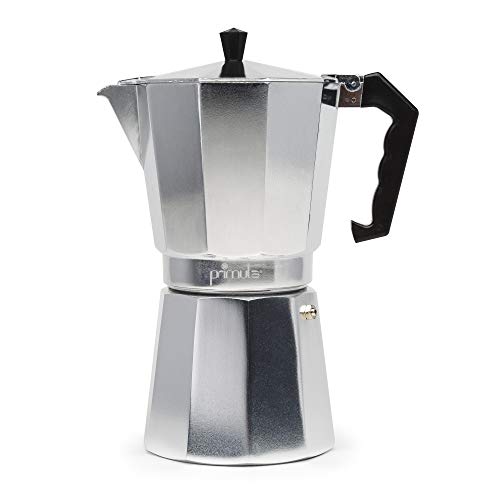
This Primula model is a cast aluminum moka pot designed to produce twelve demitasse/espresso servings in minutes. It emphasizes fast brewing for drinks like Americanos, lattes and Cuban coffee using stovetop pressure. The pot includes a flip-top lid, a heat-resistant knob and handle to support safe pouring. The cast aluminum body promotes even heat distribution for consistent extraction. Operation is manual: fill the lower chamber with water, add ground coffee to the filter, and place on heat until the top chamber fills. The product profile highlights durability and simple, tool-free use for home brewing.
The Bialetti Moka Express is the original stovetop espresso maker with a long heritage dating to 1933. Built from aluminium with a patented safety valve, it is intended for gas and electric stovetops and can work with induction using an adapter plate. The design guidance specifies filling the boiler to the safety valve and using ground coffee without pressing. Bialetti’s profile emphasizes the traditional Italian preparation method, ergonomic handle, and straightforward cleaning. The Moka Express provides an authentic moka brewing experience with standardized safety features.
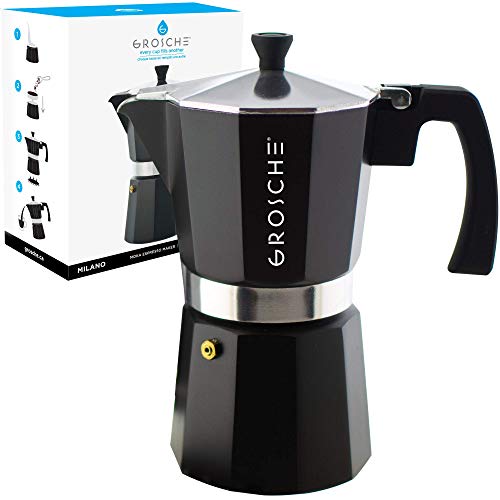
GROSCHE’s Milano is a large anodized aluminium stove top espresso maker rated for 12 cups (23.6 fl oz). The listing highlights compatibility with gas and electric stovetops and propane camping stoves, while noting it is not induction-compatible. The pot is promoted as a user-friendly alternative to electric espresso machines and includes a premium silicone gasket and food-grade anodized surface. The product aims to deliver rich moka coffee suitable for adding milk for lattes or cappuccinos and emphasizes easy operation for home or travel use.
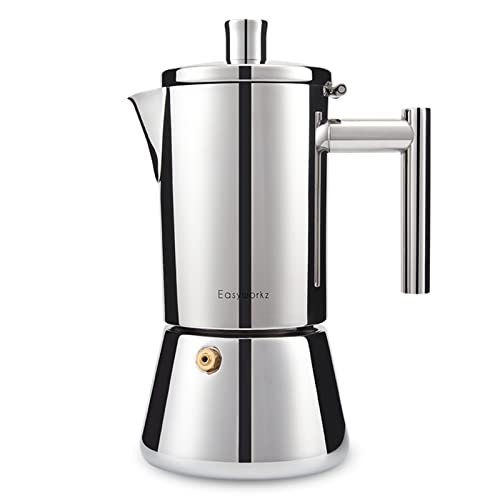
Easyworkz Diego is constructed from 18/8 stainless steel with a magnetic base suitable for induction cooktops. The design features an insulated lid and handle for safer pouring, mirror-polished surfaces for corrosion resistance, and dishwasher-safe cleaning. The maker is sized to brew twelve demitasse cups (approx. 17.5 fl oz / 520 ml) and the manufacturer suggests specific coffee-to-water ratios for optimal strength. The stainless-steel construction provides broad stove compatibility and easier long-term maintenance compared with untreated aluminum.
Mixpresso’s 12-cup moka pot is a stainless steel percolator-style espresso maker designed for stovetop brewing. It brews up to 600 ml (approx. 20 oz) using natural pressure without producing crema like pump machines. The product highlights include an integrated filter, black plastic handle, and a caution to avoid direct flame contact with the handle. The manufacturer recommends a brief pause after brewing before opening to reduce spill risk and notes that no paper filters are required, making the unit a low-waste option for stovetop espresso-style coffee.
Buying Guide
This guide covers the key considerations when selecting a 12-cup stovetop espresso maker. Assessing use cases and compatibility will help match a model to your routine.
Material And Durability
Aluminum models heat quickly and often provide classic moka flavor profiles. They are lightweight but can oxidize if not cared for properly.
Anodized aluminum offers improved surface hardness and durability versus raw aluminum and resists some staining.
Stainless steel variants resist corrosion, are dishwasher-safe in many cases, and are required for reliable induction compatibility without adapter plates.
Stovetop Compatibility
Check if the pot works with your cooktop: gas and electric are broadly supported. Induction requires a magnetic base or an adapter plate unless the product explicitly states induction-ready.
For camping or propane stoves, aluminum or anodized models are typically functional; verify handle heat resistance if using open flames.
Capacity And Real-World Output
“12-cup” moka measurements usually refer to small demitasse servings (roughly 1–2 oz each). Confirm total fluid ounces/milliliters to match your intended serving sizes.
Consider how many beverages (espresso, Americano, lattes) you’ll prepare per cycle to determine if 12 cups aligns with your needs.
Safety Features And Maintenance
Look for a safety valve to regulate pressure; it’s an important safety and performance feature on aluminum pots.
Removable gaskets and filters simplify cleaning. Aluminum models may require hand washing and drying to prevent discoloration; stainless steel often tolerates dishwasher cycles.
Extraction Control And Brewing Style
Stovetop moka pots use steam pressure, not a pump, producing a concentrated coffee without espresso crema. Grind size, heat level and brew timing impact strength and bitterness.
Choose a model with an ergonomic handle and easy-pour spout for precision when preparing milk-based drinks.
Comparison Perspectives
If you value tradition and a classic profile, a long-standing aluminum design (e.g., original Moka Express) emphasizes heritage and standardized operation.
For induction cooktops and longevity, stainless steel options offer broader compatibility and lower maintenance.
For camping and portability, lightweight anodized aluminum or basic cast aluminum pots offer simplicity and rapid heating.
Key trade-offs include weight vs. durability, speed of heating vs. long-term corrosion resistance, and stovetop compatibility vs. authenticity of the moka brewing experience. Match material, safety features and capacity to your daily routine to narrow choices.