Long hauls require reliable coffee. This guide compares portable 12-volt options and truck-friendly coffee makers, plus versatile 120V/portable models truckers often use with inverters or shore power. Below is a quick comparison of the five selected products to help you choose based on power source, portability, and brewing style.
| Product | Power Type | Capacity / Cup Size | Key Feature |
|---|---|---|---|
| Makita DCM501Z Cordless Coffee Maker | Battery Powered (18V LXT / 12V max CXT) | Single 5 oz. Cup | Permanent drip filter, cordless |
| Topyond Car Coffee Maker 12V/24V Portable | 12V / 24V Cigarette Lighter | Single Cup (compact) | Heats in 5–8 minutes, designed for vehicles |
| Hamilton Beach 2-Way 12 Cup Programmable (49980R) | 120V (requires inverter for trucks) | Single-Serve Or Up To 12 Cups | Two-way brewing (single cup or full pot) |
| BLACK+DECKER 12-Cup Thermal Programmable | 120V (inverter compatible) | Up To 12 Cups | Thermal carafe, brew strength selector |
| Hamilton Beach 2-Way 12 Cup Programmable (47500J) | 120V (inverter compatible) | Single-Serve Or Full Pot | AquaFlow showerhead, iced coffee setting |
Makita DCM501Z 18V LXT / 12V Max Cordless Coffee Maker

This cordless coffee maker is designed for jobsite portability and works with Makita batteries (battery not included). It brews a 5 oz. cup in about 5 minutes when powered by an 18V LXT battery and can produce multiple cups on a single 5.0Ah charge. The unit uses a permanent drip filter, so no paper filters are required.
For truckers who carry compatible batteries or want a battery-powered option, this unit is cordless and compact. Consider that battery compatibility and run-time depend on your specific battery pack, and the machine is oriented toward single-cup use rather than brewing full pots.
Topyond Car Coffee Maker 12V 24V Portable

The Topyond portable coffee machine is built for vehicles and plugs into a 12V/24V cigarette lighter. It brews in about 5–8 minutes, making it suitable for quick breaks on the road. The unit emphasizes simple operation and easy cleaning—unplug and rinse components as needed.
As a vehicle-first option, it’s designed for truckers and RV drivers. Check the vehicle’s accessory outlet rating and be mindful of power draw during use. The machine’s compact footprint makes storage in a cab practical.
Hamilton Beach 2-Way 12 Cup Programmable Drip Coffee Maker (49980R)

This Hamilton Beach model offers two-way brewing: single-serve or a full 12-cup pot. It’s programmable and uses a mesh scoop for single-serve brewing without K-Cup pods. The machine is intended for 120V household power, so truckers would typically use it when shore power is available or when connected to a suitable inverter.
For drivers who prefer brewing a full pot at rest stops or truck stops, this unit provides flexibility. Consider inverter capacity and steady power delivery if you plan to run this coffee maker from a vehicle battery system.
BLACK+DECKER 12-Cup Thermal Programmable Coffee Maker
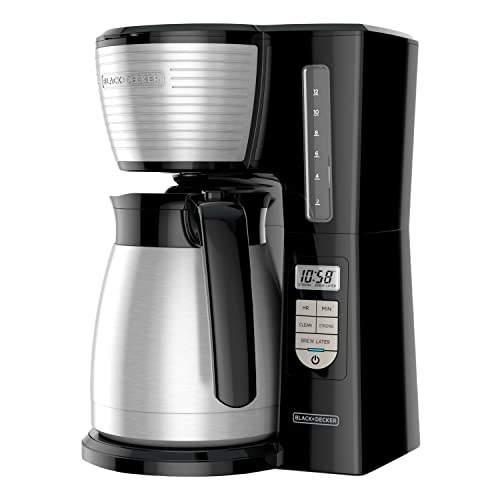
The BLACK+DECKER unit features a 4-layer vacuum-sealed thermal carafe to keep coffee hot and includes a brew strength selector and 24-hour programmable start. It uses vortex technology for improved extraction and is well suited to household or office settings.
Truckers using an inverter or parked with shore power may favor this model for its temperature retention and programmable features. Note that this is a 120V appliance; ensure your power conversion system can handle the startup and steady-state load.
Hamilton Beach 2-Way 12 Cup Programmable (47500J) With AquaFlow

This Hamilton Beach model adds an AquaFlow showerhead for even water distribution and includes settings for regular, bold, hot and iced coffee. It supports single-serve or full pot brewing and is programmable for scheduled brewing.
As with other 120V drip machines, truck use implies an inverter or shore power. The iced coffee and multiple brew settings make it versatile for long hauls when you can run a full-size coffee maker.
Buying Guide: Choosing A Coffee Maker For Truckers
This guide covers the main considerations truckers should evaluate when selecting a coffee maker for life on the road.
Power Source
- 12V Cigarette Lighter: Best for simplicity. Devices that run directly from the accessory outlet avoid inverters and battery drain complexity.
- Battery-Powered: Units like the Makita use tool batteries. Consider battery availability, voltage compatibility, and runtime per charge.
- 120V Appliances with Inverter: Full-size coffee makers require adequate inverter capacity. Check inverter continuous and surge ratings to handle heating elements.
Capacity & Brewing Style
- Single-Cup Brewers are compact and conserve energy—ideal for quick breaks.
- Full Pot Brewers suit teams or long rest periods where a carafe is practical.
- Consider cup size definitions; many manufacturers reference a 5 oz. “cup.”
Portability & Storage
- Check dimensions and weight for cab storage. Smaller, sealed units are less likely to spill and easier to stow.
- Removable water reservoirs and washable parts improve convenience on the road.
Filtration & Cleaning
- Permanent Filters reduce waste and eliminate paper supply needs, but require cleaning.
- Verify if components are dishwasher-safe or easy to rinse, especially for daily use.
Heating Time & Efficiency
- Faster heat-up times minimize engine-off periods and reduce battery drain. Expect portable units to take 5–10 minutes per cup.
- Thermal carafes retain heat without continuous power draw, useful when running from an inverter is limited.
Durability & Build
- Look for rugged construction and spill-resistant designs for vibration and movement while driving.
- Brands used on jobsites may favor durability but check compatibility with your power setup.
Safety Considerations
- Avoid leaving high-draw appliances running without proper ventilation. Monitor battery state and avoid deep-discharge of vehicle batteries.
- Use fuses and surge protection when connecting to vehicle power or inverters.
Comparison Perspectives
- Convenience vs. Capacity: Single-cup 12V units maximize convenience and portability. Full-size 12-cup machines offer capacity but need more power.
- Energy Source Tradeoffs: Battery-powered models eliminate inverter complexity but depend on battery life. Direct 12V plug-in units are simpler but can tax the accessory outlet.
- Cost Of Ownership: Consider replacement filters, battery packs, and potential inverter purchases when evaluating overall value.
Use the checklist above to match a coffee maker to your typical driving schedule, available power options, and space in the cab. When in doubt, prioritize power compatibility and portability to avoid unexpected power or storage issues on the road.