Choosing the right coffee maker for events or large households requires checking capacity, brew speed, and dispensing style. Below is a quick comparison of five top coffee urns and large-capacity makers suitable for about 25 cups or more.
| Product | Capacity | Key Feature |
|---|---|---|
| Nesco CU-25 Professional Coffee Urn | 25 Cups (4.5L) | Continuous pouring dispenser |
| West Bend 30-Cup Coffee Urn | 30 Cups | Automatic temperature control |
| Homecraft 30-Cup Quick-Brewing Coffee Urn | 30 Cups | 1 cup per minute brew time |
| SYBO 30-Cup Commercial Percolator/Urn | 30–40 Cups | Food-grade 304 stainless steel |
| Hamilton Beach 45-Cup Fast Brew Coffee Urn | 15–45 Cups | Fast brewing (45 cups in 28 min) |
Nesco CU-25 Professional Coffee Urn, 25 Cups
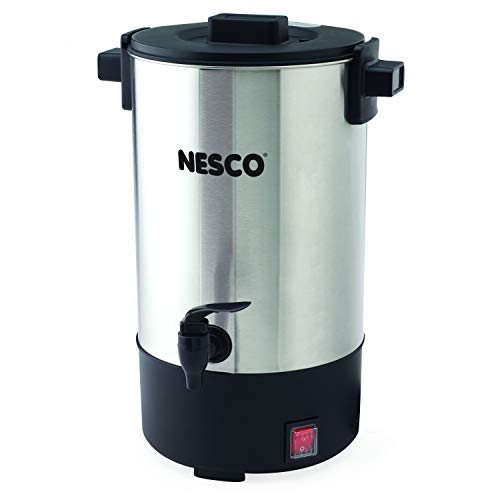
The Nesco CU-25 is specified with a 4.5L capacity which equates to approximately 25 six-ounce cups. Its matte stainless steel body emphasizes durability and an easy-to-clean surface. The urn includes an easy-to-use dispenser designed for continuous pouring, suitable for conference rooms, offices, or medium-sized gatherings.
Key operational traits: manual brew and dispensing, straightforward setup, and compatibility with standard grounds and filters. Internal capacity markings help when measuring water to coffee ratios. Designed for steady service rather than rapid refills, it balances capacity and portability for event use.
West Bend 30-Cup Coffee Urn With Temperature Control

The West Bend 30-Cup model emphasizes automatic temperature control for maintaining serving temperature after brewing. It also lists a brew rate of about one cup per minute, which is helpful for back-to-back service during high demand.
This urn is constructed with polished aluminum and features an in-basket measuring guide and a ready light to indicate completion. Its design targets venues that need consistent hot beverage service with minimal monitoring, and it is capable of serving more than the 25-cup baseline if required.
Homecraft 30-Cup Quick-Brewing Coffee Urn, Stainless Steel

The Homecraft 30-Cup Urn is marketed for quick brewing at roughly one cup per minute, and includes interior water level markings for accurate fill levels. The unit handles multiple hot beverages and is pitched toward banquets and large events.
Its stainless steel construction and 1000-watt heating element are designed for efficient heating and straightforward cleanup. The urn’s capacity and brewing speed make it appropriate where a fast turnaround and clear water-level indicators are priorities.
SYBO Commercial Grade 30-Cup Percolator/Urn

The SYBO SR-CP35C is positioned for commercial use and lists a 3.5L (about 30–40 cups) capacity with a durable 304 stainless steel body. It includes coffee level markings and a heavy-duty spigot intended for frequent service.
Designed as a percolator-style urn with a reusable basket, SYBO emphasizes durability and reduced consumables—no paper filter required. This model suits caterers, small restaurants, and larger home events where sturdiness and repeat service are essential.
Hamilton Beach 45-Cup Fast Brew Coffee Urn And Dispenser

The Hamilton Beach 45-Cup urn exceeds the 25-cup baseline and is notable for fast brewing, claiming 45 cups in about 28 minutes. It supports variable batch sizes from 15 to 45 cups and includes a one-hand dispensing lever for convenience during service.
Heat retention after brewing and the ability to scale output make this model suitable for larger gatherings, community events, or locations that anticipate heavy continuous demand. Its dispensing mechanism is designed for quick, single-handed pours into a range of cup types.
Buying Guide: How To Choose A 25-Cup Coffee Maker
Selecting the right large-capacity coffee maker depends on several functional and situational factors. Below are core considerations to compare across models.
True Capacity And Serving Size
Match the unit’s capacity to your typical event size. A 25-cup specification usually assumes six-ounce servings; confirm if you serve larger cups. Units rated for 30–45 cups provide extra buffer for bigger gatherings.
Brew Speed And Throughput
Brew time matters if you need multiple full pots in sequence. Models that brew 1 cup per minute or list a full-batch time are useful for continuous service. Faster brewing reduces downtime between batches.
Heat Retention And Temperature Control
Look for automatic temperature control or insulated designs to keep brewed coffee at a safe serving temperature. A ready light or thermostat helps you monitor when coffee is at serving temperature.
Dispensing Type And Ease Of Use
Consider the spigot design—continuous pour or one-hand lever dispensing—based on how coffee will be served. Durable metal spigots and drip guards reduce mess during heavy use.
Construction And Cleaning
Stainless steel (304-grade) and durable aluminum are common. Check for removable baskets, interior water level markings, and accessible components for easy cleaning and maintenance.
Filter Type And Consumables
Percolator-style urns often use built-in baskets and may not need paper filters. Drip-style makers might use reusable or disposable filters; factor ongoing costs and convenience into your choice.
Portability And Placement
Consider weight, handle design, and footprint. If you transport the unit frequently, look for sturdy handles and a compact footprint suitable for tables or service counters.
Power And Safety Features
Check wattage requirements and whether the unit includes auto shut-off, overheat protection, and grounded plugs as safety features for unattended operation.
Comparison Perspectives
- Capacity-focused: Choose higher-capacity models (30–45 cups) when serving larger crowds or if you want fewer refill cycles.
- Speed-focused: Fast-brew models are best for back-to-back events where time is limited.
- Durability-focused: Commercial-grade stainless steel units suit frequent use and transport.
- Convenience-focused: Units with easy-fill markings, simple controls, and one-hand dispensing simplify service for volunteers or staff.
Use these considerations to compare model features such as capacity, brew speed, material, and dispensing style. Prioritize the factors that match your typical event size and service model to select the best large-capacity coffee maker for your needs.