The 3-cup moka pot is a compact choice for making strong, stovetop espresso-style coffee. Below is a quick comparison table of the five selected 3-cup models reviewed in this guide to help you scan features at a glance.
| Product | Brand | Material / Highlight |
|---|---|---|
| Bialetti Moka Express | Bialetti | Aluminium / Iconic design & patented safety valve |
| Mixpresso Black 3 Cup Moka Pot | Mixpresso | Aluminium octagon / Heat diffusion & Cuban coffee focus |
| Primula Classic Stovetop Espresso Maker | Primula | Cast aluminum / Flip-top lid and heat-resistant handle |
| LuxHaus 3 Cup Stainless Steel Moka Pot | LuxHaus | Stainless steel / Metal hinge upgrade |
| GROSCHE Milano 3 Cup Moka Pot | GROSCHE | Anodized aluminum / Food-grade finish, silicone gasket |
Bialetti Moka Express 3 Cups

The Bialetti Moka Express is the original stovetop espresso maker credited with popularizing moka coffee. It is crafted from aluminum and includes a patented safety valve for pressure relief. The design supports gas, electric, and—when paired with an adapter—induction cooktops.
- Made In Italy with a historic design and recognizable brand mark.
- Operation: fill boiler to safety valve, add ground coffee (no tamping), assemble and heat; remove when gurgling finishes.
- Compatibility: standard stovetops; for induction, an adapter plate is required.
Mixpresso Black 3 Cup Moka Pot

The Mixpresso 3-cup moka pot uses an 8-sided octagon aluminum body designed to diffuse heat and enhance aroma. The product highlights usability for Cuban-style coffee and traditional Italian recipes.
- Classic recipe versatility: suitable for espresso, lattes, cappuccinos and Cuban coffee.
- Design features include a secure finger-grip handle and octagonal shape for even heating.
- Usage notes: fill water to valve, add grounds without pressing, assemble and heat 3–5 minutes on medium heat.
Primula Classic Stovetop Espresso Maker
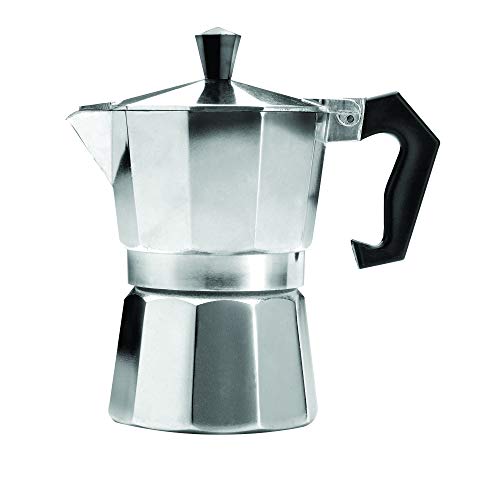
The Primula Classic produces three demitasse servings and emphasizes durable cast aluminum construction. It is built for even heat distribution and includes a flip-top lid and heat-resistant handle to aid safe pouring.
- Materials: cast aluminum for consistent heat transmission and long-lasting durability.
- Practical features: heat-resistant knob and flip-top lid for convenient operation.
- Brewing method: standard moka process—fill lower chamber, add grounds to filter, heat until brewed coffee fills the upper chamber.
LuxHaus 3 Cup Stainless Steel Moka Pot

The LuxHaus 3-cup moka pot is made from stainless steel, which appeals to users seeking non-reactive material and easier maintenance. The product emphasizes an upgraded metal hinge to improve long-term durability over plastic components.
- Material advantage: stainless steel construction resists corrosion and is suitable for more stovetops.
- Durability upgrades: metal hinge replacement reduces a common failure point.
- Capacity: 3 espresso-size cups (approximately 2 oz each) for a total near 6 oz.
GROSCHE Milano 3 Cup Moka Pot

The GROSCHE Milano is a food-grade anodized aluminum moka pot offered in a 3-cup size. It targets users looking for easy stovetop brewing and includes a premium silicone gasket and compatibility with gas, electric, and propane camping stoves.
- Construction: anodized aluminum for a food-grade finish and improved surface durability.
- Versatility: works on gas, electric, and some induction surfaces (on glass-top induction it will heat slowly).
- Accessory note: uses standard 3-cup silicone gasket sizes for replacement availability.
Buying Guide: How To Choose The Right 3-Cup Moka Pot
Choosing a 3-cup moka pot depends on material, stovetop compatibility, build quality, and intended coffee style. The sections below compare multiple perspectives to help match the right pot to your needs.
Material: Aluminum Versus Stainless Steel
Aluminum is traditional and heats quickly, producing the classic moka flavor profile. It’s lightweight but can be reactive with acidic coffee if not properly cared for. Stainless steel is non-reactive, more durable, and often dishwasher-safe, but it may heat slower and can change perceived flavor slightly.
Stovetop Compatibility
Confirm whether the moka pot supports your cooktop. Many aluminum pots work on gas and electric ranges but require an adapter for induction. Stainless steel models may be induction-ready without adapters. If you use an induction hob often, check the product specifications.
Safety Features And Durability
Look for a patented safety valve or pressure relief valve to prevent overpressure. Check hinge and handle construction—metal hinges and heat-resistant handles improve longevity and safety during pouring.
Capacity And Serving Size
3-cup moka pots typically produce small demitasse servings (around 2 oz each). Consider how many people you serve and whether you want espresso-strength shots or to dilute for Americanos.
Ease Of Use And Maintenance
Evaluate how easy it is to disassemble, clean, and replace gaskets or filters. Aluminum models may require hand washing and periodic descaling. Stainless steel can be easier to maintain for daily use.
Design And Heat Distribution
Shapes like octagonal bodies are meant to improve heat diffusion. Cast aluminum and anodized finishes can provide more even heating. Consider aesthetic and ergonomic details such as lid knobs and spout design for spill-free pouring.
Replacement Parts And Accessories
Check for availability of replacement funnels, gaskets, and valves. Standardized gasket sizes and common part availability increase long-term usability. Also consider optional accessories like induction adapter plates and gift packaging if relevant.
Flavor Preferences And Brewing Technique
Your grind size, water temperature, and heat control will influence taste. Moka pots produce a concentrated, bold cup—not the same pressure as an espresso machine but great for strong coffee, lattes, or Cuban-style brews. Use medium-fine grind and avoid tamping to prevent over-extraction or clogging.
Comparison Perspectives
- If you prioritize authentic Italian tradition, classic aluminum models with a safety valve are common choices.
- If you want lower maintenance and induction compatibility, stainless steel models or Induction-specific designs are preferable.
- If portability and outdoor use matter, look for stove and camping compatibility and rugged parts like metal hinges.