Quick Overview: This guide reviews automatic water-fill solutions and related accessories that make refilling coffee makers easier, from hard-plumbed countertop systems to DIY float-valve kits and fill funnels. Below is a summary table of the selected products for fast comparison.
| Product | Type | Best For |
|---|---|---|
| PureSec-CMK01 Coffee Maker AutoFill Kit | DIY Inline Water Line Kit | Single-serve Keurig & similar reservoirs |
| Brew Express – BEC-110 Countertop Automatic Water Filling | Countertop Self-Filling Coffee System | Plumbed, high-use countertop brewing |
| Coffee Maker AutoFill Float Valve Kit (GOOGIES) | Float Valve Tube Kit | RO systems, fridges, coffee machine reservoirs |
| LIZEWEI Coffee Machine Water Tank Access Funnel | Silicone Fill Funnel | Manual filling for recessed or rear tanks |
| KITCHENTREND 12-Cup Programmable Coffee Maker | Removable Water Reservoir Drip Maker | Easy refill reservoirs, programmable brewing |
PureSec-CMK01 Coffee Maker AutoFill Kit
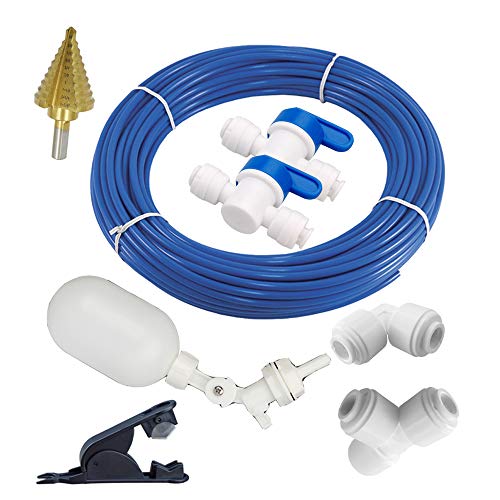
This PureSec kit is a DIY inline water line solution designed to connect a household water line to non-commercial single-serve coffee makers. It includes NSF-certified 1/4″ tubing, food-grade quick-connect fittings, and a valve for safe potable water use.
Compatibility notes list Keurig single-cup models, Breville BES870XL, Ninja CP301, Nespresso Evoluo, and other brands that use a removable reservoir. Installation emphasizes a tool-free non-locking clip method for faster setup without professional plumbing.
Strengths include a focus on food-safe materials and broad compatibility with reservoir-style machines. As a DIY kit, it requires routing tubing and positioning inside or behind the machine; suitability depends on reservoir access and clearance.
Brew Express BEC-110 Countertop Automatic Filling

The Brew Express BEC-110 is a countertop automatic water-filling coffee system that connects to a water line and self-fills its internal reservoir. It is designed to sit on a counter and provide continuous refill capability for frequent brewing.
Key features reported include a 10-cup capacity, adjustable cup selector, accent lighting, and a self-filling connection to your existing water line. This unit is positioned as a plug-and-play countertop appliance for busy kitchens or small offices.
Because it requires a water-line hookup, the Brew Express is suited to locations where a permanent or semi-permanent supply line is acceptable. It addresses automation and high-volume use by eliminating manual pouring between brew cycles.
Coffee Maker AutoFill Float Valve Kit

The GOOGIES Float Valve Kit is a 1/4″ tube float valve assembly intended for RO systems, beverage dispensers, refrigerators, ice makers, and coffee reservoirs. Materials are stated as 100% BPA-free and designed to be leak-free and reusable.
Applications are versatile: the float valve can be positioned inside a reservoir to maintain a set water level, triggered by the float mechanism to stop flow when full. The kit highlights easy faucet connection and reusability, making it a useful low-cost automation option for reservoirs that accept a tube and float.
Its advantages include simplicity and cross-application compatibility. Limitations include the need to verify reservoir geometry and secure mounting; users must route tubing without interfering with machine electronics or heating elements.
LIZEWEI Water Tank Access Funnel

The LIZEWEI silicone funnel is a manual filling accessory designed for coffee machines with rear or recessed water tanks (such as some Breville espresso units). It addresses the common problem of difficult access when refilling without moving the machine.
Made from food-grade silicone, the funnel claims heat resistance, odor-free material, and easy cleaning. It is intended to reduce spills, speed refill tasks, and prevent the need to pull the machine forward to access the tank opening.
While not an automatic filler, this accessory improves user convenience where plumbing or inline kits are impractical. It is suitable for single-family kitchens or compact countertops where direct connections aren’t desired.
KITCHENTREND 12-Cup Coffee Maker

The KITCHENTREND drip coffee maker emphasizes a detachable water reservoir and an easy-to-clean design that simplifies manual refilling. It features a permanent filter, swing-open brew basket, and a 24-hour programmable cycle.
Key design choices—such as the removable reservoir—reduce the effort of filling under cabinets or in tight spaces. This model targets users who prefer convenient manual fills without plumbing while still having programmable brewing and safety features like steam-burn prevention.
As a non-plumbed option, the unit offers improved refill ergonomics but does not automate water supply. It is relevant for buyers evaluating whether reservoir design or full automation better fits their workflow.
Buying Guide For Automatic Water Fillers
This guide highlights the critical considerations when choosing an automatic or semi-automatic water-filling solution for coffee makers.
1. Type Of Solution
- Plumbed Countertop Systems: Self-filling units (like Brew Express) connect to a household water line and are best for high-frequency use or small office settings.
- Inline DIY Kits: Hose-and-valve kits (PureSec) allow direct refill of removable reservoirs. They require routing tubing and some installation skills.
- Float Valve Kits: Float assemblies (GOOGIES) are simple, low-cost automation for maintaining water level in a tank or reservoir.
- Manual Aids: Funnels and removable reservoirs improve refill ergonomics without plumbing changes.
2. Compatibility And Fit
- Measure reservoir openings and available clearance before choosing an inline tube or float. Not all reservoirs accept a tubing insertion or float placement.
- Check manufacturer compatibility lists for kits that name Keurig, Breville, Nespresso, or other models to reduce fit issues.
3. Materials And Safety
- Select kits with NSF certification or food-grade/BPA-free tubing for potable water safety.
- Consider whether filters or water treatment are needed if connecting to hard water or municipal supplies.
4. Installation Complexity
- Tool-Free DIY Clips: Easier installations reduce the need for a professional plumber but may require careful routing to avoid kinks.
- Plumbed countertop systems require a fixed water connection and possibly minor plumbing modifications.
5. Maintenance And Reliability
- Float valves and tubing require periodic inspection for leaks, mineral buildup, or wear.
- Removable reservoirs simplify cleaning compared with permanently routed tubing that can trap sediment.
6. Use Case And Volume
- High-use environments (offices, frequent entertaining) benefit from plumbed or larger-capacity automatic systems.
- Household use may be best served by DIY inline kits or improved manual solutions like funnels or detachable reservoirs.
7. Water Quality Considerations
- Inline systems often connect directly to tap water—consider adding a water filter or using softened/treated water if mineral scaling is a concern.
- For espresso machines or brewers sensitive to scale, plan for descaling schedules and use filters compatible with your chosen kit.
8. Installation Location And Aesthetics
- Countertop plumbed units occupy space and require a nearby line; check dimensions and clearance.
- Hidden tubing may be preferred for aesthetics; evaluate routing options behind cabinets or through counters.
Comparison Perspectives
- Automation vs. Simplicity: Fully plumbed systems maximize automation but add complexity and permanence. Float valves offer a middle ground, automating level control while remaining relatively simple.
- Cost vs. Convenience: DIY kits and float valves are generally lower cost but require user setup. Countertop automatic systems trade higher upfront complexity for hands-off convenience.
- Maintenance Tradeoffs: Fixed plumbing reduces manual pour frequency but introduces tubing and valve maintenance. Removable reservoirs emphasize easy cleaning but require manual filling.