Battery operated coffee makers let you brew coffee without mains power, ideal for camping, road trips, RVs, and job sites. Below is a quick comparison of five cordless and rechargeable coffee makers selected for portability, battery type, and brewing style.
| Product | Power Type | Brewing Style | Portability |
|---|---|---|---|
| Makita DCM501Z | 18V LXT / 12V CXT Battery (sold separately) | Drip (5 oz cup) | Tool-grade, rugged |
| MAKITA CM501DZ (Japan) | Slide-type Li-ion (10.8V/14.4V/18V) | Drip (240 ml tank) | Workshop & travel |
| OutIn Nano Portable Espresso | Internal 7500mAh battery, USB-C | Espresso-style (20-bar) | Lightweight travel |
| Aerogogo 3-in-1 Portable Espresso | Built-in rechargeable battery / self-heating | Espresso, pods, ground | Compact & cordless |
| Cocoarm Portable Coffee Maker | 1200mAh rechargeable (USB) | Capsule & ground, segmented pressure | Handheld travel |
Makita DCM501Z 18V LXT / 12V max Cordless Coffee Maker

The Makita DCM501Z is designed for job sites and outdoor use with compatibility for 18V LXT and 12V max CXT batteries (battery not included). It brews a single 5 oz cup in about 5 minutes when powered by an 18V battery and can produce up to three 5 oz cups on a 5.0Ah LXT battery charge. The unit uses a permanent drip filter, eliminating paper filters and allowing grounds to be added directly to the unit.
Key considerations: built for durability and compatibility with Makita tool batteries, best suited for users who already own compatible batteries and want a rugged drip brewer rather than espresso-style extraction.
MAKITA Rechargeable Coffee Maker CM501DZ (Japan Domestic)
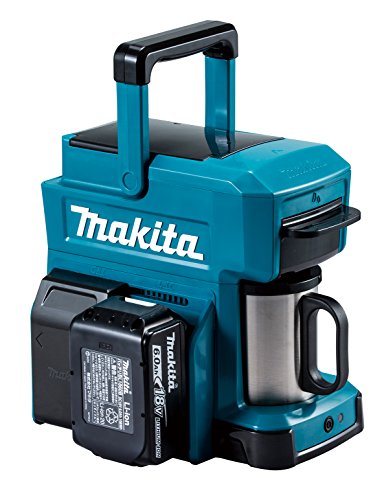
This MAKITA CM501DZ model accepts slide-type Li-ion batteries (10.8V, 14.4V, 18V; battery and charger sold separately) and features a 240 ml water tank. It provides a portable drip coffee option for users who prefer using existing Makita batteries. The compact tank size fits travel and workshop needs while leveraging tool-platform batteries.
Key considerations: compatibility with multiple battery voltages offers flexibility, and the simple drip design is easy to use. Batteries must be purchased separately, so factor in battery ownership for full portability.
OutIn Nano Portable Electric Espresso Machine

The OutIn Nano is a lightweight travel espresso machine with a 7500mAh internal battery rechargeable via USB-C. It heats rapidly, bringing 1.7 oz from room temperature to near 198°F in roughly 200 seconds, and uses a 20-bar pressure pump for espresso-like extraction with rich crema. The machine supports both ground coffee and NS-style capsules, and its materials and disassembly are designed for easy cleaning.
Key considerations: excellent for users wanting near-cafe espresso results on the go. Battery capacity supports multiple short brews; charging infrastructure (USB-C) is convenient for travel.
Portable Espresso Machine 3-in-1 By Aerogogo
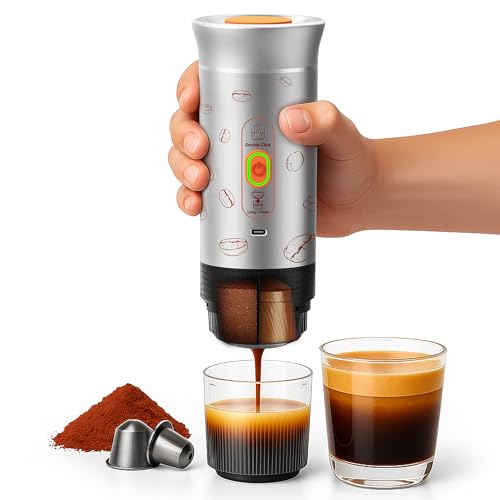
The Aerogogo 3-in-1 is a cordless, self-heating portable espresso device designed for flexibility. It features 20-bar pressure and a self-heating element that claims to reach espresso temperatures quickly. The unit is compatible with ground coffee, NS pods, and DG capsules, making it suitable for travelers who want choice in brew materials. The modular design supports quick cleaning and packing.
Key considerations: combines espresso-level pressure with multi-format compatibility. Ideal when you need capsule convenience or want to use your own grounds without mains power.
Cocoarm Portable Cordless Coffee Maker With 1200mAh Battery

The Cocoarm handheld coffee maker is a compact rechargeable unit with a 1200mAh battery and USB charging. It supports both capsules and ground coffee, holding up to 10 g of ground coffee and a 160 ml water reservoir. The device uses segmented pressure technology to deliver consistent extraction for a richer flavor profile in a small, travel-ready form factor.
Key considerations: very portable and designed for single-serve convenience. Battery capacity favors short sessions; best for solo travelers who value compactness and the ability to use capsules or grounds interchangeably.
Buying Guide: How To Choose A Battery Operated Coffee Maker
Selecting the right battery operated coffee maker depends on three main areas: power system, brewing style and capacity, and portability/maintenance. Review these considerations to match a model to your routine.
Power System And Battery Type
- Tool-Battery Platforms: Models like Makita use existing tool batteries (e.g., 18V LXT). Pros: rugged, high capacity if you own batteries. Cons: batteries sold separately, heavier.
- Built-In Rechargeable: Portable espresso makers (OutIn, Aerogogo) include integrated batteries and USB-C charging. Pros: convenient charging, optimized capacity for device. Cons: fixed battery lifespan, may need frequent recharges with repeated use.
- Small Internal Cells: Handheld units (Cocoarm) use smaller batteries suited for single cups. Pros: very compact. Cons: limited number of brews per charge.
Brewing Style And Output
- Drip Coffee: Simpler mechanics, uses grounds and sometimes permanent filters. Good for camp-style drip cups and users who prefer regular coffee over espresso.
- Espresso/High-Pressure: Requires pumps that generate ~20-bar pressure for crema. These provide concentrated espresso shots and often heat water quickly. Consider water heating speed, pressure stability, and dose control.
- Capsule vs Grounds: Multi-format compatibility increases convenience but can add cost or require adapters. Choose based on the coffee you drink most.
Capacity, Heat-Up Time, And Brew Speed
- Capacity: Check water tank size and number of cups per charge. Small tanks are portable but require frequent refills.
- Heat-Up Time: Faster heating (under 5 minutes) is better for on-demand use. Battery drain is higher for rapid self-heating units.
- Brew Speed: Drip systems are often slower per cup; espresso units deliver shots quickly but in small volumes.
Portability And Durability
- Weight And Size: Consider packed dimensions for backpacks, glove boxes, or toolboxes.
- Build Quality: Metal components improve longevity; plastic lowers weight but may be less rugged.
- Ease Of Cleaning: Removable parts and simple pathways reduce maintenance when traveling.
Charging And Power Logistics
- USB-C Charging: Widely compatible with power banks and car chargers—convenient for travel.
- Replaceable Batteries: If the device uses standardized batteries (tool-platform or AA), consider the availability of replacements for extended trips.
- Power Bank Use: Some devices can be recharged from power banks or car USB ports; verify charging input requirements.
Use Case Comparisons
- Camping Or Backpacking: Prioritize weight, integrated battery with USB charging, and fast heat-up time.
- Car / Road Trips: Compatibility with car chargers, durable build, and quick single-serve brewing are advantages.
- Job Site / Workshop: Tool-battery models offer ruggedness and leverage existing battery ecosystems.
- RV / Dorm / Office: Versatile models that accept capsules and grounds and are easy to clean are suitable.
When comparing models, balance battery life vs brewing performance, and verify whether replacement batteries or charging options meet your travel plans. Check compatibility with your preferred coffee format (grounds, pods, or capsules) and prioritize ease of cleaning for repeated travel use.