Handheld cast iron coffee grinders deliver durability, classic style, and consistent burr grinding for manual brewing methods. Below is a quick comparison of five cast iron grinders selected for build quality, adjustability, and design.
| Product | Material / Burr | Adjustable Grind | Style |
|---|---|---|---|
| Akirakoki Manual Coffee Bean Grinder (FUMAO) | Solid Wood Body, Cast Iron Burr | Yes (screw under base) | Wooden Mill, Portable |
| IMAVO Manual Coffee Grinder | Pine Wood, Ceramic Core, Cast Iron | Yes (polygon adjustor) | Antique Design |
| Manual Coffee Grinder (BAILIQI) | Pine Wood, Ceramic Core, Cast Iron | Yes (polygon adjuster) | Vintage Wooden Decor |
| Manual Coffee Grinder Antique (YUEHUA) | Cast Iron Burr, Catch Drawer | Yes (twist cog nut) | Vintage Cast Iron Mill |
| Kalita Coffee Mill, Cast Hand Grinding | Hard Cast Iron Teeth | Adjustable | Compact Diamond Mill, Japanese |
Akirakoki Manual Coffee Bean Grinder Wooden Mill
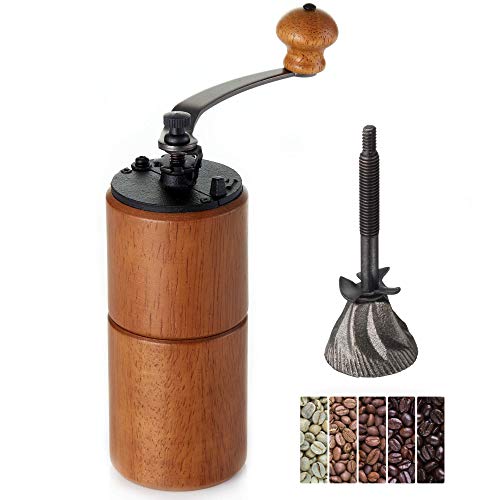
This wooden mill from FUMAO emphasizes a solid wood body carved from a single block and a cast iron conical burr. The design notes that the pig iron top and cast iron burr avoid metal odor and reduce heat transfer that could affect coffee oils. Grind fineness is adjusted via a screw under the grinder base.
Features referenced: solid wood build, cast iron conical burr, adjustable grinding screw. The configuration suits travel or countertop use where a classic wooden aesthetic is preferred. Assembly and hand crank ergonomics determine actual user effort for multiple doses.
IMAVO Manual Coffee Grinder Wooden Coffee Bean Grinder

IMAVO combines pine wood, a ceramic core, and cast iron components. The listing highlights a cast iron hand crank for smooth operation and a polygon adjustor to set grind fineness precisely. The manufacturer positions the grinder for home, coffee shop, or gifting scenarios.
Features referenced: pine wood body, ceramic core, cast iron hand crank, fineness adjustment. This grinder targets users who want manual control with multiple grind settings suitable for French press, drip, and finer methods when adjusted properly.
Manual Coffee Grinder Vintage Wooden Coffee Decor (BAILIQI)

BAILIQI’s manual grinder lists a composition of pine wood, a ceramic core, and cast iron, with a built-in polygonal adjuster for grind thickness. The product notes suitability for beans, spices, and nuts and emphasizes easy use by rotating the handle.
Features referenced: pine wood, ceramic core, cast iron, adjustable polygonal mechanism. The product is presented as a multi-use kitchen tool and decorative accent that also aims to maintain bean flavor by limiting heat during grinding.
Manual Coffee Grinder Antique Cast Iron Hand Crank Mill
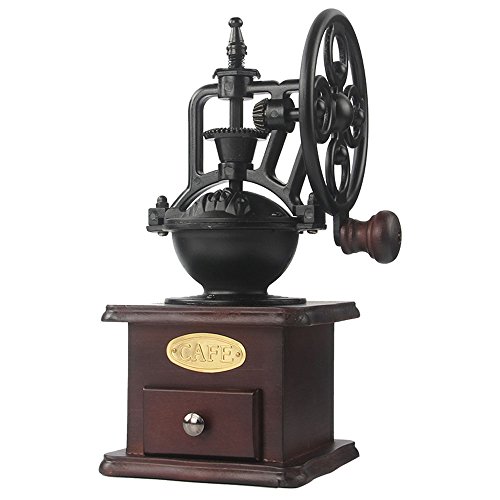
YUEHUA’s cast iron burr mill emphasizes a vintage look with a catch drawer and conical burr configuration. Grind setting changes via a twist cog nut and the unit operates without electricity. The listing mentions use for coffee, spices, and nuts with coarse or fine finishes possible.
Features referenced: conical burr mill, catch drawer, twist cog nut adjustment. This mill prioritizes a traditional cast iron aesthetic and the convenience of a drawer to collect ground coffee, useful for consistent dosing and reduced mess.
Kalita Coffee Mill, Cast Hand Grinding Diamond Mill

Kalita’s mill is a compact hand grinder with hard cast iron teeth, designed in Japan for consistent manual grinding. The mill’s build dimensions and durable cast iron components are emphasized for countertop or café use.
Features referenced: hard cast iron teeth, adjustable grind, compact diamond mill format. Kalita’s design targets users seeking a small, robust manual grinder with a reputation for reliable mechanical performance and simple adjustment.
Buying Guide: Choosing A Cast Iron Coffee Grinder
Picking the right cast iron grinder depends on brewing method, frequency of use, portability, and desired grind consistency. Consider the factors below to match a grinder to your needs.
Grind Mechanism And Burr Type
- Conical vs. Flat/Teeth: Conical burrs tend to produce uniform grounds with less heat buildup. Cast iron teeth (as in some vintage mills) are durable but may require more maintenance.
- Material Pairing: Many models combine cast iron with ceramic cores. Ceramic reduces metal contact and heat, which can preserve flavor oils.
Adjustability And Grind Range
- Fine Adjustment: Look for precise mechanisms (polygon adjustor, cog nut, or under-base screw) if you plan to brew espresso or require fine control.
- Coarse To Fine: Ensure the grinder supports the full range you need—coarse for French press, medium for drip, fine for espresso-like extractions.
Build Quality And Materials
- Cast Iron Durability: Cast iron components last long but can be heavier and require care to avoid rust. Many manufacturers pair cast iron with treated wood or ceramic to mitigate corrosion risk.
- Wood vs. Metal Housing: Solid wood bodies offer a classic look; cast iron housings are more industrial and rugged. Consider kitchen decor and handling preferences.
Ergonomics And Capacity
- Crank Comfort: Smooth, well-shaped handles reduce effort for multiple doses. Some cast iron cranks provide better leverage.
- Bean Hopper Size: Smaller hoppers are fine for single-cup brewing; larger capacities suit batch grinding but add weight.
Cleaning, Maintenance, And Longevity
- Cleaning: Manual grinders generally require brushing and occasional disassembly. Cast iron parts should be dried thoroughly to prevent rust.
- Replacement Parts: Check if burrs or adjustment parts are available. Ceramic and cast iron burrs have different wear characteristics.
Use Cases And Comparison Perspectives
- Daily Home Use: Choose a grinder with stable burrs and easy adjustability for consistent cups across methods.
- Travel Or Camping: Select a lighter wooden-bodied grinder with a compact profile and secure crank to withstand movement.
- Decorative Or Gift Purposes: Vintage wooden or ornate cast iron models double as decor—verify grinding performance in addition to appearance.
- Multi-Purpose Kitchen Use: Some cast iron mills are listed for spices and nuts; confirm that cross-use won’t contaminate coffee flavors if you plan multiple uses.
When comparing these cast iron grinders, weigh grind consistency, adjustability, and maintenance needs relative to your brewing style. Durable cast iron components can provide long-term service, but pairing with ceramic or wood elements often helps preserve flavor by minimizing heat and metal contact.