Finding the right cezve (Turkish coffee pot) affects flavor, crema, and ritual. Below is a concise comparison of five popular options covering materials, capacity, and stovetop compatibility to help choose the best fit for home brewing.
| Product | Brand | Material / Capacity |
|---|---|---|
| Caizen Coffee Quality Turkish Coffee Pot | Caizen Coffee | Stainless Steel / 15 oz |
| DEMMEX Thickest Copper Turkish Pot | DEMMEX | Copper (1mm) / 9 fl oz |
| Cuisinox Stainless Steel Turkish Cezve | Cuisinox | 18/10 Stainless Steel / 24 oz |
| IMEEA Turkish Coffee Pot | IMEEA | 18/10 Stainless Steel, Tri-Ply / 16.9 oz |
| Volarium Hammered Copper Coffee Cezve | Volarium | Hammered Copper, Tin Lined / Small |
Caizen Coffee Quality Turkish Coffee Pot – Turkish Coffee Maker

This stainless steel briki focuses on durability and everyday use. The seller highlights lasting quality with solid stainless construction that resists rust and a handle designed to stay cool. It is suitable for gas, electric coil, and ceramic stovetops, though it’s not compatible with induction. The design is noted as decorative yet fully functional for traditional Turkish or Arabic coffee brewing. For users who want a low-maintenance pot that heats evenly on common stovetops, this model is positioned as a practical choice.
DEMMEX Thickest Copper Turkish Greek Arabic Coffee Pot

This handcrafted copper cezve emphasizes traditional brewing and artisan detail. Constructed from 1mm thick copper, it is designed to heat quickly and evenly to produce rich, flavorful coffee. The product features hand engraving by Turkish artisans and includes a wooden handle and spoon. Copper’s thermal response supports precise control during foam formation and boiling, and the engraved exterior makes it suitable as both a functional pot and display piece. Recommended for those seeking a traditional look and hands-on brewing experience.
Cuisinox Stainless Steel Turkish Cezve Coffee Pot, 24 oz.
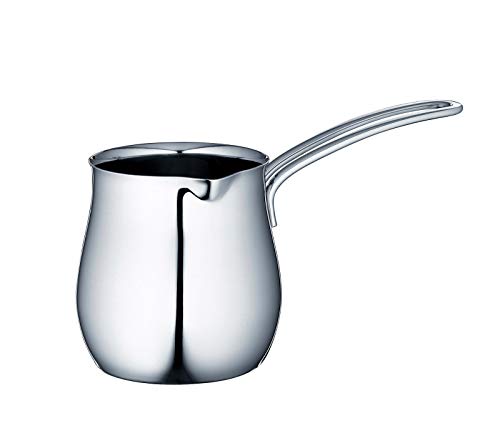
This larger-capacity 18/10 stainless steel cezve offers a mirror-polished finish and a 24 oz (710 ml) volume for brewing multiple servings. The material choice of 18/10 stainless steel provides corrosion resistance and ease of cleaning. The wider capacity and robust construction are useful for gatherings or multi-cup preparation. The simple, polished design integrates with modern kitchens while maintaining traditional brewing form. Note that heating characteristics will differ from copper; stainless steel often requires a bit more time to see boiling or foam behavior.
IMEEA Turkish Coffee Pot 18/10 Stainless Steel Briki

The IMEEA cezve is built with a tri-ply base – 18/10 stainless inside, pure aluminum core, and 430 magnetic stainless outside – to enable induction compatibility (subject to cooktop minimum diameter). With a 16.9 oz capacity, wide mouth for easy stirring, and dual pouring spouts for left- or right-handed use, this model balances traditional form with modern stovetop flexibility. The product notes a bottom diameter specification; buyers should verify induction plate detection limits before purchase.
Volarium Turkish Coffee Pot, Hammered Copper Cezve

This handmade hammered copper cezve features a food-safe tin lining and a premium brass handle. The listing emphasizes thick copper construction, ergonomic design, and a hammered aesthetic. The tin lining is commonly used to prevent direct copper contact with acidic beverages, preserving flavor and safety. The manufacturer notes the handle may become hot and advises using mitts. This pot is targeted at enthusiasts who value artisanal appearance and traditional copper heat properties.
Buying Guide: How To Choose A Cezve Turkish Coffee Pot
Selecting the right cezve depends on material, capacity, stovetop type, and user preferences for maintenance and aesthetics. Below are key considerations.
Material And Heat Response
- Copper Heats Quickly And Responds Fast To Temperature Changes, Helping Control Foam And Boil. Copper Often Requires A Tin Or Stainless Lining To Prevent Metal Interaction With Coffee.
- Stainless Steel Is Durable, Low Maintenance, And Often Dishwasher Safe; It May Heat More Slowly Than Copper And Produce Different Foam Characteristics.
- Tri-Ply Bases Offer Even Heating And Broaden Stovetop Compatibility, Including Induction If The Exterior Is Magnetic.
Capacity And Serving Size
- Choose A Size That Matches Typical Serving Needs: Small (1–2 Cups), Medium (3–4 Cups), Or Large (Multiple Servings Or Multi-Use Pots).
- Remember Turkish Coffee Cups Are Small; A 9–16 oz Pot Often Suits 2–4 Servings, While 24 oz Suits Hosts Or Multi-Purpose Use.
Stovetop Compatibility
- Verify Whether The Pot Works With Your Cooktop: Gas, Electric Coil, Ceramic, And Induction Have Different Requirements.
- For Induction, Confirm The Pot Has A Magnetic Base Or A Specified Induction-Compatible Note; Small Bottom Diameters May Fail Induction Detection.
Handle Design And Safety
- Handles Should Provide A Secure Grip And Stay Cool Enough To Pour. Wooden Or Brass Handles Vary In Heat Transfer.
- Some Copper Handles Can Become Hot—Check Manufacturer Guidance About Using Mitts.
Maintenance And Lining
- Copper Pots Often Have A Tin Lining To Protect Against Corrosion And Metallic Taste; Re-tinning May Be Required Over Time.
- Stainless Steel Requires Less Special Care And Is Typically Dishwasher Safe; Consider Ease Of Cleaning For Daily Use.
Brewing Style And Features
- Wide Mouths Make Stirring Ground Coffee And Sugar Easier; Narrow Necks Help Retain Foam.
- Pouring Spouts And Dual Spouts Aid Left/Right-Handed Users; A Well-Shaped Spout Enables Cleaner Pouring Over Small Cups.
- Engraving Or Hammered Finishes Add Visual Appeal If You Intend To Display The Pot.
Comparison Perspectives
- Traditionalists May Prefer Copper (Hand-Engraved, Tin-Lined) For Authentic Heat Response And Aesthetic.
- Practical Users Often Choose Stainless Steel For Durability, Ease Of Cleaning, And Compatibility With Modern Kitchens.
- Induction Owners Should Seek Tri-Ply Or Magnetic Stainless Options And Verify Bottom Diameter Specs.
Use the above criteria to match the cezve to your brewing priorities: thermal control, ease of care, capacity, and stovetop type. Each material and design offers trade-offs between performance, maintenance, and traditional character.