Stovetop moka pots deliver concentrated, espresso-style coffee without an espresso machine. Below is a quick comparison of five classic stovetop espresso makers selected for durability, capacity, and stovetop compatibility.
| Product | Brand | Capacity | Material / Feature |
|---|---|---|---|
| Primula Classic Stovetop Espresso | Primula | 6 Cups | Cast Aluminum, Reusable Filter |
| Bialetti Moka Express | Bialetti | 3 Cups | Aluminum, Patented Safety Valve |
| Bellemain Stovetop Espresso Maker | Bellemain | 6 Cups | Aluminum, Fast Heat |
| SIXAQUAE Glass-Top Moka Pot | SIXAQUAE | 6 Cups | Borosilicate Glass Top, Stainless Steel |
| LAOION Stainless Induction Moka Pot | LAOION | 6 Cups | All-Stainless, Induction Base |
Bialetti Moka Express 3-Cup

Overview: The Moka Express is the original classic moka pot, designed in Italy and known for its iconic shape and reliable performance. It is available in multiple sizes and is recognized for delivering concentrated coffee using traditional moka brewing.
- Material: Aluminum construction for quick heat transfer.
- Safety: Patented safety valve to release excess pressure.
- Compatibility: Suitable for gas and electric; induction use requires an adapter plate.
- Usage: Fill to safety valve, add ground coffee without pressing, heat until gurgle then remove from heat.
Notes: The Moka Express emphasizes simplicity and heritage. Its aluminum body warms quickly, producing the characteristic moka pot coffee profile. Induction stovetops need an adapter for direct heating.
Primula Classic 6-Cup Moka Pot

Overview: Primula’s 6-cup stovetop espresso maker is cast aluminum and designed to produce six demitasse or espresso servings quickly. It includes a reusable filter and a flip-top lid for convenient pouring.
- Capacity: Six small espresso servings (demitasse size).
- Material: Cast aluminum for even heat distribution.
- Filter Type: Reusable metal filter for ongoing use.
- Design: Heat-resistant knob and handle for safer handling.
- Use Cases: Moka-style espresso, Americano, Cuban coffee, lattes and cappuccinos when used with frothed milk.
Notes: This model focuses on durability and usability. The cast-aluminum construction supports consistent extraction, while the reusable filter reduces waste compared with single-use options.
Bellemain 6-Cup Moka Pot
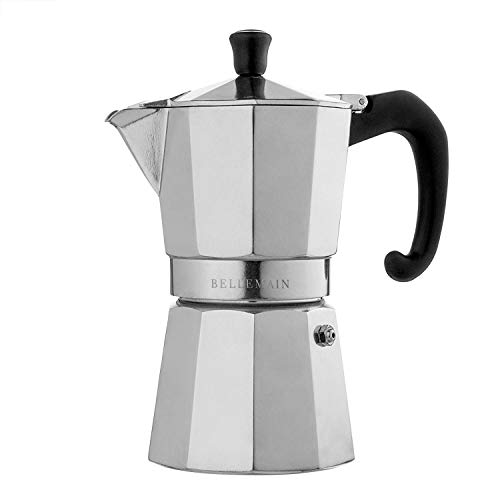
Overview: The Bellemain moka pot is a classic aluminum design marketed for quick, even heating and consistent home brewing. It’s positioned as a versatile option for households and casual coffee drinkers.
- Material: Classic aluminum construction for fast heat-up.
- Design: Minimalist Italian styling with emphasis on even heat distribution.
- Capacity: Six-cup configuration suitable for serving multiple small cups.
- Cleaning: Simple disassembly for rinsing and drying; avoid dishwashers to preserve finish.
Notes: Bellemain highlights speed and consistent warmth. Its simple construction and traditional moka geometry make it comparable to other six-cup aluminum pots in flavor profile and performance.
SIXAQUAE Glass-Top Stainless Moka Pot

Overview: The SIXAQUAE moka pot combines a stainless steel body with a borosilicate glass viewing top. The glass allows visual monitoring of the brew while the stainless components provide induction compatibility and longevity.
- Materials: 304 food-grade stainless steel with borosilicate glass top.
- Visibility: Glass top enables users to observe extraction stages.
- Compatibility: Works on induction, ceramic, gas and electric stovetops.
- Sizes: Available in multiple sizes; the listed model is 240ml (6 cups by moka sizing).
Notes: The glass-top design is helpful for monitoring but requires careful handling to avoid thermal shock. Stainless steel base improves induction performance and reduces long-term wear compared to aluminum.
LAOION Induction Stainless 6-Cup Moka Pot

Overview: LAOION’s moka pot emphasizes induction compatibility with an all-stainless steel construction and induction-ready base. It includes practical usage tips to minimize leaks and optimize extraction.
- Material: All stainless steel construction including induction base for optimal heat transfer.
- Capacity: 240ml (6 small espresso servings).
- Design Tips Included: Recommendations like filling water below safety valve and avoiding tamping grounds to prevent leaks.
- Compatibility: Designed specifically to perform well on electromagnetic and induction stovetops.
Notes: An all-stainless build addresses common limitations of aluminum pots on induction cooktops. The included usage guidance helps reduce common issues such as overfilling or improper sealing.
Buying Guide: How To Choose A Classic Stovetop Espresso Maker
Selecting the right moka pot depends on several factors. Below are practical considerations and comparison perspectives to guide selection.
Material And Durability
Aluminum heats quickly and gives the traditional moka flavor profile. It is lightweight but can wear over time and is usually not suitable for induction without an adapter. Stainless steel is more durable, often induction-compatible, and resists corrosion, but can heat more slowly and may produce a slightly different flavor.
Stovetop Compatibility
If you use an induction cooktop, choose a model with an induction-ready base or full stainless steel construction. For gas or electric stoves, aluminum and stainless options both work well. Some aluminum pots require an adapter plate on induction.
Capacity And Serving Size
Moka pot “cups” are small demitasse servings (about 1–2 ounces). Common sizes: 3-cup (compact), 6-cup (household), 9–12 cup (larger groups). Match capacity to how many concentrated cups you typically brew at once.
Extraction Control And Visibility
Some models, like glass-top designs, allow you to visually monitor extraction. This can help prevent over-extraction but adds fragility. Standard metal tops require listening for the gurgle and watching for changing sounds and steam.
Safety Features
Look for a safety valve that releases excess pressure. Ergonomic, heat-resistant handles and knobs improve safe handling. Follow manufacturer fill-level and sealing instructions to avoid leaks and spills.
Maintenance And Cleaning
Most moka pots disassemble into three parts for rinsing. Avoid dishwashers for aluminum models to preserve finish and coffee oils. Stainless steel tolerates more aggressive cleaning, but rinsing with water and air-drying preserves flavor best.
Grind, Dose, And Brewing Technique
Use a medium-fine grind slightly coarser than espresso but finer than drip. Do not tamp the grounds hard; level them gently. Fill the base with water up to, but not above, the safety valve. Heat over medium or medium-low to avoid burning and to allow proper pressure buildup.
Flavor And Use Cases
Moka pots produce rich, concentrated coffee suitable for Americanos, lattes and cappuccinos when mixed with hot water or frothed milk. Aluminum models often yield the classic moka taste; stainless models provide similar strength with minimal metallic interaction.
Comparison Perspectives
- Traditionalists: Often prefer aluminum (e.g., Bialetti) for classic flavor and heritage design.
- Induction Users: Should favor stainless models or induction-ready bases (e.g., LAOION, SIXAQUAE).
- Visual Brewers: May opt for glass-top models to monitor extraction stages (e.g., SIXAQUAE).
- Group Brewing: Choose larger 6-cup or above pots to serve multiple people without repeated brewing.
By considering material, stovetop compatibility, capacity, extraction control, and cleaning needs, you can select a classic stovetop espresso maker that aligns with your kitchen setup and coffee preferences.