Home roasting unlocks fresher, more flavorful coffee by letting you control roast profiles and ingredients. Below is a quick comparison of five popular home coffee roasters selected for capacity, control, and ventilation options.
| Product | Capacity | Key Feature |
|---|---|---|
| Fresh Roast SR540 | Up To 120 g (4 scoops) | Variable Heat & Convection Fan |
| NIASIA 500g Automatic Roaster | Up To 500 g | Automatic Profiles & Smoke Filter |
| JIAWANSHUN 1.1lb Roaster | Up To 800 g (best 300–500 g) | Adjustable Temp & Timer |
| DIYAREA 800g Electric Roaster | Up To 800 g (best 300–500 g) | Non-Stick Drum & Multi-Purpose |
| fatamorgana 450g Direct-Fired Roaster | Approx 450 g | Direct Flame Simulation & Quartz Glass |
Fresh Roast SR540 Automatic Coffee Bean Roaster

The Fresh Roast SR540 Is Designed For Small Batch, Fast Roasting. It Supports Up To 4 Scoops (120 g) Wet Processed Beans And Delivers Roasts In Under Ten Minutes. Key features include a Precise Real-Time Temperature Display, Nine Power Levels for fine control, convection fan control for even roasting, and a speed roast mechanism for uniform results.
Its strengths are explicit control over heat and airflow and suitability for diverse bean types including espresso. The unit is framed as user-friendly for novices while offering adjustments for experienced roasters. For those prioritizing freshness and quick small-batch roasting, this model emphasizes repeatable control and rapid cycle times.
500g Automatic Coffee Roaster Machine For Home Use

This NIASIA Model Is An Automatic Sample Roaster (110V) With Both Manual And Automatic Modes. It Offers Nine Roasting Profiles Covering Light, Medium, Dark, And Specific Processes Like Sun-Dried, Washed, And Honey.
The machine’s 500 g Drum Is Marketed For Home Use (optimal batches 350–400 g). It Includes A Smoke Purifier For Light Roasts And Two Exhaust Pipes For Venting Smoke During Dark Roasts. This combination Supports indoor use while providing options for outdoor venting when producing heavier smoke loads.
JIAWANSHUN 1.1lb Electric Coffee Roaster
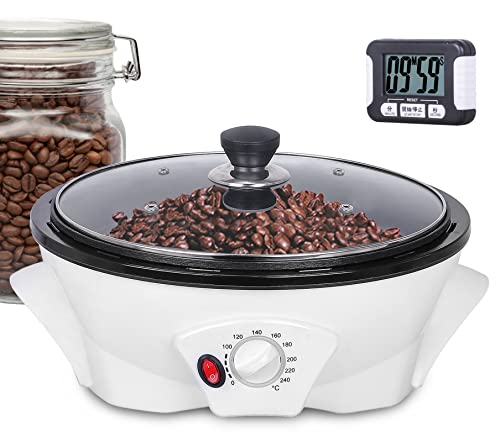
The JIAWANSHUN Electric Roaster Provides Temperature Control From 0–240℃ And A Built-In Timer For Flexible Roast Profiles. It Features A Transparent Glass Cover With Ventilation Holes For Visual Monitoring And Aroma Feedback During Roasting.
With An 800 g Physical Capacity And Recommended Batch Size Of 300–500 g, The Unit Uses An Automatic Mixing Rod For Even Bean Movement. The Non-Stick Bottom Aids Cleaning. This model Is Positioned As A Versatile Home Roaster Capable Of Handling Coffee And Other Small Foods Like Nuts Or Seeds.
DIYAREA 800g Capacity Electric Coffee Roaster

The DIYAREA Roaster Emphasizes Non-Stick Drum Bottom And Efficient Cooling. Rated To Handle Up To 800 g, The Manufacturer Recommends 300–500 g For Best Results. The Unit Claims Even Mixing And Constant Temperature Control For Consistent Batches.
This Model Is Marketed As Multi-Purpose, Suitable For Coffee Beans, Cocoa, Nuts, Grains, And More. It Includes Operational Guidance Such As Maintaining Coverage During Roasting And Observing Recommended Batch Sizes To Avoid Uneven Results.
fatamorgana 450g Direct-Fired Home Roaster

This fatamorgana Unit Uses A Direct Flame Simulation Rather Than Hot Air, Which The Listing States Can Produce Different Flavor Outcomes. It Features A 5mm Quartz Glass Window For Full Visual Monitoring And A Removable Bean Bin For Easy Cleaning.
The Design Highlights Durability With A Stainless Steel Shell And Tool-Free Access For Maintenance. The Direct-Fired Approach May Require Greater Ventilation Control; The visible roasting chamber Helps Track Color Changes Throughout The Roast.
Buying Guide: How To Choose A Home Coffee Bean Roaster
Choosing a home roaster depends on batch size, roast control, ventilation, and intended use. Below are key considerations and comparison perspectives to help match a model to your needs.
Batch Size And Throughput
- Small Batch (Up To ~150 g): Ideal For high-frequency, single-origin experiments. Units like the Fresh Roast SR540 target this use case.
- Medium Batch (300–500 g): Balances experimentation with production. Many electric drum roasters (JIAWANSHUN, DIYAREA, NIASIA recommended batches) perform best here.
- Larger Batch (450–800 g): Suited to sharing and small shops; requires more ventilation and longer cycle times.
Roast Control And Features
- Manual vs Automatic Profiles: Automatic modes simplify repeats and are good for beginners; manual control gives advanced users fine-grained manipulation of heat and airflow.
- Temperature Display And Timers: Real-time temperature readouts and timers aid repeatability and recording roast curves.
- Drum vs Hot-Air vs Direct Flame: Drum roasters tend to produce even contact roasts; hot-air (convection) promotes brighter, cleaner flavors; direct flame can emphasize caramelization and different flavor notes.
Ventilation, Smoke Management, And Indoor Use
- Smoke Filters And Exhaust Options: Models with filters or exhaust pipe options (NIASIA, precision-styled units) are better for indoor use, especially for medium–dark roasts.
- Dark Roasts Produce More Smoke: Plan for outdoor venting or high-quality filtration when selecting a roaster for darker profiles.
Material, Cleaning, And Maintenance
- Non-Stick Coatings And Removable Bins: Ease cleaning and lower downtime between batches (DIYAREA, JIAWANSHUN emphasize non-stick surfaces).
- Glass Windows And Visibility: Quartz or glass viewing windows (fatamorgana, JIAWANSHUN) help monitor color change without opening the chamber.
Versatility And Multi-Purpose Use
- Some roasters accept nuts, cocoa, and seeds, adding utility beyond coffee. If you plan to roast other ingredients, confirm temperature ranges and drum design.
Skill Level And Learning Curve
- Beginner: Look for automatic profiles, guided settings, and good documentation.
- Intermediate/Advanced: Seek units with granular heat/airflow control, visible temperature readouts, and manual modes for crafting roast curves.
Comparison Perspectives
- Speed vs Capacity: Faster small-batch roasters (Fresh Roast SR540) offer quick iteration but lower output. Larger drum units yield more beans per run but with longer cycle times.
- Flavor Targets: Convection/hot-air designs emphasize clarity and bright notes; direct-fired or drum contact can enhance body and sweetness.
- Convenience vs Flexibility: Automatic profile machines reduce setup time; manual-capable machines increase hands-on control for tailored results.
Consider matching capacity and ventilation to your typical roast profile and workspace. Keep batch-size recommendations in mind to avoid uneven roasting or undue wear on the machine. Proper cleaning and consistent roast logging will improve repeatability across any model you choose.