Finding a coffee maker that reliably produces lattes and cappuccinos means balancing pressure, frothing, convenience, and footprint. Below is a concise comparison of five machines that cover single-serve capsule options, semi‑automatic pump machines, and fully automatic bean‑to‑cup systems.
| Product | Type | Key Feature |
|---|---|---|
| Ninja Espresso & Coffee Maker | Single-Serve / Capsule Compatible | Built-In Frother, 19-Bar Pressure |
| Mr. Coffee One-Touch CoffeeHouse | Pod / One-Touch | One-Touch Control, Automatic Frother |
| QJA 20 Bar Espresso Machine | Semi-Automatic | 20-Bar Pump, Steam Wand |
| AIRMSEN 20 Bar Espresso Machine | Automatic / Touchscreen | Automatic Milk Frother, 20-Bar Extraction |
| De’Longhi Rivelia Automatic | Bean-To-Cup Automatic | Integrated Grinder, One-Touch Recipes |
Ninja Espresso & Coffee Maker
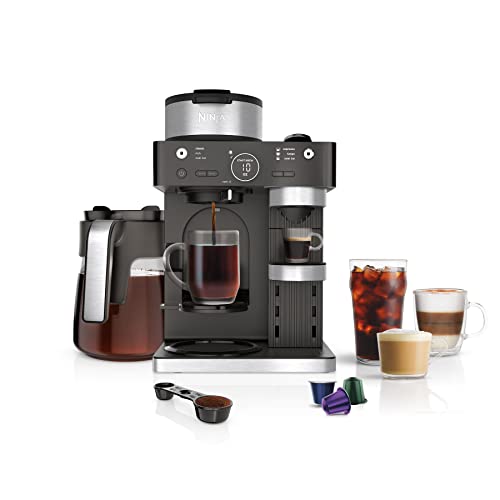
The Ninja Espresso & Coffee Maker combines capsule compatibility with a built-in frother and multi-style espresso brewing. It uses Barista Plus technology and a 19-bar pressure system to deliver espresso with a creamy crema. The machine supports three espresso sizes — Espresso (1.35 oz), Lungo (3.75 oz), and Over Ice (1 oz) — and the fold-away frother creates steamed and frothed milk for lattes and cappuccinos. As a single-serve solution, it’s designed for flexibility with pods while offering espresso-style extraction and integrated frothing without a separate steam wand.
Mr. Coffee One-Touch CoffeeHouse

Mr. Coffee’s One-Touch CoffeeHouse emphasizes simplicity with one-button brewing for single or double espresso shots and milk-based drinks. It features an automatic milk frother with adjustable froth levels, which supports consistent cappuccino and latte textures. The progress bar provides visual feedback on brewing status. The system accepts ESE pods and is positioned as an easy-to-use option for users who want reliable milk-based drinks without complex programming or manual steaming.
QJA 20 Bar Espresso Machine

The QJA semi-automatic machine targets users seeking stronger manual control. With a 20-bar Italian pump and 1400W boiler, it aims for higher extraction pressure and stable temperature. The LED touch screen and programmable brewing time add convenience and the pre-impregnation function improves extraction consistency. A steam wand with removable nozzle supports milk texturing for latte art and creamy cappuccino foam. This model suits home baristas who want flexibility in grind, dose, and milk control.
AIRMSEN 20 Bar Espresso Machine

AIRMSEN positions this unit as a versatile, semi-to-automatic option with touchscreen controls and an automatic milk frother. It uses a 20-bar professional pump and pre-infusion technology for fuller saturation and extraction. The machine provides one-click selection for espresso, cappuccino, and latte, and offers single or double shot options. The detachable frother head is intended for easier cleaning, and the quick-brew dual-boiler design helps maintain steam power while brewing.
De’Longhi Rivelia Automatic

The De’Longhi Rivelia is a bean-to-cup automatic machine with a built-in burr grinder and a one-touch system for 18 preset recipes including latte and cappuccino. It features two removable bean hoppers for quick bean switching, a 13-setting burr grinder, and adjustable intensity and cup size options. The integrated milk frother and programmable settings allow consistent milk textures and automated workflows for users who want a fully automated, customizable daily routine.
Buying Guide: Choosing A Latte And Cappuccino Coffee Maker
Deciding on the right machine depends on how much control, convenience, and workspace you want. Below are key considerations to compare across models.
Extraction Pressure And Brew Quality
Pressure (measured in bars) affects crema and extraction. Machines listing 15–20 bars often use pumps designed to reach espresso‑style extraction. Higher listed bars may indicate stronger pumps, but actual extraction depends on boiler temperature and tamping/grind consistency for manual machines.
Milk Frothing Method
- Automatic Frother: One-button convenience and consistent foam for lattes and cappuccinos.
- Steam Wand: Manual control for microfoam and latte art; requires skill and time.
- Detachable/Integrated Design: Easier cleaning if the frother head or milk circuit is removable or dishwasher safe.
Beans vs. Pods vs. Capsules
- Bean-To-Cup Automatic (integrated grinder): Best for fresh flavor and daily convenience; offers many presets.
- Semi-Automatic (portafilter + steam wand): Offers hands-on control over grind, dose, and milk texture.
- Pods/Capsules: Simplest operation and minimal cleanup; may limit drink customization.
Footprint, Water Tank, And Capacity
Consider counter space and resupply frequency. Larger water tanks reduce refill frequency but increase footprint. Removable tanks are easier to fill and clean.
Programming And Ease Of Use
Touchscreens and one-touch recipes simplify repeatability. Programmable shot volumes, temperature presets, and froth levels allow consistent results for different drinks.
Cleaning And Maintenance
- Look For descaling alerts, removable brew groups, and dishwasher-safe parts for easier upkeep.
- Automatic milk systems require periodic cleaning cycles to avoid milk residue buildup.
Performance Perspectives To Compare
- Consistency: Do repeated shots and milk pours stay uniform? Automated grinders and one-touch systems typically excel here.
- Customization: Semi-automatic machines allow more manual tweaking for espresso enthusiasts.
- Speed: Dual-boiler or high-wattage units maintain steam pressure for back-to-back milk drinks.
- Value: Balance features vs. reliability and warranty support for long-term ownership.
Final Tips
- Match the machine to your routine: single-cup convenience vs. craft control.
- Factor in learning curve: steam wands require practice; one-touch systems reduce user skill needs.
- Check replacement part availability for boilers, pumps, and frother components.