Quick Overview: Choosing the right milk frother jug affects foam quality, pouring control, and cleaning. The table below summarizes the five selected stainless steel pitchers chosen for their capacity options, spout design, and measurement markings.
| Product | Brand | Capacity Options |
|---|---|---|
| UMUACCAN Milk Frothing Pitcher | UMUACCAN | 12oz / 20oz |
| Adorever Milk Frothing Pitcher | Adorever | 12oz / 20oz / 32oz / 50oz |
| watchget Stainless Steel Pitcher | watchget | 12oz |
| De’Longhi DLSC060 Milk Frothing Jug | De’Longhi | 12oz (350 ml) |
| Zulay Milk Frothing Pitcher | Zulay Kitchen | 12oz / 20oz / 32oz |
UMUACCAN Milk Frothing Pitcher, 350ml/600ml (12oz/20oz)
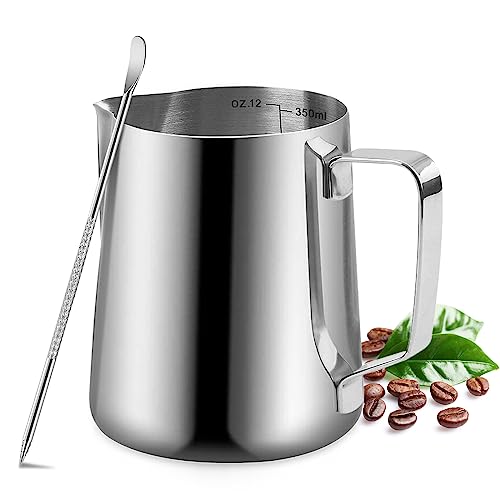
The UMUACCAN pitcher is made from 304 stainless steel and targets home baristas who want precise pouring and latte art tools. Its V-Sharp mouth design is intended to reduce dripping and support fine pattern work. Double scale lines inside the pitcher provide measurement guidance for portion control while steaming or frothing. The package includes a latte art pen for drawing designs. The manufacturer highlights a cool-touch handle and rust-resistant construction. This option balances a narrow spout for accuracy with visible volume markings for consistent results.
Adorever Milk Frothing Pitcher With Latte Art Pen

Adorever offers multiple capacities (12oz, 20oz, 32oz, 50oz) made from #304 stainless steel with a chrome finish. The product emphasizes a point-mouth (narrow spout) design to prevent leakage and aid pattern precision. A bundled latte art pen facilitates decorative pours. The description notes rust-proof, stain-proof, and heat-resistant properties. Multiple size choices suit single cups or larger batches for groups, and the durable finish supports frequent use in home or small office settings.
watchget Stainless Steel Milk Frothing Pitcher 12oz

watchget’s 12oz pitcher is constructed from food-grade 304 stainless steel with a creamy white coating for a different aesthetic and surface finish. The product copy highlights precise, drip-free pouring and an ergonomic handle designed for control of speed and direction when creating latte art. The coating is described as wear-resistant and heat-resistant, and the overall design aims to support both beginners and professional users in producing consistent microfoam and clean pour lines.
De’Longhi DLSC060 Milk Frothing Jug, 12 oz

The De’Longhi milk frothing jug is a compact 350 ml (12 oz) stainless steel pitcher. It is positioned as suitable for producing smooth milk foam and preparing cappuccinos. The product’s description focuses on practical frothing performance and compatibility with espresso-based drinks. As a brand-recognized accessory maker, De’Longhi emphasizes consistent capacity for single-serve frothing and a simple form factor for routine kitchen use.
Zulay Milk Frothing Pitcher With Measurement Markings

Zulay’s frothing pitcher offers laser-welded handle strength, oz and ml internal markings, and a narrow spout tailored for latte art. Made of food-grade 304 stainless steel, it emphasizes measurement accuracy and control for both cappuccinos and lattes. The manufacturer highlights home barista use and gift potential; the available sizes accommodate single cups or larger servings. The ergonomic design and clear markings aim to reduce waste and improve repeatability when steaming milk.
Buying Guide: Choosing The Right Milk Frother Jug
Selecting the right milk frother jug requires matching design features to your brewing habits and skill level. Below are the most important factors to compare.
Capacity And Use Case
- Single Cup (12oz / 350 ml): Ideal for one cappuccino or latte; easier to produce dense microfoam.
- Medium (20oz / 600 ml): Good for preparing two drinks or larger lattes; useful for households with multiple coffee drinkers.
- Large (32–50oz): Designed for multiple servings, offices, or entertaining; requires more steam power to heat evenly.
Spout Design And Pour Control
- Narrow / V-Sharp Spout: Better for latte art and precise lines; reduces dripping during intricate pours.
- Wider Spout: Easier for beginners to pour evenly for basic patterns; may be less precise for fine art.
Material And Finish
- 304 Stainless Steel: Standard for durability, rust resistance, and food safety; common across the selected models.
- Coatings And Polishes: Mirror or brushed interiors impact cleaning and heat retention; coated exteriors change grip and aesthetics.
Measurement Markings
- Internal Marks (ml/oz): Help avoid wasted milk and achieve consistent ratios for espresso to milk.
- Dual-Scale Lines: Useful for repeatability when switching recipes or serving sizes.
Handle Ergonomics And Heat Management
- Comfort Grip: A handle sized for secure hold improves control during pouring and reduces wrist fatigue.
- Heat Insulation: Some handles claim cool-touch design; verify if the handle material is metal or insulated for safety.
Included Tools And Extras
- Latte Art Pen: Adds the ability to draw fine details; commonly bundled with many jugs for added value.
- Attachments: Spoons or lids may be included in some kits; evaluate if they align with your workflow.
Cleaning And Durability
- Dishwasher Safety: Many stainless steel pitchers are dishwasher safe, but coated finishes may require hand washing to preserve appearance.
- Weld Quality: Laser-welded handles and seamless spouts reduce pockets where milk can collect.
Comparing Across Perspectives
- Home Single-Serve Barista: Prioritize a 12oz pitcher with a narrow spout and clear measurement lines for microfoam control.
- Small Household / Entertaining: A 20oz option balances capacity with manageable steaming time and is suitable for two drinks.
- Cafe Or Small Office: Larger 32–50oz pitchers can speed service but require stronger steam wands and more practice to texture milk evenly.
- Skill Level: Beginners benefit from wider spouts and ergonomic handles; experienced pourers prefer narrow spouts and precision rims.
Final Selection Tips: Match capacity to average servings, prioritize a spout suited to your pouring style, and choose durable 304 stainless steel with clear markings if you value repeatable results. Bundled tools like a latte art pen add versatility but are secondary to core jug geometry and build quality.