Choosing a combination coffee and espresso maker can simplify your morning routine and expand your drink options. Below is a concise comparison of top multi-function machines that brew espresso plus drip or capsule coffee, and include grinders or frothers for café-style drinks at home.
| Product | Key Feature | Best For |
|---|---|---|
| De’Longhi COM530M | All-in-one espresso + drip, 47 oz water tank | Versatile household use |
| Ninja CFN601 | 19-bar pressure, capsule compatible, built-in frother | Espresso styles + single-serve capsules |
| Ninja ES601 Luxe Café | Integrated grinder, Barista Assist, 3-in-1 system | Custom grind and guided extraction |
| De’Longhi Rivelia | One-touch recipes, dual bean hoppers | Preset drinks and bean switching |
| QJA 20 Bar Espresso Machine | 20-bar pump, touch screen, steam wand | Compact semi-automatic control |
De’Longhi COM530M All-In-One

The De’Longhi COM530M combines espresso extraction and drip coffee capability with a 47-ounce water reservoir. It supports traditional portafilter espresso brewing and a drip coffee side that can serve multiple cups. Important operational notes from the manufacturer highlight grind size, dose, and tamping: too coarse a grind, too little coffee, or insufficient tamping can reduce brewing pressure and affect espresso quality. The unit allows reprogramming of extraction volume to match grind and dose changes.
Ninja Espresso & Coffee Maker CFN601
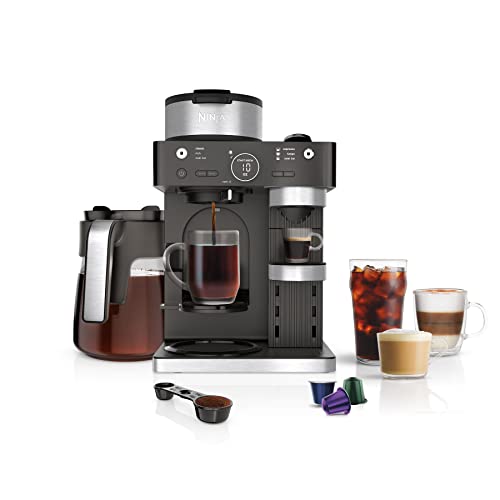
The Ninja CFN601 delivers 19-bar pressure with Barista Plus Technology to produce crema and concentrated extraction. It supports single-serve espresso brewing styles and is compatible with Nespresso-style capsules for convenience. The built-in fold-away frother creates steamed milk and microfoam for cappuccinos, lattes, and flat whites. Brewing options include Espresso (1.35 oz), Lungo (3.75 oz), and Over Ice styles, enabling both hot and iced espresso drinks.
Ninja Luxe Café Premier ES601

The Ninja ES601 is a 3-in-1 system with integrated conical burr grinder, drip coffee, and espresso-style extraction. It offers Barista Assist technology for grind size guidance, weight-based dosing, and active brew adjustments for temperature and pressure. The grinder has 25 settings for precise control, and the machine supports multiple brew sizes for drip and cold brew. This model targets users who want guided customization plus an all-in-one countertop solution.
De’Longhi Rivelia Espresso Machine

The De’Longhi Rivelia is an automatic all-in-one with a built-in burr grinder and two removable bean hoppers for easy bean switching. It features one-touch access to 18 preset recipes, from espresso to lattes and iced drinks, plus adjustable intensity and cup size. The Bean Switch System allows rotating between two bean types without emptying the hopper, and a 13-setting grinder supports tailored extraction. It’s designed for users who prefer preset convenience with personalization options.
QJA 20 Bar Espresso Machine

The QJA semi-automatic machine uses a 20-bar pump and 1400W boiler to support concentrated extraction and rapid heating. It includes a steam wand with removable nozzle for frothing and hot water, and an LED touch screen for programmable brew time and pre-infusion. The pre-impregnation function helps even saturation of grounds, which can improve flavor extraction for espresso and allow more hands-on control for home baristas.
Buying Guide: How To Choose A Combination Coffee And Espresso Maker
Selecting a combination machine depends on brewing preferences, kitchen space, and desired control. Below are key considerations to evaluate before buying.
1. Brewing Modes And Drink Variety
Decide whether you want espresso plus drip, espresso plus single-serve capsule compatibility, or an all-in-one that includes integrated grinding and cold brew options. Machines with multiple modes increase versatility but may add complexity.
2. Pressure And Extraction
Look for reliable pump pressure for espresso extraction. Models with 15–20 bar pumps commonly advertise strong extraction, though actual performance also depends on pre-infusion, temperature stability, and grind/dose control.
3. Grinder Quality And Adjustability
An integrated burr grinder with multiple settings offers fresher, more consistent grounds. If the machine lacks a grinder, consider how you’ll source properly ground coffee. Adjustable grind size and dosing are key for dialing in espresso shots.
4. Frothing And Milk Texture
Choose between a steam wand for manual microfoam control or an automatic/fold-away frother for convenience. Steam wands provide more control for latte art; automatic frothers are faster for everyday drinks.
5. Water Tank Capacity And Footprint
Water reservoir size affects refill frequency. Larger tanks suit households that brew multiple cups per day. Also confirm the machine’s countertop footprint and clearance for tall travel mugs.
6. Presets, Customization, And Ease Of Use
One-touch presets are useful for consistency; barista-assist features help beginners. If you prefer manual control, choose a semi-automatic with programmable options. Consider menu navigation, touch screens, and cleaning reminders.
7. Maintenance And Cleaning
Removable components like drip trays, portafilters, bean hoppers, and water tanks simplify cleaning. Check if the machine offers auto-rinse, descaling alerts, or easily removable brew groups.
8. Build Quality And Materials
Stainless steel housings and metal portafilters usually outlast plastic components. Durability matters if you plan heavy daily use. Also review how manufacturer support and replacement parts are handled.
9. Noise And Heat Management
Grinders and pumps can be noisy. If you’re sensitive to sound or have early-morning routines, check user feedback about operational noise and heating times for the boiler.
10. Matching Beans And Grind To The Machine
For consistent espresso, use freshly roasted beans matched to the grinder settings. Manufacturer notes often warn that grind size, dose, and tamping directly affect pressure and extraction, so plan to experiment and reprogram extraction volumes as needed.