Keeping a coffee maker free of limescale and mineral buildup preserves performance and flavor. Below is a quick comparison table of the five selected descalers reviewed in this guide to help you match product format and compatibility with your machine.
| Product | Format | Compatibility | Notable Feature |
|---|---|---|---|
| ACTIVE Descaler Tablets | Tablets (24) | Single-serve & Multi-cup | Bulk supply, wide compatibility |
| IMPRESA Descaling Solution | Liquid (2×8 oz) | Single-use machines | Made in USA, concentrated |
| De’Longhi EcoDecalk | Liquid (16.9 oz) | Espresso & Coffee machines | Plant-based lactic acid formula |
| Keurig Brewer Maintenance Kit | Kit (descale + filters + pods) | Keurig Classic & 2.0 | Complete maintenance kit |
| Affresh Coffee Maker Cleaner | Tablets (3) | Multi-cup & Single-serve | No vinegar odor, descaling + cleaning |
ACTIVE Descaler Tablets

Format: 24 tablets designed for periodic descaling and deep cleaning. The tablets are pre-measured and intended to dissolve in the reservoir or in a cleaning cycle.
Compatibility: Marketed as compatible with single-serve K-Cup systems and multi-cup machines including major brands like Breville, Keurig, Nespresso Vertuo, De’Longhi, Cuisinart, and more.
Key Strengths: Bulk supply aims to deliver long-term value. The formulation targets hard water buildup, calcium, limescale, grime, and oil in brew paths and heating elements. Tablets avoid measuring liquid concentrates during use.
Considerations: Tablet dissolution time and rinse cycles vary by machine model. Review your manufacturer’s descaling recommendations to confirm tablet use and rinse frequency.
IMPRESA Descaling Solution

Format: Two 8-ounce bottles providing multiple uses. The manufacturer indicates each bottle delivers two uses, using 4 ounces per session.
Compatibility: Labeled for Keurig, Nespresso, De’Longhi and other single-use coffee and espresso machines. Designed as a universal liquid descaler.
Key Strengths: Concentrated formula intends to minimize product needed per session. The product emphasizes effective removal of mineral buildup while protecting heating components to extend machine lifespan.
Considerations: Liquid descalers require measuring and mixing per instructions. Ensure full rinse cycles to remove any residual solution before brewing. Follow recommended cleaning intervals (often every 3–4 months) for best results.
De’Longhi EcoDecalk

Format: 16.9-ounce liquid descaler with up to five uses per bottle depending on dosage and machine size.
Compatibility: Promoted by De’Longhi for use with its espresso machines and other coffee appliances. Suitable for many brands that accept liquid descalers.
Key Strengths: Uses a plant-based lactic acid formulation. The manufacturer positions it as a fast-acting, safe option to remove limescale and preserve brewing temperature and consistency.
Considerations: Sent by a brand recognized for espresso equipment; follow machine-specific intervals and dosing. EcoDecalk’s formula may be preferable if you prioritize a plant-based active ingredient over harsher acids.
Keurig Maintenance Kit

Format: Multi-item kit including a descaling solution, water filter cartridges, and rinse pods for flavor carryover reduction.
Compatibility: Designed for Keurig Classic/1.0 and 2.0 single-serve brewers. Components are tailored to the Keurig cleaning cycle and reservoir filtration.
Key Strengths: Comprehensive approach combining descaling, water filtration, and rinse cycles. Rinse pods address oil and residue in the pod holder to reduce flavor cross-contamination.
Considerations: Best matched to Keurig systems; kit components offer a broader maintenance routine than descaling alone. Follow Keurig-specific instructions for descaling duration and filter replacement.
Affresh Coffee Maker Cleaner
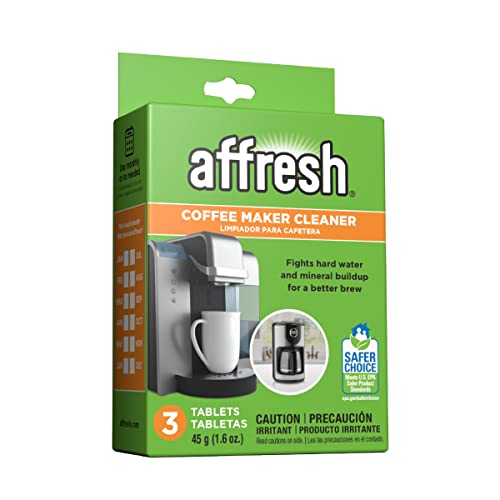
Format: Pack of 3 cleaning tablets formulated to descale and deep clean without strong vinegar odor.
Compatibility: Marketed for both multi-cup and single-serve brewers. Tablets are typically added to the reservoir and run through a cleaning cycle.
Key Strengths: Focuses on mineral deposit removal and oil/film cleaning with an emphasis on odour-free descaling. Affresh is commonly referenced for appliance-safe formulations.
Considerations: Tablets may require multiple rinse cycles post-cleaning. Check appliance manual for use of tablet-type cleaners to ensure proper application and safety.
Buying Guide: How To Choose A Descaler For Your Coffee Maker
Choosing the right descaler involves matching product format, compatibility, active ingredients, and maintenance frequency to your machine and water conditions. Below are the key factors to weigh.
Machine Compatibility
- Single-serve vs. Multi-cup: Some kits are tailored to Keurig or Nespresso machines and include rinse pods or filters specific to those systems.
- Manufacturer Recommendations: Always check the coffee maker manual. Some manufacturers list approved descalers or provide exact dosing instructions.
Descaler Format
- Tablets/Sachets: Pre-measured convenience reduces measuring errors and mess. Good for consumers who prefer solids over liquids.
- Liquid Concentrates: Can be more concentrated and cost-effective per use but require measuring. Often suitable for espresso machines with larger reservoirs.
- Kits: Combine descaling with filter replacements and rinse pods for fuller maintenance routines.
Active Ingredients And Safety
- Citric Acid/Lactic Acid: Common, effective, and generally milder. Suitable for routine descaling and less aggressive on components.
- Stronger Acids: May remove heavy buildup faster but require strict adherence to instructions and thorough rinsing.
- Food-Safe Formulations: Look for products designed for beverage equipment to avoid corrosive or unsafe residues.
Water Hardness And Cleaning Frequency
- Hard Water Areas: More frequent descaling is necessary. Bulk tablet packs or concentrated liquids may be more economical.
- Soft Water: Longer intervals between descaling; single-use packets or smaller bottles may suffice.
Environmental And Practical Considerations
- Eco-Friendly Formulas: Plant-based lactic or citric acid options may align with sustainability preferences.
- Packaging Waste: Tablets in bulk reduce bottle waste compared to single-use liquid containers.
- Storage & Shelf Life: Check expiration or storage guidance for liquid concentrates versus dry tablets/sachets.
Performance Vs. Convenience
- Effectiveness: Liquid concentrates and proven brands often remove heavy scale reliably.
- Ease Of Use: Tablets and pre-measured sachets minimize measurement steps and cleanup.
- Maintenance Scope: Kits that include filters and rinse pods address both mineral scale and oil/film buildup for comprehensive upkeep.
Comparative Perspectives
- Cost Per Use: Bulk tablets or concentrated liquids may lower long-term cost; kits may cost more upfront but reduce other maintenance needs.
- Speed Of Action: Stronger chemistries remove scale faster but require caution. Milder acids act longer but are gentler on components.
- Residue And Odor: Formulations that advertise minimal odor (non-vinegar) can reduce post-cleaning taste issues; thorough rinsing is still essential.
When selecting a descaler, balance your machine’s compatibility and the local water profile with the product format you find easiest to use. Following the manufacturer’s instructions for dosing and rinse cycles will help maintain machine performance and coffee quality.