Commercial electric coffee roasters vary by capacity, heating method, ventilation, and automation. Below is a concise comparison of five machines covered in this guide to help match capacity and features to your roasting needs.
| Product | Brand | Capacity / Key Strength |
|---|---|---|
| 1Pound Electric Coffee Roaster | precision coffee roaster | Small batches, smoke filter, multiple modes |
| Nut Roaster Machine 4000g | Generic | Large stainless steel drum, 0–350°C dial, 4,000 g capacity |
| 500g Automatic Coffee Roaster (WQV) | WQV | 500 g batch, 3 roast programs, built-in smoke filter |
| GYQSSD Commercial Coffee Roaster 4000g | GYQSSD | 2,000–4,000 g capacity, timing and temp control |
| Bokknppo Drum-Type Roaster 14.5L | Bokknppo | ~3.8 gal (7.7–8.8 lb) drum, automatic rotation, stainless steel |
1Pound Electric Coffee Roaster — Precision Coffee Roaster

This unit emphasizes versatile control modes: automatic, assisted, and manual. The design targets users who want programmable roasting with the option to intervene for profile tweaks.
- Modes: Automatic for repeatability; Assisted for partial automation; Manual for hands-on control.
- Ventilation: Built-in smoke filter and vent pipe intended to discharge smoke outdoors and meet indoor ventilation needs.
- Use Case: Claimed suitability for home and small commercial use; manufacturer notes it is not recommended for heavy commercial throughput.
The roaster is compact and aimed at operators who need programmable profiles and smoke management for small batch runs. Consider ventilation layout and expected batch volume before selecting for a commercial environment.
Nut Roaster Machine 4000g — Generic

This stainless steel electric roaster is positioned for heavier-duty batches with a 4,000 g capacity and a 0–350°C temperature dial. It targets multipurpose roasting of nuts and beans.
- Construction: High-quality stainless steel for insulation, conductivity and hygiene.
- Controls: Thermostatic heating, 0–350°C temperature range, 0–99 minute timer.
- Ventilation: Vent holes to discharge smoke and reduce particulate fallout during roasting.
The machine is suitable when larger single-batch throughput and adjustable timing/temperature are priorities. Ensure your space can manage smoke generation and that the ventilation plan aligns with local codes.
500g Coffee Roaster — WQV Automatic Roaster

This machine focuses on small professional batches with features aimed at both novices and experienced baristas. Capacity is up to 500 g per batch (recommended 350–400 g for consistency).
- Roast Programs: Automatic, Assistant, and Manual modes to support repeatable profiles and hands-on adjustments.
- Profiles: Nine preset roasting profiles simulating direct-fire characteristics for light to dark roasts and different processing methods.
- Accessories: Built-in smoke filter, chaff collector, and an integrated cooling function.
Choose this unit for quality-controlled small-batch production, cupping sample runs, or a café needing precise, repeatable profiles with integrated smoke control.
GYQSSD Commercial Coffee Roaster 4000g — GYQSSD

Designed for higher throughput, this model offers large capacity options (2,000g or 4,000g) and a wide temperature range with extended timing control.
- Capacity: Large batches suitable for small roasteries or high-volume café production.
- Controls: Timing 0–999 minutes and temperature adjustment 0–350℃ for flexible roast curves.
- Material: Stainless steel heating tube for rapid, efficient heating and easy cleaning.
This roaster fits operations prioritizing batch size and control fidelity. Plan for industrial ventilation and workflow integration when deploying in a commercial setting.
Bokknppo Drum Roaster 14.5L — Bokknppo
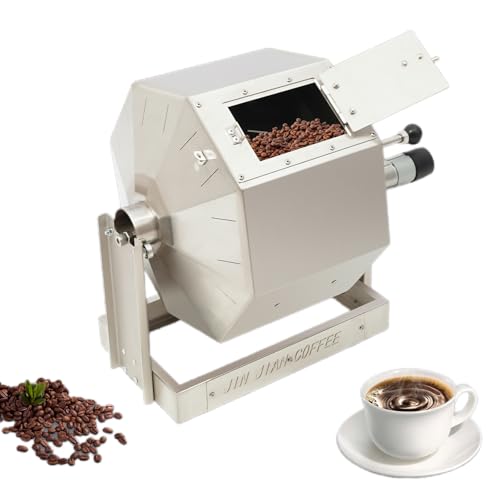
This drum-type roaster emphasizes large, even batches with a 14.5L drum (~7.7–8.8 lb). It uses automatic rotation for uniform heating and a stainless steel build for durability.
- Large Capacity: Suitable for higher-volume commercial or small roastery production runs.
- Automation: 14W motor provides consistent rotation for even roast profiles.
- Durability: Stainless steel construction and rectangular base for stable operation and simplified cleaning.
Opt for this roaster when drum-style roasting and larger single-batch capacity are required. Confirm fuel/heating type compatibility and workplace ventilation before installation.
Buying Guide: How To Choose A Commercial Electric Coffee Roaster
Selecting the right commercial electric roaster requires matching capacity, control features, heating method, and ventilation to your business model. Below are key considerations and comparisons to guide purchase decisions.
Capacity And Throughput
Batch Size: Match batch capacity to daily production. Small cafés often benefit from 250–500 g machines for frequent fresh roasts. Small roasteries or high-volume cafés typically require 2,000–4,000 g or drum roasters.
Scaling: Consider whether you’ll roast several smaller batches per day for freshness or fewer larger batches for operational efficiency.
Heating Method And Roast Character
Hot Air vs. Direct-Heat/ Drum: Hot-air roasters yield clean, fast roasts and often include smoke filtration. Direct-fire or drum-style units can develop different flavor notes and surface caramelization favored by some profiles.
Control Resolution: Look for temperature range (0–350°C common) and timing precision to reproduce roast curves. Manual overrides and profile memory increase flexibility.
Automation And Profile Management
Programs: Automatic modes help consistency; assisted modes let you manage key events; manual control is essential for custom profiles. Evaluate the number of preset profiles and logging features.
Repeatability: For retail or wholesale, reproducible profiles reduce waste and maintain cup quality.
Ventilation, Smoke Control, And Cleanup
Smoke Filtration: Integrated smoke filters and vent pipes simplify indoor use. For larger units, external ducting and industrial exhaust systems are often required.
Chaff Collection: Removable chaff collectors and accessible interiors reduce cleaning time and fire risk.
Materials, Build Quality, And Maintenance
Stainless Steel: Durable, hygienic, and easier to clean. Consider accessibility of serviceable parts and manufacturer support.
Ease Of Cleaning: Removable glass panels or drums and simple fasteners reduce downtime between batches.
Energy Use And Installation
Power Requirements: Verify electrical supply compatibility and peak load. Larger electric roasters may need dedicated circuits.
Space And Venting: Account for clearance, ducting paths, and local ventilation codes when siting the machine.
Operational Considerations And Compliance
Local Regulations: Check local environmental and fire codes for indoor roasting. Smoke and particulate controls can impact permitting.
Operator Training: Evaluate the learning curve for profile programming, maintenance tasks, and safety procedures.
Comparative Perspectives
- Small Café / Artisan Approach: Choose a precise small-batch roaster (e.g., 500 g class with smoke filter) for flexibility and quality control.
- High Throughput / Small Roastery: Prioritize larger-capacity machines (2,000–4,000 g or drum roasters) with robust timing and temperature controls.
- Flavor Focus: If direct-fire characteristics matter, seek drum or flame-simulating models; if cleanliness and repeatability matter, hot-air automatic units are preferable.
- Maintenance & Venting: Integrated filtration helps in small commercial spaces; larger operations will need dedicated extraction systems.
Use the above criteria to align roaster selection with production goals, facility constraints, and desired roast profiles. Consider trial runs or vendor demos to validate fit before full deployment.