Choosing the right espresso machine for a food truck requires balancing size, speed, durability, and drink consistency. Below is a quick comparison of five compact, high-performance machines suited to mobile service.
| Machine | Key Strength | Notable Feature |
|---|---|---|
| Gevi Commercial 20 Bar | Durable Stainless Steel | 20-bar pump, pressure gauge |
| CASABREWS 20 Bar | Removable 34oz Tank | Professional 20-bar pump, pressure gauge |
| Electactic Espresso With Grinder | Built-In Grinder | Conical burr, 30 grind settings |
| Breville Bambino | Fast Heat-Up | Thermojet heating, automatic microfoam |
| De’Longhi Stilosa | Compact & Reliable | 15-bar pump, manual frother |
Gevi Commercial 20 Bar Espresso

The Gevi Commercial Espresso Machine Is Built With A Full Stainless Steel Housing, Making It Suited To The Vibration And Traffic Typical In Food Truck Environments. It Uses A 20-Bar Pump, NTC Temperature Control, And A Pre-Infusion Feature To Promote Even Extraction And Consistent Flavor.
Key operational features include a powerful steam wand for fast milk texturing and a removable froth nozzle for easier cleaning. A pressure gauge offers real-time feedback for extraction adjustments. The compact footprint helps with counter space limitations while providing a durable exterior for daily service.
CASABREWS 20 Bar Compact Espresso

CASABREWS Offers A Professional 20-Bar Pump With A 34oz Removable Water Tank, Which Is Useful For Food Trucks That May Not Have Direct Water Hookups. The Built-In Pressure Gauge Helps Operators Monitor Extraction Pressure For Consistent Shots.
The stainless steel exterior And Steam Wand Allow For Traditional Milk-Based Drinks. Its compact design Is Intended For Space-Constrained Counters, And The removable tank simplifies refilling and cleaning during service shifts.
Electactic Espresso With Grinder

This Model Integrates A Precision Conical Burr Grinder With 30 Preset Grind Settings, Which Helps Maintain Freshness And Consistency When Making Large Batches Of Espresso On-The-Go. A 20-Bar Italian Pump And 1500W Motor Aim To Deliver Reliable Extraction Performance.
Additional features include a steam wand and hot water function for americanos and cleaning flushes. The built-in grinder reduces gear needs inside a food truck, saving space compared to separate grinder setups.
Breville Bambino Fast Heat Espresso
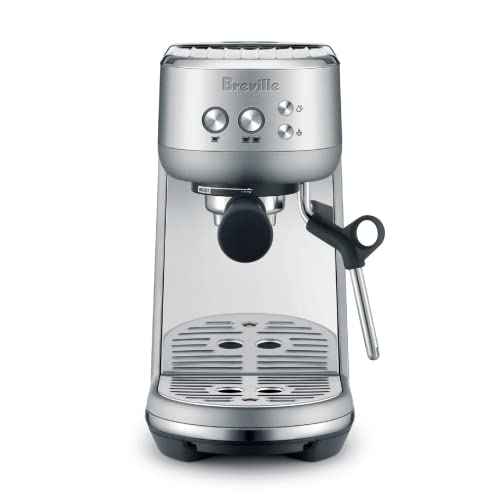
The Breville Bambino Is Noted For Its Ultra-Fast Heat-Up Using A ThermoJet System, Reaching Optimum Extraction Temperature In Seconds. That Feature Reduces Wait Times Between Orders, Which Is Valuable During Peak Food Truck Hours.
It Includes An Automatic Steam Wand For Hands-Free Microfoam Texturing, A 54mm Portafilter For Consistent Dosing, And A Compact Footprint To Fit Tight Serving Areas. While It Lacks An Integrated Grinder, Its speed And build quality Make It Suitable Where A Separate Grinder Is Used.
De’Longhi Stilosa Compact Espresso
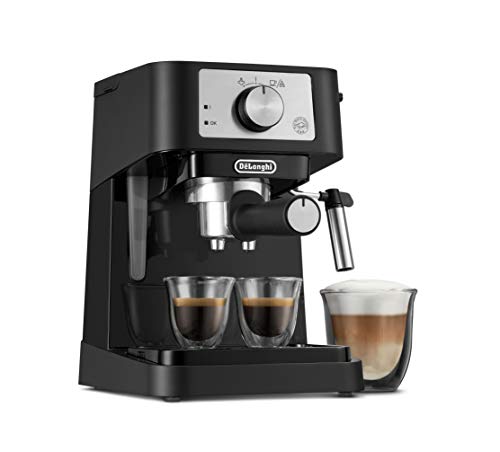
The De’Longhi Stilosa Is A Compact, Straightforward Option Featuring A 15-Bar Pump And A Manual Milk Frother. Its Simple Controls And Small Footprint Make It Easy To Operate And Maintain In Mobile Settings.
This model is engineered for easy cleaning and basic repairs, which can reduce downtime in a food truck. While it doesn’t offer advanced temperature controls or integrated grinders, it delivers consistent extraction for single or double shots with minimal complexity.
Buying Guide For Food Truck Espresso Machines
Selecting an espresso machine for a food truck involves practical trade-offs. Consider the following factors to match equipment to your operation and expected service volume.
Size, Footprint, And Counter Space
Food trucks have limited counter real estate. Prioritize compact machines or models with removable tanks that simplify placement. Measure counter depth and width before purchase.
Power Requirements And Heat-Up Time
Check the machine’s wattage and required voltage. Many trucks use generators or limited circuits, so select machines with manageable power draw. Fast heat-up systems minimize wait time between orders and improve throughput.
Water Supply And Tank Capacity
Decide if you will use a direct water line or refill tanks. Machines with removable water tanks make refill and cleaning easier when a direct hookup is unavailable. Consider tank size relative to daily drink volume.
Durability And Build Material
Stainless steel housings and commercial-grade pumps handle the vibration and movement of mobile service better than fragile plastics. Look for metal components and accessible service parts.
Extraction Consistency And Controls
Pressure gauges, pre-infusion, and temperature controls help maintain consistent shot quality across busy shifts. For focused operations, a reliable pump pressure and thermostat matter more than extra functions.
Grinder Integration Versus Separate Grinder
Integrated grinders save space but reduce flexibility and may be harder to service. Separate grinders allow finer control and quicker replacement. If you plan high-volume service, a robust external grinder may be preferable.
Steam Wand Speed And Milk Texture
Powerful steam wands that create microfoam quickly reduce beverage prep time. Consider automatic steam options if you need consistent milk texture with minimal training.
Cleaning, Maintenance, And Ease Of Repair
Machines with removable components, accessible internals, and simple descaling routines minimize downtime. Check availability of replacement parts and whether the brand supports service in your region.
Noise, Vibration, And Generator Load
Consider the operational noise and vibration levels. High-power pumps and grinders increase generator load. Match equipment to your generator capacity to avoid brownouts and interruptions.
Menu Needs And Beverage Variety
Select a machine that supports the menu: if you serve mostly straight espresso and americanos, focus on extraction consistency. If the menu centers on lattes and cappuccinos, prioritize steaming power and wand control.
Compliance And Food Safety
Ensure the machine’s materials are food-safe and check local health regulations for water handling and waste. Removable tanks and easy-clean steam wands aid compliance during inspections.
Cost Of Ownership
Beyond initial purchase, factor in maintenance, parts, and cleaning supplies. Machines that are easy to service or have local support often reduce total cost of ownership.
Comparison Perspectives
- High Throughput: Prioritize fast heat-up, large boilers, and powerful steam wands.
- Limited Power/Generator: Choose lower wattage units or models with quick recovery and efficient heating systems.
- Space-Constrained Trucks: Favor compact units or integrated grinder options to minimize separate equipment.
- Simplified Operation: Automatic steam and straightforward controls reduce the need for skilled baristas during peak service.
- Durability-Focused: Select stainless steel construction and commercial-grade pumps to withstand mobile service conditions.