Choosing a professional Italian-style espresso machine for home means balancing extraction pressure, temperature control, and milk steaming performance. Below is a quick comparison of five relevant models chosen for their pump quality, grinder options, steam systems, and Italian design cues.
| Product | Key Features | Best For |
|---|---|---|
| Electactic Espresso Machine With Grinder | 20-bar pump, built-in grinder, milk frother | All-in-one setup with adjustable grind |
| Breville Barista Express BES870XL | Integrated conical burr grinder, dose control, pre-infusion | Specialty extraction and hands-on control |
| CASABREWS CM5418 20 Bar | 20-bar Italian pump, pressure gauge, steam wand | Compact machine with visual pressure feedback |
| De’Longhi Linea Classic | Thermoblock temperature control, 15-bar pump, adjustable frother | Stable temperature and classic Italian styling |
| De’Longhi Rivelia Automatic | Built-in burr grinder, one-touch recipes, dual bean hoppers | Automated drinks and multi-bean convenience |
Electactic Espresso Machine With Grinder

This Electactic model combines a 20-BAR Italian pump with a built-in precision conical burr grinder and a 1500W motor for extraction. The grinder offers 30 preset grind settings, enabling adjustments to grind size for different beans and brewing preferences. The steam wand provides hot water and high-pressure steam for textured milk and crema-rich beverages.
Key practical points: removable water tank for refill and cleaning, multi-mode steam/water knob for easy switching, and grinder settings that let users dial in extraction. The integrated grinder simplifies workflow for users who prefer a single integrated unit.
Breville Barista Express BES870XL

The Breville Barista Express is an all-in-one espresso station with an integrated conical burr grinder that grinds on demand into the portafilter. It emphasizes the “4 keys” formula (grind, dose, yield, and time) and uses low-pressure pre-infusion to expand grounds and ensure even extraction.
Its strengths include dose control grinding, good temperature stability through a dedicated heating system, and hands-on controls that suit users aiming for specialty coffee results. The workflow benefits users who want manual control paired with reliable grinder-to-portafilter workflow.
CASABREWS CM5418 20 Bar Espresso Maker

CASABREWS offers a compact espresso maker with a 20-bar professional Italian pump, 1350W boiler, and a removable 34oz water tank. A built-in pressure gauge provides visual feedback for extraction pressure so users can adjust tamp and grind accordingly.
This machine targets users seeking a compact footprint with the ability to create cappuccinos, lattes, and other milk drinks. The steam wand supports microfoam creation, and the stainless steel design emphasizes durability and kitchen compatibility.
De’Longhi Linea Classic Espresso Machine

The De’Longhi Linea Classic blends Italian design with a 15-bar professional pump and Thermoblock technology for fast, stable temperature control. It emphasizes consistent temperature and pressure, which supports reliable shot extraction for multiple drinks.
The adjustable two-setting steam wand simplifies frothing for both steamed milk and microfoam suitable for latte art. The Linea Classic is positioned for users prioritizing temperature stability and traditional Italian brewing workflow rather than integrated bean-to-cup automation.
De’Longhi Rivelia Automatic Espresso Machine
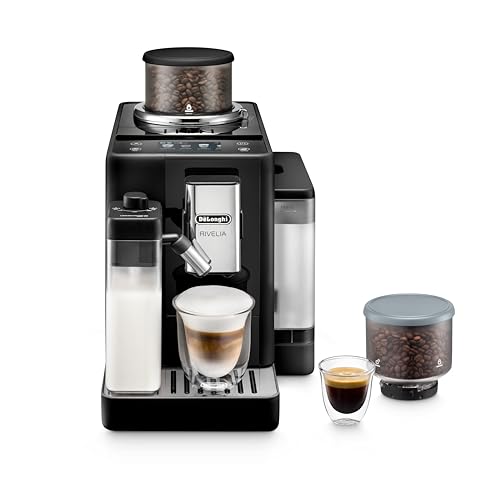
The De’Longhi Rivelia is an all-in-one automatic machine with a built-in burr grinder, one-touch recipes, and a Bean Switch System featuring two removable bean hoppers. It offers 18 preset recipes and customization for intensity, quantity, and extra shots.
This model is suitable for users wanting consistent, automated drink preparation with the flexibility to switch beans quickly. The integrated grinder and customizable presets reduce the manual steps required for specialty beverages while maintaining customization options.
Buying Guide
Selecting a professional Italian-style espresso machine requires attention to four main areas: extraction pressure, temperature control, milk steaming, and grinder integration. Below are detailed considerations to match machine features to your brewing goals.
Extraction Pressure And Pump Type
- 15 Bar vs 20 Bar: Many machines advertise 15–20 bar pumps. Effective espresso extraction depends on stable pressure during the shot and pre-infusion behavior rather than peak bar number alone. Look for machines with tested extraction workflows and pressure gauges if you want visual feedback.
- Italian Pumps: Pumps labeled as Italian typically refer to component origin and build quality. Consider maintenance access and replacement parts availability.
Temperature Control
- Thermoblock vs Boiler: Thermoblock systems heat quickly and save energy; single boilers offer temperature stability for longer back-to-back shots and steaming. Choose based on volume and whether you often prepare multiple milk drinks in succession.
- Pre-Infusion: Low-pressure pre-infusion improves even extraction and flavor balance. If you pursue specialty-level cups, prioritize pre-infusion capability.
Grinder Integration And Grind Control
- Integrated Burr Grinders: Offer convenience and consistent dosing. Look for adjustable grind settings and dose control to match various roasts.
- Separate Grinder: Dedicated grinders typically provide finer control and easier maintenance. If you plan to experiment widely with beans, a separate high-quality grinder is ideal.
Milk Frothing And Steam Wand
- Steam Power: Strong, consistent steam produces microfoam suitable for latte art. Check for adjustable steam settings and wand reach/rotation for pitcher clearance.
- Single Vs Dual Boilers: Dual boilers allow simultaneous brewing and steaming for efficient workflow. Single-boiler machines may require pauses between tasks.
Workflow And User Interface
- Manual vs Automatic: Manual or semi-automatic machines give greater control over extraction parameters; automatic machines provide convenience with presets and one-touch beverages.
- Bean Switching: Dual hopper systems enable fast transitions between bean types without emptying hoppers—useful if you alternate roasts or decaf during the day.
Size, Water Capacity, And Maintenance
- Footprint: Consider counter space and access to plumbing if connecting directly to water lines.
- Water Tank Capacity: Larger tanks require less frequent refilling; removable tanks simplify cleaning.
- Cleaning And Descaling: Check for removable drip trays, accessible brew groups, and manufacturer guidance for descaling intervals.
Durability, Parts, And Serviceability
- Material Quality: Stainless steel boilers and metal components often outlast plastic parts but can add weight and cost.
- Service And Parts Availability: Choose brands with established customer support and replacement part supply, especially for pumps and heaters.
Comparison Perspectives
- Performance-Oriented Users: Favor machines with precise temperature control, pre-infusion, and a quality grinder—Breville models typically fit this need.
- Convenience-Focused Users: Prefer all-in-one automation, one-touch recipes, and dual hoppers—De’Longhi Rivelia exemplifies this approach.
- Budget-Oriented But Capable: Compact 20-bar machines with a professional pump and steam wand provide barista-style drinks in a smaller footprint, as with CASABREWS or CHULUX.
- Traditional Italian Methods: For stovetop, the Moka pot offers authentic Italian-style coffee extraction without pumps, though it differs from pressure-extraction espresso.
Consider which combination of control, convenience, and maintenance matches your daily routine. Matching machine features to your brewing priorities will ensure the best integration into your home coffee setup.