Looking For A French Press With No Plastic Parts? This guide compares five highly relevant plastic-free or minimal-plastic French presses that prioritize purity, heat retention, and filtration. Below is a concise summary table to help you scan options quickly.
| Product | Material Highlight | Capacity |
|---|---|---|
| Teabloom Toulouse Glass French Press | Borosilicate Glass, 100% Plastic-Free | 24 oz (700 mL) |
| Ziruma Surgical Stainless Steel Press | 316 Surgical-Grade Stainless Steel, Double-Wall | 34 oz |
| Teabloom Insulated Double-Walled Glass | Borosilicate Glass + Stainless Steel, 100% Plastic-Free | 34 oz |
| wedrink Borosilicate Glass With Bamboo Lid | Thick Borosilicate Glass, Bamboo Lid, 18/8 Stainless Steel | 34 oz (1000 mL) |
| Frieling Double-Wall Stainless Steel Press | 18/10 Stainless Steel, Double-Wall Insulation | 17 oz |
Teabloom Toulouse Plastic-Free Glass French Press

The Teabloom Toulouse emphasizes 100% plastic-free and lead-free construction using borosilicate glass and stainless steel components. Its design aims for stain- and odor-free brewing, making it suitable for multiple tea steeps or coarse coffee grounds. The plunging press is described as stopping steeping cleanly to reduce over-extraction, which supports clearer flavor profiles.
Included manufacturer details reference an SGS report for material safety. The roomy carafe and open steeping area are noted benefits for tea leaves and coarse grinds to expand and infuse fully. This model targets users prioritizing purity and authentic flavor transfer from vessel to cup.
Ziruma Surgical-Grade Stainless Steel French Press

Ziruma’s press is built from 316 surgical-grade stainless steel and marketed as 100% plastic-free. The double-wall construction provides thermal insulation, retaining heat while keeping the exterior comfortable to touch. A precision 4-layer filter is included to minimize grit and deliver smoother, low-sediment coffee.
This model suits users who want durability and insulation combined with a filter system engineered to reduce fine particles. The stainless finish is inherently resistant to staining and heavy-metal concerns often cited with lesser materials.
Teabloom Insulated Double-Walled Glass French Press

This Teabloom variant combines double-walled borosilicate glass with stainless steel parts to deliver 100% plastic-free brewing and improved heat retention. The plunging mechanism is positioned as a precision control for stopping steeping to avoid bitterness and over-extraction.
The double-insulated glass claims to keep beverages warm longer while maintaining a cool exterior. This model is positioned for connoisseurs who value visual clarity of the brew and insulation without switching to full-metal designs.
wedrink Thick Borosilicate Glass French Press With Bamboo Lid
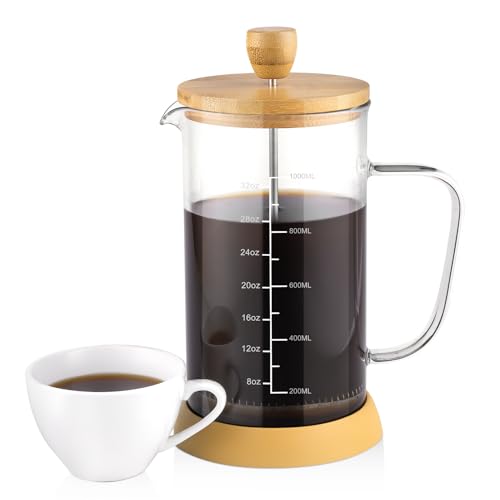
wedrink’s press uses extra-thick borosilicate glass and an eco-friendly bamboo lid, with an 18/8 stainless steel plunger and filter. The absence of plastic and the use of wood and metal address concerns about flavor transfer or plastic-derived taste.
A two-level filter system and stainless steel plunger help reduce grounds in the cup. The product highlights high heat resistance and a visible scale for precise water measurement while recommending brief cooling time before pouring to protect the glass.
Frieling Double-Wall Stainless Steel Insulated French Press

Frieling offers a robust 18/10 stainless steel double-walled press designed for insulation and durability. The dual-screen filter aims for sediment-free brewing. Its heavy-duty construction reduces breakage risk and provides long-term thermal performance.
This press is positioned for portability, travel, and users preferring metal over glass for impact resistance. The product notes dishwasher compatibility and corrosion resistance, highlighting suitability for high-use environments like travel or hospitality.
Buying Guide: How To Choose A Plastic-Free French Press
Choosing the right plastic-free French press depends on material, filtration, heat retention, capacity, and intended use. Below are key factors and comparison perspectives to help make an informed selection.
Material And Health Considerations
- Borosilicate Glass – Offers neutral flavor transfer and visibility of brewing. Glass is inert and resists stains and odors but is breakable.
- Stainless Steel (316 vs 18/10) – 316 grade is highly corrosion-resistant and often marketed for medical-grade safety. 18/10 is common, durable, and offers excellent thermal retention in double-wall designs.
- Bamboo/Wood Components – Visually appealing and plastic-free, but may require more care to avoid warping or staining over time.
Filtration And Brew Quality
- Single vs Multi-Layer Filters – Multi-layer filters reduce fine sediment and produce a cleaner cup. Single mesh can allow more oils and sediment, favored by some for body.
- Plunger Design – Smooth plunges that stop steeping cleanly help avoid over-extraction, particularly for delicate teas.
Heat Retention And Insulation
- Double-Walled Glass – Balances visual brewing experience with improved heat retention compared to single-wall glass.
- Double-Wall Stainless Steel – Best for prolonged thermal retention and travel; also unbreakable in most conditions.
Capacity And Daily Use
- Consider typical serving size—single-serve presses are compact, while 34 oz models support sharing or multiple cups.
- Large glass carafes provide more steeping room for whole leaf teas; smaller insulated presses may be more portable.
Cleaning And Maintenance
- Glass models are generally easier to inspect for residue and often dishwasher-safe, though care with sudden temperature changes is advised.
- Stainless steel models are durable and often dishwasher-safe, but confirm filter disassembly for thorough cleaning.
- Bamboo or wooden lids should be hand-washed and dried to preserve integrity.
Comparison Perspectives
- Flavor Purity – Glass and surgical-grade stainless steel minimize off-tastes from materials. Check manufacturer material tests if available.
- Durability – Stainless steel wins for impact resistance; thick borosilicate glass offers thermal shock resistance but remains breakable.
- Heat Retention – Double-wall designs (glass or steel) retain heat longer than single-wall glass.
- Filtration Preference – Choose multi-layer filters for low sediment; single mesh for fuller-bodied cups with more oils.
When evaluating options, match material advantages to your priority: purity of flavor, portability, thermal performance, or visual brewing experience. Inspect product details for explicit “plastic-free” claims and the presence of any small plastic components such as lids or handles if total absence of plastic is essential.