Choosing the right Greek coffee pot (briki) affects flavor, heat control, and tradition. Below is a concise guide and comparison of five well-reviewed briki options that cover stainless steel, tri‑ply induction‑capable models, and handcrafted copper pots suitable for traditional brewing.
| Product | Material | Capacity |
|---|---|---|
| Caizen Coffee Quality Turkish Coffee Pot | Stainless Steel | 15 oz |
| IMEEA Turkish Coffee Pot (16.9 oz) | 18/10 Stainless Steel, Tri‑Ply | 16.9 oz |
| DEMMEX Thickest Copper Turkish Greek Pot | Copper (1mm), Tin Lined | 9 fl oz |
| Volarium Hammered Copper Coffee Cezve (Small) | Copper, Tin Lined | Small (approx. traditional) |
| BCS 12 Oz Copper Turkish Coffee Pot | Hand Hammered Copper, 2mm | 12 oz |
Caizen Coffee Quality Turkish Coffee Pot – Stainless Steel Briki

This model is constructed from solid stainless steel for long life and easy maintenance. The manufacturer highlights a cool-touch sturdy handle and compatibility with gas, electric coil, and ceramic stovetops. It is not compatible with induction cooktops.
- Durability: Stainless steel resists rust and dents compared to thin copper.
- Heat Performance: Heats quickly and evenly on compatible stovetops.
- Design: Marketed as both functional and decorative for visible countertop use.
Best suited for users who want low‑maintenance brewing and broad stovetop compatibility except induction. The wider stainless shell simplifies cleaning and avoids tin re‑lining concerns found in copper pots.
IMEEA Turkish Coffee Pot Briki – Tri‑Ply Stainless, Induction Compatible

This IMEEA model features a tri‑ply base construction: 18/10 stainless steel inner layer, aluminum core, and 430 stainless outer layer for magnetic properties. The pot is designed to be induction compatible but the bottom diameter (8.4 cm) may not activate every induction cooktop.
- Capacity: 16.9 oz — brews 3–4 servings.
- Practicality: Wide mouth for easier stirring and cleaning; dual pouring spouts for left/right‑handed use.
- Material Benefits: Tri‑ply offers even heat distribution and induction use when compatible.
Choose this briki if you need induction capability with the convenience of stainless steel and a slightly larger capacity for sharing.
DEMMEX Thickest Copper Turkish Greek Coffee Pot – Hand Engraved

This handcrafted copper briki emphasizes traditional brewing with a 1mm thick copper body that heats responsively. The pot is hand‑engraved by artisans and intended to deliver an authentic flavor profile typical of café‑style Turkish coffee.
- Traditional Flavor: Copper’s thermal properties support rapid, even heating and foam development.
- Artisan Finish: Engraved design makes it suitable as a display piece as well as a brewer.
- Constructed For: Stovetop use; copper typically requires tin lining for food safety and easier cleaning.
This option is appropriate for users prioritizing authentic technique and presentation. Copper requires more care and occasional re‑tinning over many years.
Volarium Turkish Coffee Pot – Hammered Copper Cezve

The Volarium briki is fully handmade from thick copper with a hammered exterior and a food‑safe tin lining. The design includes an ergonomic brass‑style handle, and the product is advertised as multi‑purpose for milk warming or small saucepan tasks.
- Craftsmanship: Hammered finish and tin lining for food safety.
- Versatility: Usable as a milk warmer, butter melter, or small sauce pan.
- Handling: Handle may become hot — recommended to use mitts on high heat.
Suitable for buyers who appreciate handcrafted aesthetics and multiuse cookware. The tin lining supports long‑term copper use while maintaining traditional brewing characteristics.
BCS 12 Oz Copper Turkish Coffee Pot With Wooden Handle
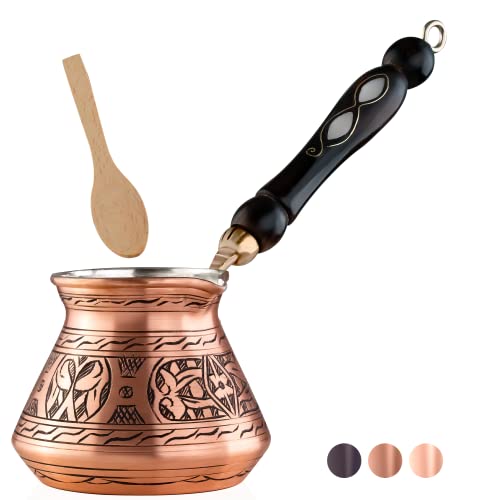
The BCS briki is hand hammered 2mm copper with a tin lining and a wooden handle for comfortable pouring. The set includes a wooden spoon and features a decorative engraved floral pattern.
- Thickness: 2mm copper increases durability and heat consistency versus thinner copper pots.
- Traditional Aesthetics: Engraved motif and wooden handle support classic presentation.
- Compatibility: Compatible with gas, electric, and ceramic cookers; copper is not induction‑ready without adapter.
This pot appeals to users seeking a robust, traditional copper briki with decorative detail and practical wooden handling for safer pours.
Buying Guide: How To Choose The Right Briki
Selecting a briki depends on material, stovetop type, capacity, and maintenance preferences. Below are the most important factors to evaluate.
Material And Brew Characteristics
- Copper: Excellent heat response and favored for authentic foam creation. Usually tin‑lined for food safety. Requires gentle cleaning and periodic re‑tinning over long use.
- Stainless Steel: Low maintenance, corrosion resistant, and easy to clean. May not deliver the same rapid heat response as copper but offers durability.
- Tri‑Ply Stainless (Induction Compatible): Provides balanced heat distribution and works on induction cooktops when base diameter is sufficient.
Stovetop Compatibility
- Confirm whether your briki is compatible with gas, electric coil, ceramic, or induction. Copper and many thin‑bottom pots may not register on induction without a magnetic base.
- For induction users, look for magnetic stainless steel or tri‑ply constructions explicitly listed as induction compatible.
Capacity And Serving Size
- Typical briki sizes range from 8–24 oz. Smaller briki (8–12 oz) yield 2–4 small cups; larger models allow multiple servings or milk heating.
- Consider how many servings you usually prepare and whether you need multiuse capability (milk, sauces).
Handle Design And Safety
- Long handles provide safer pouring and cooler grip. Wooden or coated handles reduce heat transfer.
- Be aware that metal handles on copper pots can become hot; mitts or handle wraps may be necessary.
Cleaning, Maintenance, And Longevity
- Copper requires more care: avoid abrasive cleaners that strip tin lining; dry thoroughly to prevent tarnish.
- Stainless steel is dishwasher‑friendly in many cases, though hand washing prolongs finish.
- For copper, confirm tin re‑lining options and expected maintenance if long‑term use is intended.
Design, Presentation, And Extras
- Hand‑engraved or hammered finishes enhance traditional presentation for serving guests.
- Extras like wooden spoons, dual spouts, or included lids add convenience.
Comparative Perspectives
- Traditionalists: Prefer copper briki for authenticity and flavor response despite higher maintenance.
- Practical Users: Stainless steel or tri‑ply models for low maintenance, even heating, and induction compatibility.
- Entertainers: Larger capacities and decorative finishes support serving multiple guests and display.
Use the above criteria to match a briki to your brewing habits, stovetop, and maintenance willingness. Each material and design offers tradeoffs between authenticity, convenience, and longevity.