Freshly ground coffee improves extraction and flavor. This guide compares five popular Amazon grinders—covering burr vs blade designs, grind range, capacity, and cleanup—to help you match a grinder to your brewing method and routine.
| Product | Type | Key Feature |
|---|---|---|
| Amazon Basics Electric Coffee Grinder | Blade | Quick 1 oz grind, multi-use (spices, nuts) |
| OXO Brew Conical Burr Coffee Grinder | Burr (Conical) | 15 settings + micro-adjustments for uniform grounds |
| BLACK+DECKER One Touch Coffee Grinder | Blade | One-touch control, stainless steel blades |
| CUISINART Electric Burr Grinder DBM-8P1 | Burr (Flat) | 18-position selector, removable hopper and chamber |
| SHARDOR Burr Coffee Bean Grinder | Burr (Flat) | 16 grind settings, 2–14 cup quantity selection |
Amazon Basics Electric Coffee Grinder

This electric blade grinder is designed for quick home use. It can grind up to 30 grams (1 ounce) of beans in about ten seconds, suitable for drip coffee and single-cup servings. The motor and stainless steel blades also handle herbs, spices, grains, and nuts.
Blade grinders create less uniform particle sizes compared with burr designs, which can affect extraction consistency. Strengths: speed, multi-use capability, compact footprint. Considerations: particle uniformity and heat buildup when grinding larger batches.
OXO Brew Conical Burr Coffee Grinder
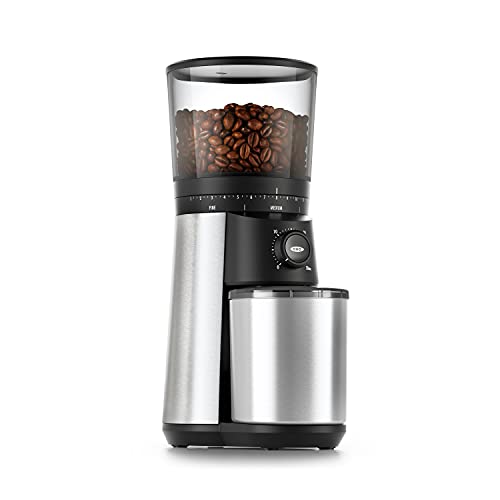
The OXO Brew uses stainless steel conical burrs to produce uniform grounds across a wide range. It offers 15 grind settings plus micro-adjustments, which supports espresso through French press and cold brew.
Its one-touch automatic start remembers the last setting for convenience. Benefits: consistency, fine control over grind size, minimal heat transfer. Considerations: burr grinders are typically larger and require more careful cleaning than blade models.
BLACK+DECKER One Touch Coffee Grinder
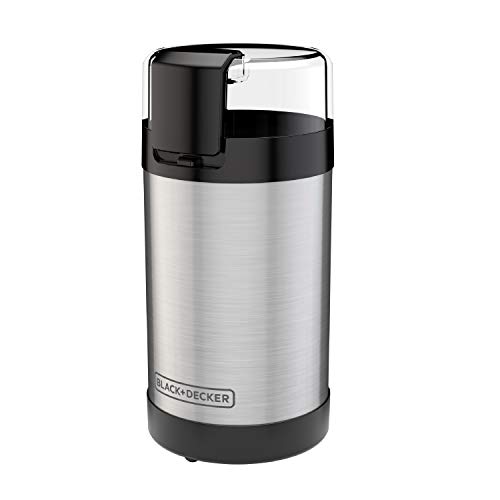
This one-touch blade grinder features stainless steel blades and a durable grinding bowl. It offers easy operation with a push-button control and handles coffee beans, spices, and grains.
Blade grinders like this model are fast and affordable, suitable for users who grind small amounts frequently. Considerations: grind consistency varies based on grinding time; short bursts typically yield coarser grounds, while longer runs produce finer but less uniform particles.
CUISINART Electric Burr One-Touch Grinder
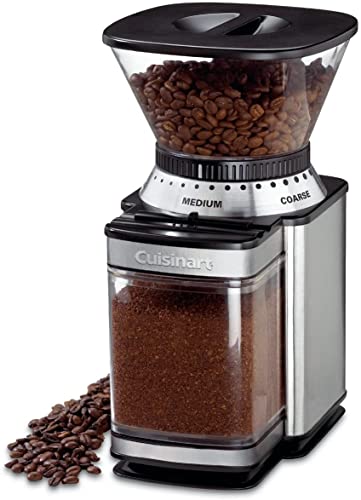
The Cuisinart DBM-8P1 is a flat burr grinder with an 18-position grind selector, enabling settings from ultra-fine to extra-coarse. It includes a removable 8 oz. bean hopper and a removable grind chamber that holds grounds for 4–18 cups (cup size variable).
Strengths: wide grind range, removable parts for easier cleaning, consistent grind size. Considerations: flat burrs may require calibration and periodic cleaning to maintain uniformity; unit size and noise level may be higher than blade grinders.
SHARDOR Burr Coffee Bean Grinder

The SHARDOR burr grinder uses metallic flat burrs and offers 16 precise grind settings. It includes quantity selection for 2–14 cups, making it convenient to grind exact amounts for one cup or a full pot.
Flat burrs help avoid overheating and preserve flavor. Considerations: check grind setting calibration for your brewing method and clean the hopper and burrs periodically to prevent oil buildup.
Buying Guide: How To Choose A Coffee Grinder
This guide covers the main factors to evaluate when selecting a grinder for home coffee brewing.
- Grind Type (Burr vs Blade): Burr grinders (conical or flat) provide uniform particle size, improving extraction and flavor consistency. Blade grinders are cheaper and faster but produce uneven particles and can generate heat with prolonged runs.
- Grind Range And Adjustability: If you brew multiple methods (espresso, pour-over, French press, cold brew), choose a grinder with multiple grind settings and fine adjustments. Micro-adjustments are useful for dialing in espresso.
- Capacity And Batch Size: Match hopper and grind-chamber capacity to your routine. Small hoppers are fine for single servings; larger hoppers suit households that brew multiple cups at once. Consider models with quantity settings to avoid over-grinding.
- Retention And Static: Burr grinders can retain oily grounds in the chute; look for designs with low retention if you switch beans often. Anti-static chambers and materials reduce mess when transferring grounds.
- Build Quality And Burr Material: Stainless steel burrs are durable; ceramic burrs can stay sharp longer and reduce heat transfer. Flat burrs typically yield very uniform particles; conical burrs can be quieter and produce less heat.
- Cleaning And Maintenance: Removable hoppers, grind chambers, and burrs simplify cleaning. Regular cleaning prevents flavor carryover and maintains consistency. Blade grinders often have fewer removable parts but can be harder to clean thoroughly.
- Noise And Size: Consider motor noise and countertop footprint. Burr grinders are usually louder and larger than compact blade units. If you grind early, look for quieter models or schedule grinding when noise is less disruptive.
- Versatility: Some grinders double as spice or nut grinders. If you plan to grind non-coffee items, use separate dedicated grinders or ensure models are easy to clean to avoid cross-contamination.
- Budget And Value: Blade grinders deliver basic function at lower cost. For improved flavor consistency and control, invest in a burr grinder. Assess long-term value based on durability, replaceable parts, and consistent results.
- Comparison Perspectives:
- Best For Espresso: Burr grinder with fine settings and micro-adjustment (conical or flat).
- Best For French Press/Cold Brew: Coarse, uniform grind—choose burr with coarse range.
- Best For Occasional Single Cups: Blade grinder or small burr for convenience.
- Best For Multi-User Households: Larger hopper, quantity settings, and low retention burr designs.