Looking For A Coffee Maker That Minimizes Plastic Contact? This guide compares no-plastic or low-plastic coffee makers built from glass, stainless steel, and bamboo to reduce plastic exposure and improve recyclability. Below is a quick summary of the five products reviewed, followed by detailed look, features, and a buying guide.
| Product | Primary Materials | Style |
|---|---|---|
| The Cosori Pour Over Coffee Maker | Glass decanter, 304 stainless steel filter | Pour-over |
| Sivaphe 34 oz French Press | Borosilicate glass, stainless steel filter, bamboo lid/handle | French press |
| MuellerLiving French Press 34oz | Stainless steel double-walled carafe, stainless filters | French press (insulated) |
| Unbreakable Pour Over Coffee Maker | Borosilicate glass, double stainless filter | Pour-over |
| Hamilton Beach The Scoop Single Serve | Stainless permanent filter, brewer with metal parts (some plastic components possible) | Single-serve drip with reusable filter |
Cosori Pour Over Coffee Maker With Double Layer Stainless Steel Filter

The Cosori Pour Over combines a borosilicate glass decanter with a dual-layer 304 stainless steel filter, eliminating the need for paper filters and reducing plastic contact. The double-layer filter is designed to allow oils and fine coffee particles through for a fuller flavor while still catching grounds.
Features listed include the heat-resistant glass decanter (stovetop-safe on low flame) and a 34-ounce capacity suitable for multiple cups. The materials emphasize metal and glass where coffee contacts are most direct, which aligns with preferences for minimizing plastic exposure.
Sivaphe 34 oz French Press With Bamboo Lid

The Sivaphe French Press uses a high-borosilicate glass carafe, a fine mesh stainless steel filter, and a bamboo lid and handle. The product description highlights that the base and handle are plastic-free, designed to reduce plastic contact and offer a natural aesthetic.
Key features: 34 oz capacity, quick 2–4 minute brew times, and a fine mesh filter intended to prevent grounds in the cup. The glass and wood surfaces contact the coffee directly, which some buyers choose for perceived purity and reduced plastic leaching.
MuellerLiving French Press 34oz Stainless Steel

MuellerLiving’s French Press is a double-walled stainless steel unit with multiple fine filters. The rust-free stainless construction aims to keep coffee hot and is frequently chosen where durable metal contact surfaces are preferred over plastic.
Features include an insulated carafe that supports longer heat retention, an immersion brewing method for full-bodied flavor, and dishwasher-safe components. Stainless steel surfaces that contact coffee are food-grade, which is a common requirement when avoiding plastic-lined pathways.
Unbreakable Pour Over Coffee Maker With Double Stainless Filter

The Unbreakable Pour Over is marketed with a thickened borosilicate glass carafe and a double stainless steel filter. The design promotes manual control of extraction and minimizes disposable filters and plastic contact where the water and coffee meet.
Product features highlight ergonomic handling with an anti-drip spout and stovetop safety. The double stainless filter is intended to provide consistent extraction and reduce waste from paper filters, aligning with low-plastic and sustainable preferences.
Hamilton Beach The Scoop Single Serve Coffee Maker & Fast Grounds Brewer
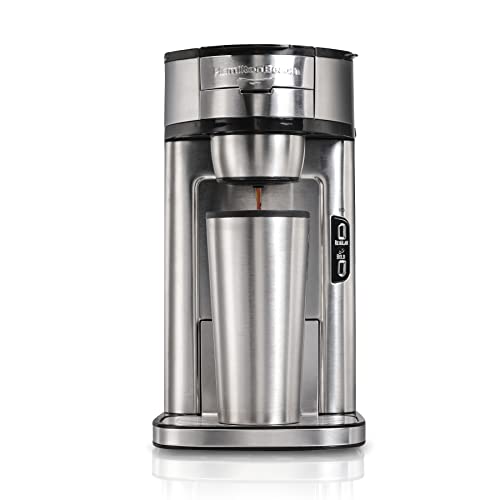
Hamilton Beach The Scoop is a single-serve brewer that uses a permanent filter which doubles as a scoop, allowing brewing with ground coffee instead of single-use plastic pods. The product highlights reusable filtration to reduce waste and skip K-Cups and paper filters.
Features include adjustable cup size (8–14 oz), a reusable metal filter, and a design that simplifies ground coffee use. Note that while the filter is reusable stainless, many single-serve units include exterior plastic components; buyers prioritizing zero-plastic contact should review full material details before purchase.
Buying Guide: Choosing A Healthiest, Low-Plastic Coffee Maker
Materials In Contact With Coffee: Prioritize stainless steel, glass, ceramic, or untreated wood for any component that touches hot water or coffee. These materials are less likely to leach chemicals compared to some plastics.
Filter Type: Metal (stainless steel) or cloth filters eliminate single-use paper and plastic pods. Metal filters preserve oils and body, while paper removes more oils for a cleaner cup. Consider what aligns with taste and waste preferences.
Brewing Style And Control: Pour-over and French press offer manual control and minimal mechanical plastic contact. Automatic drip machines may use plastic water tanks, reservoirs, or internal tubing—check manufacturer material specs if zero-plastic contact is required.
Heat Resistance And Safety: Look for borosilicate glass
Insulation And Heat Retention: Double-walled stainless or insulated presses reduce the need for warming plates and preserve flavor without additional plastic-lined warming surfaces.
Ease Of Cleaning: Dishwasher-safe glass and stainless parts reduce buildup. French press meshes and double filters require regular cleaning to avoid oils accumulating and affecting taste.
Sustainability And Waste: Reusable metal filters and glass carafes reduce single-use waste. Consider compostable pods or recyclable packaging when single-serve convenience is needed, but verify claims for compostability and compatibility.
Durability And Repairability: Metal and glass parts are often replaceable and more durable over time. Check availability of replacement filters, lids, and carafes.
Taste Considerations: Immersion methods (French press) deliver fuller body; pour-overs with stainless filters preserve more oils than paper. Choose based on desired flavor profile.
Certification And Food Safety: Look for food-grade stainless (304/18-8) and verified material claims. Manufacturers sometimes list BPA-free on plastic components; if avoiding plastic entirely, confirm which parts contain plastic.
Capacity And Use Case: Consider cup count, portability (if camping), and whether you need single-serve or multi-cup brewing. For travel, stainless insulated presses may be preferred for durability.
Multiple Comparison Perspectives: Compare how each option handles heat, filtration, and direct material contact. Pour-overs minimize mechanical parts but require manual pouring; French presses emphasize immersion and simplicity; single-serve with reusable filters offers convenience but may still include some plastic exterior.
Using these criteria, match the brewing method and materials to your priorities for health, taste, sustainability, and convenience.