Choosing the right industrial coffee grinder means balancing capacity, grind consistency, durability, and serviceability. The table below summarizes five commercial-capable grinders from the selected list to help compare core specs at a glance.
| Product | Brand | Key Strength |
|---|---|---|
| OXO Brew Conical Burr Coffee Grinder | OXO | Precision stainless-steel burrs, versatile grind range |
| Bunn G3 HD 3 lb Bulk Coffee Grinder | BUNN | High throughput, 3 lb hopper for continuous service |
| Huanyu 60mm Flat Burr Coffee Grinder | Huanyu | 60mm flat burrs, stepless adjustment for precision |
| BUNN 1-Pound Bulk Coffee Grinder | BUNN | Turbo action for fast one-pound grinding cycles |
| La Pavoni Commercial 2.2 lb Grinder | La Pavoni | Large grindstones, low motor placement to reduce heat |
Bunn G3 HD 3 lb Bulk Coffee Grinder

The Bunn G3 HD is designed for high-volume environments where continuous grinding is required. Its 3 lb hopper minimizes refill frequency, and the model emphasizes speed with the ability to grind one pound in under 30 seconds. The turbo-style grinding path and dedicated cleaning lever simplify maintenance by clearing residual beans from the grind chamber.
Features referenced: Fast grinding, 3 lb hopper, and cleaning lever. Considerations include motor cooling and replacement burr availability if used in round-the-clock operations. The unit targets cafes, small restaurants, and office bulk-prep stations where throughput and minimal downtime are priorities.
BUNN 1-Pound Bulk Coffee Grinder

The BUNN 1-Pound Bulk Coffee Grinder focuses on quick cycle grinding for frequent batch use. Its hopper holds up to 1 pound of beans and the turbo action design draws beans through the grind chamber for sustained efficiency. The specification of one pound in under 30 seconds suits venues preparing consistent batch sizes.
Features referenced: 1-pound hopper, turbo action, and fast grinding. This model is appropriate where moderate bulk capacity and rapid processing are needed. Evaluate burr wear schedules and ventilation in continuous-run settings to maintain consistent grind quality over time.
La Pavoni Commercial 2.2 Pound Grinder
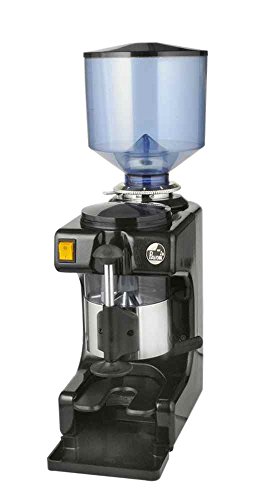
The La Pavoni Commercial grinder features a heavy-duty design with 63.5mm diameter flat grindstones and a larger 2.2-pound capacity. The low-mounted motor reduces heat transfer to beans, preserving flavor during high-volume use. Seal-slide technology prevents bean spillage during cleaning, which supports hygienic maintenance routines.
Features referenced: Low motor placement, seal-slide tech, and large flat grindstones. Its die-cast aluminum body provides structural durability for commercial counters. Ideal for specialty cafés and small roasters that require both large-capacity grinding and careful heat control for flavor integrity.
Aromaster 48 Grind Settings Conical Burr Grinder
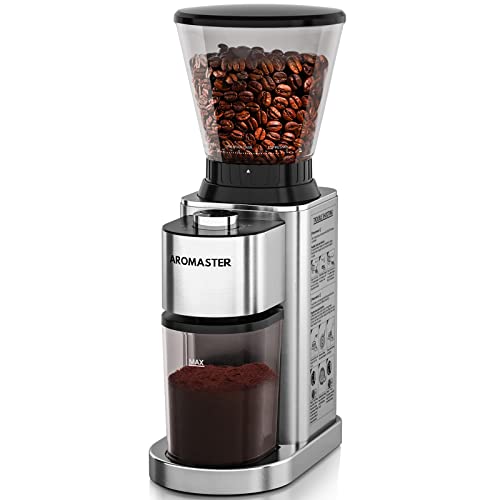
The Aromaster grinder emphasizes grind versatility with 48 settings and a large chamber that can process up to 3.9 ounces per cycle, making it a candidate for offices or smaller commercial settings requiring a wide range of grind profiles. Its anti-static technology and stainless steel burrs aim to reduce mess and heat generation during grinding.
Features referenced: 48 grind settings, anti-static tech, and stainless steel burrs. Consider this unit where menu variety and grind precision are important but throughput demands are moderate. Check durability and serviceability expectations if used for sustained commercial shifts.
Huanyu 60mm Flat Burr Adjustable Grinder

The Huanyu model uses a 60mm stainless steel flat burr and stepless adjustment via an 8-position dial for fine tuning grind thickness. Its anti-jump bean design and magnetic ground outlet reduce static and mess. The hopper capacity and build target serious home baristas and light-commercial applications.
Features referenced: Stepless adjustment technology, 60mm flat burr, and anti-static/magnetic outlet. This grinder suits settings that prioritize extraction control and consistent particle distribution, such as espresso bars and small specialty outlets where batch sizes are smaller but grind accuracy is critical.
Buying Guide: Key Considerations For Industrial Coffee Grinder Equipment
Selecting industrial coffee grinders requires evaluating technical specs alongside operational needs. Below are the main factors to weigh when comparing equipment from throughput, grind quality, and long-term cost perspectives.
Capacity And Throughput
- Hopper Size: Larger hoppers (1–3+ pounds) reduce refill frequency in busy venues. Match hopper size to peak service volume.
- Grind Speed: Throughput metrics (e.g., one pound per 30 seconds) matter for continuous-service environments. Faster units reduce wait times but may require more cooling.
Grind Quality And Versatility
- Burr Type And Size: Conical vs flat burrs influence particle distribution; larger burrs (60mm+) generally offer more consistent grinds for commercial use.
- Adjustment Range: Stepped or stepless adjustments affect how precisely you can target espresso, filter, and coarse brews.
- Heat Control: Motor placement, low-speed motors, or cooling designs help preserve bean flavors during extended runs.
Durability And Serviceability
- Construction Materials: Die-cast aluminum, stainless steel burrs, and robust housings extend equipment life in commercial settings.
- Replaceable Parts: Check availability of burr replacements, motor service, and the ease of cleaning grind chambers.
- Maintenance Features: Removable hoppers, sealing mechanisms for cleaning, and cleaning levers simplify daily care.
Operational Practicalities
- Anti-Static Measures: Built-in anti-static tech or magnetic grounds collectors reduce waste and keep counters cleaner.
- Noise and Vibration: Consider acoustic impact for front-of-house placement; heavier, well-mounted units can reduce vibration.
- Power And Installation: Ensure electrical requirements and ventilation are compatible with your location and workload.
Comparison Perspectives
- High Throughput vs Precision: Choose Bunn models for raw speed and hopper capacity; choose flat-burr units like Huanyu or La Pavoni when extraction control and particle uniformity are highest priority.
- Durability vs Budget: Commercial-grade die-cast and larger burrs increase initial cost but lower long-term replacement and downtime expenses.
- Versatility vs Specialization: If you need broad menu flexibility, prioritize grinders with wide adjustment ranges and anti-static features; for single-style shops (e.g., espresso-only), prioritize stable, consistent burr geometry and heat control.
When selecting a grinder, align capacity and grind quality with your service model, plan for routine maintenance, and confirm replacement parts and technical support options to sustain consistent operations.