Choosing the best Italian automatic espresso machine depends on factors like bean-to-cup automation, milk frothing, grinder quality, and build materials. Below is a quick comparison of five top machines available on Amazon that match those criteria.
| Model | Type | Key Strength |
|---|---|---|
| Philips 2200 Series (EP2220/14) | Fully Automatic | Easy touch display, ceramic grinder |
| De’Longhi Rivelia | Super Automatic | Two bean hoppers, 18 presets |
| De’Longhi Linea Classic | Semi-Automatic / Professional | Italian pump, thermoblock temperature control |
| Breville Barista Express (BES870XL) | Semi-Automatic with Integrated Grinder | Precision dose grinding, low-pressure pre-infusion |
| QJA 2025 Updated Model | Semi-Automatic | 20-bar pump, touch LED control |
Philips 2200 Series Fully Automatic Espresso Machine

The Philips 2200 Series is a fully automatic machine designed for straightforward bean-to-cup brewing. It offers two core drink profiles: Espresso and Coffee, and includes a classic milk frother for cappuccino preparation. The machine uses a 100% ceramic grinder to preserve flavor and reduce wear. An AquaClean filter extends filter life and reduces descaling frequency. The intuitive touch display makes choosing drinks and adjusting basic settings simple. The unit targets buyers who want automation and low-maintenance grinding combined with essential milk-texturing capability.
De’Longhi Rivelia Automatic Espresso Machine
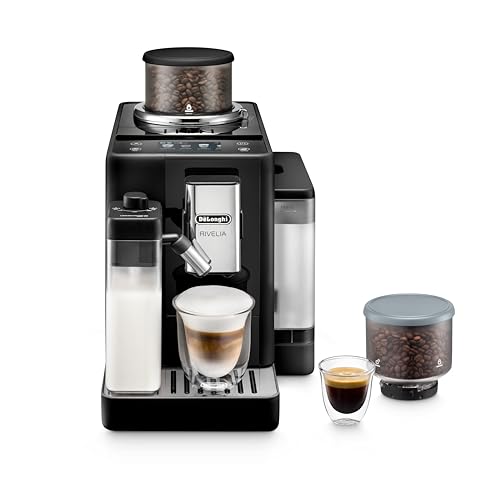
The De’Longhi Rivelia is a super-automatic model with extensive one-touch options and advanced personalization. It offers 18 preset recipes including lattes, cappuccinos, iced drinks, and espresso-based variations. Customization includes adjusting intensity, volume, and an extra shot function. A notable hardware feature is the two removable bean hoppers (Bean Switch System) that let you switch between bean types without emptying the hopper. The integrated burr grinder has 13 settings, enabling different grind textures for varied drinks. This model suits users who want a wide recipe range and fast, repeatable results.
De’Longhi Linea Classic Espresso Machine

The De’Longhi Linea Classic follows a professional, Italian design approach. It features a 15-bar Italian pump for consistent extraction and Thermoblock temperature control for rapid, stable heat. The two-setting steam wand allows adjustment from steamed milk to microfoam for latte art. As a machine leaning toward semi-automatic operation, it requires more user input (grinding, dosing, tamping) but provides control favored by users who want hands-on espresso preparation with reliable temperature and steam performance. Stainless steel construction emphasizes durability and a commercial aesthetic.
Breville Barista Express Espresso Machine

The Breville Barista Express blends integrated grinding with manual barista techniques. It offers dose-control grinding where the precision conical burr grinder delivers ground beans directly into the portafilter. Low-pressure pre-infusion gradually increases pressure during extraction for balanced flavor. Users control tamping, extraction time, and steaming, which makes this machine suitable for those developing barista skills. The unit’s build and features appeal to users seeking an all-in-one semi-automatic experience with direct influence on shot quality.
QJA Espresso Machine With Touch Screen

The QJA 2025 Updated Model is a semi-automatic espresso machine featuring a 20-bar Italian pump and a 1400W boiler for quick heating and extraction. An LED touch screen allows programmable brewing time and cold extraction options, plus a pre-impregnation function for improved flavor extraction. The removable nozzle on the steam wand simplifies cleaning. This model targets users who want programmable convenience and higher pressure extraction while retaining manual control over milk work and dosing.
Buying Guide: How To Choose An Italian Automatic Espresso Machine
When comparing machines, consider these core factors to match the appliance to your routine and expectations.
1. Automation Level
- Fully Automatic / Super-Automatic: Bean-to-cup with one-touch recipes and automated milk systems. Best for convenience and consistent results.
- Semi-Automatic: Requires manual grinding/tamping or manual steam wand work. Offers greater control for users refining espresso skills.
2. Grinder Type And Settings
- Ceramic vs Steel Burrs: Ceramic burrs (like Philips) resist heat and preserve flavor; steel burrs can be faster but heat more quickly.
- Adjustability: More grind settings permit dialing in extraction for different beans and roast levels.
3. Pump Pressure And Boiler/Temperature Control
- Pressure: 9–15 bar is typical for espresso; many consumer machines advertise 15–20 bar pumps. Consistent pressure and stable temperature are more important than peak numbers.
- Boiler Type: Thermoblock and single boilers heat fast; dual boilers or heat exchangers provide more precise steaming and brewing for advanced users.
4. Milk Frothing And Steam Performance
- Automatic Milk Systems: Provide consistent milk texture for lattes and cappuccinos with minimal skill.
- Manual Steam Wands: Allow more texture control and latte art for hands-on users, but need practice.
5. Bean Hoppers And Flexibility
- Dual Hoppers: Useful for alternating bean types (e.g., decaf and regular) without swapping or emptying hoppers.
- Ground-Bypass: A ground coffee chute is helpful for pre-ground or decaf use.
6. Ease Of Cleaning And Maintenance
- Detachable Water Tanks and Drip Trays: Simplify cleaning and refilling.
- Descaling / Filter Systems: Machines with water filters reduce descaling frequency; accessible parts reduce long-term maintenance.
7. Build Quality And Materials
- Stainless Steel Components: Improve durability and heat retention compared with plastic bodies.
- Internal Plumbing Materials: Food-safe materials reduce risk of flavor contamination over time.
8. Personalization And Presets
- Preset Recipes: Useful for quick one-touch drinks; customizable presets let you save personal preferences.
- Programming Options: Adjustable shot volume, temperature, and strength are important for tuning espresso flavor.
9. Space, Noise, And Power
- Footprint: Consider countertop space and clearances for hoppers and steam wands.
- Noise Level: Integrated grinders and pumps can be loud; check user feedback if noise matters.
- Power Draw: Higher-watt boilers heat faster but require adequate circuit capacity.
10. Use Case Scenarios
- Casual Drinkers: Fully automatic machines that produce consistent cups with minimal input.
- Enthusiasts: Semi-automatic machines with integrated grinders for skill development and customization.
- Entertaining / Multi-User: Machines with multiple presets, larger water tanks, or dual hoppers provide flexibility for diverse preferences.