Finding an authentic Italian moka pot that works on induction requires attention to materials and design. Below is a concise comparison table followed by objective, feature-focused summaries of five induction-compatible Italian coffee makers. Each product section links to its Amazon page and includes the manufacturer features for quick reference.
| Product | Brand | Capacity |
|---|---|---|
| Bialetti – New Venus Induction | Bialetti | 6 Cups (7.9 Oz) |
| Bialetti – Moka Induction | Bialetti | 6 Cups (9.4 Oz) |
| Bialetti Moon Exclusive Induction | Bialetti | 4 Espresso Shots (5.7 Oz) |
| Easyworkz Diego Stovetop Espresso Maker | Easyworkz | 12 Cups (17.5 Oz) |
| SIXAQUAE Moka Induction (Glass-Top) | SIXAQUAE | 6 Cups (240ml) |
Bialetti – New Venus Induction Stovetop Coffee Maker

Materials And Compatibility: Constructed from 18/10 stainless steel, the New Venus is specified as an original induction coffee maker suitable for all hob types. The stainless steel construction aims to deliver durability and induction compatibility.
Design And Use: The product notes highlight a blend of tradition and innovation with a distinctive design. Usage instructions specify adding ground coffee and turning off the heat when the unit gurgles, aligning with standard moka brewing technique.
Key Features: Made in Italy design, stainless steel 18/10 construction, suitable for induction and other stovetops, straightforward brewing method. The information focuses on build quality and compatibility rather than specific brewing nuances.
Bialetti – Moka Induction, Moka Pot For Induction

Materials And Construction: The Moka Induction pairs an aluminum upper part—like the classic Moka Express—with a stainless steel boiler to enable induction use. This hybrid approach aims to preserve classic moka performance while ensuring induction compatibility.
Heritage And Manufacturing: The product is noted as Made In Europe by Bialetti, the inventor of the Moka Express, and carries brand identifiers intended to convey original design lineage and manufacturing standards.
How To Use: Instructions mirror traditional moka process: fill boiler to the safety valve, add ground coffee to the filter, close, heat until gurgle, then remove from heat. The safety valve position is emphasized for correct filling and safe operation.
Bialetti Moon Exclusive Induction Stainless Steel Moka Pot

Construction And Capacity: Built from 18/10 stainless steel, the Moon Exclusive emphasizes durability and an induction-friendly base. The listed 4-cup model produces approximately 5.7 oz total, defined here as espresso shots rather than mug-sized servings.
Intended Use And Notes: The description clarifies that cup counts refer to espresso servings. It also outlines the same basic moka brewing steps: fill, add ground coffee, heat until gurgle, then stop heating.
Applicability: Marketed for universal stovetop compatibility, the focus is on material quality and consistent construction across stovetop types, including induction.
Easyworkz Diego Stovetop Espresso Maker Stainless Steel
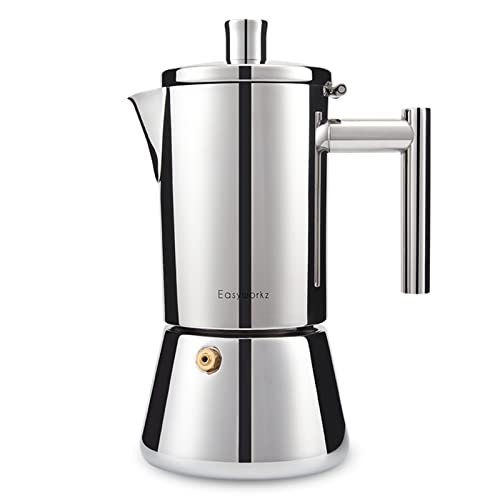
Materials And Capacity: The Easyworkz Diego uses 18/8 stainless steel with a heavy gauge magnetic stainless steel base for induction compatibility. The model cited is a 12-cup (17.5 fl. oz / 520 ml) capacity intended for larger batches.
Design Details: Features include a heat-resistant hollow insulated lid and a handle grip. The description mentions dishwasher safe construction and polished finish for corrosion resistance and ease of cleaning.
Brewing Recommendation: The manufacturer suggests a specific coffee-to-water ratio for optimal strength (approximately 40g coffee for the 12-cup capacity) and highlights fast brewing suitable for multiple small espresso servings.
SIXAQUAE Moka Induction Stovetop Espresso Maker With Glass Top

Hybrid Materials: This model combines borosilicate glass for the top window with 304 food-grade stainless steel, enabling visual monitoring of extraction while maintaining induction compatibility on the steel base.
Functionality: The visible glass top is intended to help users observe the espresso as it brews, allowing control over extraction timing. The manufacturer lists support for induction, ceramic, gas, and electric stovetops.
Sizes And Use: Available in multiple sizes, the 6-cup (240ml) version follows traditional moka technique and targets consumers who value visual feedback during brewing and stainless-steel safety for induction use.
Buying Guide: How To Choose An Induction-Compatible Italian Coffee Maker
Material And Base Construction: Induction stovetops require a magnetic base. Look for stainless steel (18/10, 18/8, 304) or a stainless steel base paired with other materials. Aluminum upper bodies may be paired with stainless steel bottoms to retain classic flavor while enabling induction use.
Capacity And Serving Size: Moka pot “cups” typically refer to small espresso servings (≈50 ml). Confirm whether the listed capacity meets your intended serve size—4, 6, or 12 small espresso servings differ from regular mug volumes.
Safety Features: Check for a clearly placed safety valve and pressure-resistant design. Proper safety valves help relieve excess pressure and are an important safety component for stovetop espresso makers.
Handle, Lid, And Heat Resistance: Insulated or heat-resistant handles and lids reduce handling risk. Hollow insulated lids and secure handles provide safer operation when removing the pot from a hot hob.
Cleaning And Maintenance: Stainless steel models generally tolerate dishwasher cleaning, though manufacturers may recommend hand washing to preserve gaskets and finishes. Removable parts and simple assembly improve maintenance convenience.
Design Preferences: Classic aluminum Moka Express models offer a traditional brewing profile, while full stainless steel designs prioritize induction compatibility and durability. Glass-top options allow visual extraction monitoring but require careful handling.
Brand And Manufacturing: Established Italian brands may emphasize heritage and specific manufacturing origins. “Made In Italy” or “Made In Europe” labels indicate production location, which some buyers consider for authenticity or quality expectations.
Heat Distribution And Brewing Speed: Thicker, heavy-gauge bases and well-fitted parts support even heating and consistent extraction. Larger capacity pots can take longer to heat and may require adjustments in grind size or heat level to avoid over-extraction.
Compatibility With Cooktops: Confirm that the product description explicitly lists induction as supported. Some moka pots advertise universal stovetop compatibility but may differ in how efficiently they perform on induction surfaces.
Capacity Versus Portability: If you need a moka pot for travel or camping, smaller stainless steel models weigh less and heat faster, while larger units suit home use when brewing for multiple people.