Looking For a reliable moka pot to make real Italian-style coffee at home? Below are five well-regarded options ranging from the classic aluminum Moka Express to stainless steel and electric variants. A summary table follows to help you compare key attributes at a glance.
| Product | Type | Material | Capacity |
|---|---|---|---|
| Bialetti Moka Express 3-Cup | Stovetop Classic | Aluminium | 4.4 oz / 130 ml |
| Bialetti Moka Express 6-Cup | Stovetop Classic | Aluminium | 6 oz |
| Primula Classic 6-Cup | Stovetop | Cast Aluminum | 6 demitasse cups |
| Easyworkz Diego 4-Cup | Stovetop Induction-Ready | 18/8 Stainless Steel | 6.8 oz / 200 ml |
| Vaolvpant Electric 6-Cup | Electric Moka | Stainless Steel | 300 ml / 6 cups |
Bialetti Moka Express 3-Cup

The Bialetti Moka Express is identified as the original stovetop espresso maker, designed in 1933. Its aluminium body and distinctive shape are noted for producing the classic moka extraction style. The unit includes a patented safety valve and an ergonomic handle, and is described as suitable for gas and electric stovetops; induction use requires an adapter plate.
Preparation steps listed by the manufacturer emphasize filling the boiler to the safety valve, adding ground coffee without tamping, and removing the pot from heat when gurgling begins. The product’s heritage and procedural guidance make it a reference choice for traditional Italian coffee brewing.
Bialetti Moka Express 6-Cup
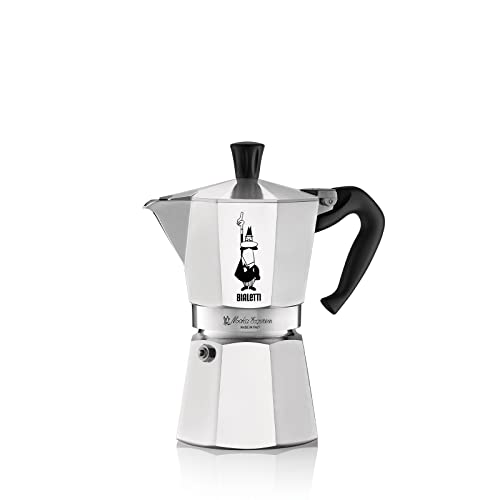
This larger 6-cup Moka Express retains the same design and features as the smaller model. It is Made in Italy and also includes the patented safety valve and ergonomic handle for safe pouring. The manufacturer indicates it is available in multiple sizes and can be used on gas and electric stoves; induction requires a separate adapter plate.
The product features the same brewing instructions: fill to the safety valve, fill the filter with ground coffee without pressing, brew on stovetop, and stop when gurgling occurs. The 6-cup capacity targets households seeking a greater yield while preserving the traditional moka brewing method.
Primula Classic Stovetop 6-Cup

The Primula Classic is a cast aluminum moka pot designed to produce six demitasse-style servings. Its features include even heat distribution and a reusable filter, plus a flip-top lid with heat-resistant knob and handle for safe pouring.
Instructions indicate simple operation: fill the lower chamber with water, add ground coffee to the filter, and place on the stovetop. The product is positioned for versatility—suitable for making moka, Cuban-style coffee, lattes and cappuccinos when combined with milk-based preparations.
Easyworkz Diego 4-Cup Stainless Steel
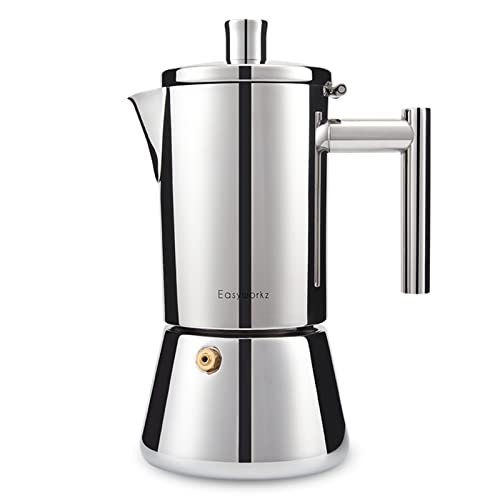
The Easyworkz Diego moka pot is constructed from 18/8 stainless steel, marketed as induction-ready due to a magnetic heavy-gauge base. The design emphasizes corrosion resistance, high-polish finish, and dishwasher safety. The product includes a heat-resistant hollow insulated lid and handle grip.
It is specified to brew four espresso cups (~6.8 oz / 200 ml). The manufacturer recommends a fine grind (approximately 16g) for optimal extraction. The stainless steel construction targets users who require induction compatibility and dishwasher tolerability.
Vaolvpant Electric 6-Cup Stainless Steel

The Vaolvpant Electric Moka Pot offers an automatic, plug-in brewing option for those who prefer an electric appliance. It provides a 6-cup capacity (300 ml) and an automatic power-off function when the brewing temperature threshold is reached. The lid design allows viewing the coffee level and the handle is described as ergonomic.
Features highlight convenience: fill with water and coffee, plug in, and press start. While it lacks a heat preservation function, the detachable base and stainless steel body provide an alternative for users who prioritize countertop automation over a stovetop process.
Buying Guide: How To Choose The Right Moka Pot
Material: Aluminium moka pots are traditional and heat up quickly, often delivering the classic flavor profile. Stainless steel
Capacity: Select a size that matches your typical serving need. Moka pot “cups” are small demitasse portions; a 3-cup produces roughly one or two espresso-style servings, while 6-cup and larger models serve multiple people.
Heat Source Compatibility: Confirm whether your stovetop is gas, electric, ceramic, or induction. Aluminium pots often require an induction adapter plate, while stainless steel bases are commonly magnetic and induction-ready.
Safety Features: Look For A patented safety valve or pressure relief; this is a standard safety component in many established brands. Ergonomic, heat-resistant handles reduce the risk of burns during pouring.
Ease Of Cleaning: Consider whether the pot is dishwasher-safe or requires hand washing. Aluminium models typically recommend hand washing to preserve finish and flavor, while some stainless steel models are dishwasher compatible.
Authenticity Of Brew: Traditional aluminum moka pots yield the classic Italian moka profile. If you want a stovetop ritual, aluminum models from heritage brands emphasize traditional extraction techniques and instructions.
Electric vs Stovetop: Electric moka pots offer plug-and-play convenience and automatic shutoff, useful for counters without stovetops. Stovetop models are preferred by users who value manual control over extraction and heat.
Included Accessories: Check for accessories such as induction adapter plates, replacement gaskets, spare filters, or bundled specialty coffee that can affect immediate usability.
Grind And Coffee Selection: Choose a grind specifically calibrated for moka pots—finer than drip but coarser than espresso machine grind. Some brands provide blends or ground coffee labeled for moka brewing, formulated to extract balanced flavor and crema-like texture.
Durability And Warranty: Review manufacturer guidance on lifespan, material grade (e.g., 18/8 stainless steel), and warranty coverage. Cast aluminum can be long-lasting when cared for properly, stainless steel often provides increased longevity and ease of maintenance.
Flavor Goals: If you prefer the traditional Italian profile, aluminum moka pots from established Italian makers are commonly recommended. If you want flexibility across heat sources and easier maintenance, stainless steel or electric alternatives may be more suitable.