Discover reliable moka pots that deliver authentic Italian-style coffee at home. Below is a quick comparison of the five selected stovetop moka makers featured in this guide.
| Product | Brand | Capacity | Material / Compatibility |
|---|---|---|---|
| Bialetti Moka Express 6 Cup | Bialetti | 6 Cups | Aluminum; gas/electric (induction with adapter) |
| Bialetti New Venus Induction | Bialetti | 6 Cups (7.9 oz) | 18/10 Stainless Steel; induction-friendly |
| Primula Classic Stovetop Espresso | Primula | 6 Espresso Cups | Cast Aluminum |
| GROSCHE Milano 6 Cup | GROSCHE | 6 Cups | Anodized Aluminum |
| Easyworkz Diego 4 Cup Stainless | Easyworkz | 4 Cups (6.8 oz) | 18/8 Stainless Steel; induction |
Bialetti Moka Express 6 Cup

Overview: The Bialetti Moka Express is the classic Italian stovetop moka pot known for its octagonal shape and long heritage. It is designed to produce a concentrated coffee similar to espresso using pressure from steam.
- Material: Traditional aluminum construction.
- Compatibility: Works on gas and electric stovetops; induction use requires an adapter plate.
- Key Features: Patented safety valve, ergonomic handle, easy disassembly for cleaning.
- Use: Fill boiler to safety valve, add ground coffee without pressing, heat until gurgle, then remove from heat.
Bialetti New Venus Induction 6 Cup

Overview: The Venus is Bialetti’s stainless steel alternative designed for modern cooktops. It aims to combine traditional moka extraction with induction compatibility and stainless durability.
- Material: 18/10 stainless steel, polished finish.
- Compatibility: Suitable for gas, electric, and induction hobs without an adapter.
- Key Features: Robust build for longevity and a similar brewing method to classic moka pots.
- Use: Fill, load coffee, close, and heat until the pot gurgles; remove from heat when done.
Primula Classic Stovetop Espresso And Coffee Maker

Overview: Primula’s classic moka pot offers a cast aluminum construction and a reusable filter, targeting users who want quick stovetop espresso-style coffee in small servings.
- Capacity: Produces six demitasse/espresso servings.
- Material: Cast aluminum for even heat distribution.
- Design Features: Flip-top lid, heat-resistant knob and handle for safer pouring.
- Use: Lower chamber water, add ground coffee to filter, heat until coffee fills top chamber, remove from heat to serve.
GROSCHE Milano Stovetop Espresso Maker 6 Cup

Overview: GROSCHE’s Milano is offered in anodized aluminum with a focus on ease of use and compatibility across many stovetops. It positions itself as simple to operate for consistent moka extraction.
- Material: Food-grade anodized aluminum.
- Compatibility: Works on gas, electric, and propane camping stoves; slow on glass induction (non-magnetic).
- Key Features: Premium silicone gasket, available in multiple sizes, designed for moka, Cuban, or Greca style coffee.
- Use: Similar moka method: fill, add coffee, heat, and remove at gurgle.
Easyworkz Diego 4 Cup Stainless Steel Moka Pot
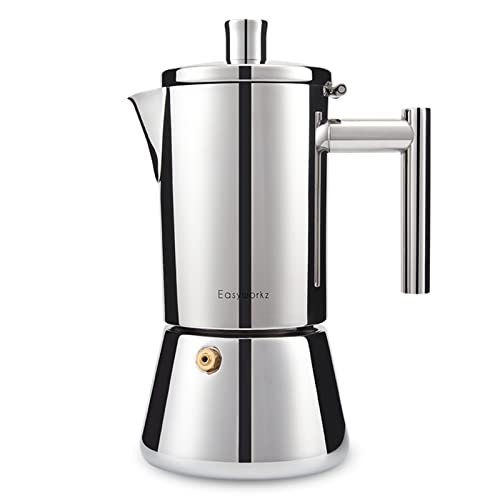
Overview: The Diego model uses 18/8 stainless steel with a magnetic base for induction. It targets users who want a smaller capacity stainless-steel moka suitable for modern kitchens.
- Material: 18/8 stainless steel with mirror polish; dishwasher safe.
- Compatibility: Gas, electric, and induction-ready due to magnetic base.
- Key Features: Heat-resistant hollow lid and insulated handle, easy to disassemble and clean.
- Use: Best brewed with fine ground coffee; recommended fill and heat until extraction completes.
Buying Guide: How To Choose The Right Moka Coffee Maker
Capacity And Serving Size: Choose a size that matches your typical serving needs. Moka cups are smaller than standard coffee cups; a 6-cup moka often yields 6 demitasse servings.
Material Considerations: Aluminum models heat quickly and are traditional for moka pots, offering classic flavor extraction. Stainless steel models are more durable, compatible with induction, and resist corrosion.
Cooktop Compatibility: Confirm compatibility with your stovetop. Aluminum moka pots are ideal for gas and electric; stainless steel models usually work on induction without an adapter.
Safety Features: Look for a certified safety valve and secure handles. A safety valve regulates internal pressure and is standard on many reputable brands.
Ease Of Cleaning: Consider whether the pot is dishwasher safe or requires hand washing. Stainless steel versions are often dishwasher friendly; aluminum pots generally benefit from hand washing to preserve finish.
Gasket And Filter Quality: Inspect the gasket material and the filter/liner. High-quality silicone or rubber gaskets and a reusable filter improve seal and longevity. Replacement gasket availability is useful.
Heat Distribution And Build: Cast aluminum and anodized bodies provide even heating. Thicker stainless steel bases improve heat stability on induction cooktops.
Flavor And Brewing Control: Moka extraction is sensitive to grind size, water temperature, and heat management. Choose a pot that allows you to observe gurgling and remove it promptly to avoid burning. Consider models with visible lid designs for easier monitoring.
Design And Durability: Classic aesthetics vs modern finishes: Bialetti’s aluminum design is iconic, while stainless models provide a sleeker, long-lasting look. Weight, handle ergonomics, and lid design affect daily use.
Use Case Comparisons:
- Traditionalists: Prefer aluminum Bialetti or Primula for the classic experience and flavor profile.
- Modern Kitchens With Induction: Stainless steel models like Bialetti Venus or Easyworkz Diego provide direct induction support.
- Outdoor Or Camping: Anodized aluminum GROSCHE works on propane stoves and is durable for travel.
- Small Households: 4-cup stainless options offer compact brewing with induction compatibility.
Maintenance And Spare Parts: Check availability of replacement gaskets and filters. Routine descaling and gasket replacement extend service life. Keep spare parts specifications handy when buying.
Cost Versus Longevity: Balance initial cost with expected durability and serviceability. Stainless steel models tend to offer longer useful life and broader stovetop compatibility, while aluminum units deliver traditional performance at lower weight.