The Japanese approach to cold brew emphasizes gentle extraction, clarity of flavor, and elegant design. This guide compares five popular Japanese-style cold brew makers available on Amazon, highlighting features, materials, capacity, and brewing methods to help you choose the best option for your kitchen.
| Product | Type | Capacity |
|---|---|---|
| Hario “Mizudashi” Cold Brew Coffee Maker | Immersion Glass Server With Mesh Filter | 1000ml |
| Yama Cold Brew Maker | Slow Drip Tower With Wood Frame | 32oz (6–8 cups) |
| Hemli Cold Drip Coffee Maker | Cold Drip Tower (Hand-Blown Glass) | 32oz |
| HANWUDI Cold Drip Coffee Maker | Slow Drip Tower (Glass) | 20oz |
| Hario “Mizudashi” Cold Brew Tea Maker (used as coffee) | Immersion Glass Server With Mesh | 1200ml |
Hario “Mizudashi” Cold Brew Coffee Maker
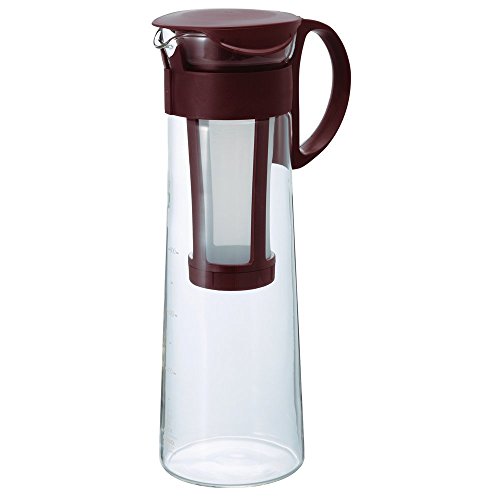
Type: Immersion cold brew; Material: Heatproof glass with fine mesh filter; Capacity: 1000ml. The unit uses a removable fine mesh basket to contain grounds while brewing in the refrigerator. The slender spout is designed for controlled pouring directly from the glass server. Hario recommends coarse grind for lighter results or finer grind for more body. The removable filter simplifies cleaning and reuse. This model emphasizes simplicity, glass construction, and direct serving, suitable for users who prefer immersion cold brew stored in the fridge for several hours.
Yama Cold Brew Maker With Slow Drip

Type: Slow drip cold brew tower; Material: Glass reservoirs with wood frame; Capacity: ~32oz (makes 6–8 cups). The Yama tower uses an adjustable slow-drip valve and an ice water reservoir to control extraction rate. Faster extraction times (3–4 hours) are possible while preserving low acidity and full body. Its drip technology targets precise extraction of flavor compounds, especially desirable for single-origin beans. The wood frame and multi-chamber design highlight a traditional Japanese slow-drip aesthetic for tabletop presentation and manual control over drip rate.
Hemli Cold Drip Coffee Maker Tower

Type: Cold drip tower; Material: Hand-blown borosilicate glass; Capacity: 32oz. Hemli’s tower emphasizes low-temperature extraction with a 5-hour brew time to reduce acidity and enhance smoothness. The product highlights an innovative aerating coil meant to increase body and reduce bitterness for a rounded finish. Assembly is required since components are hand-blown. This unit focuses on producing a bold but smooth cold brew through extended drip extraction and premium glass craftsmanship.
HANWUDI 20oz Cold Drip Coffee Maker
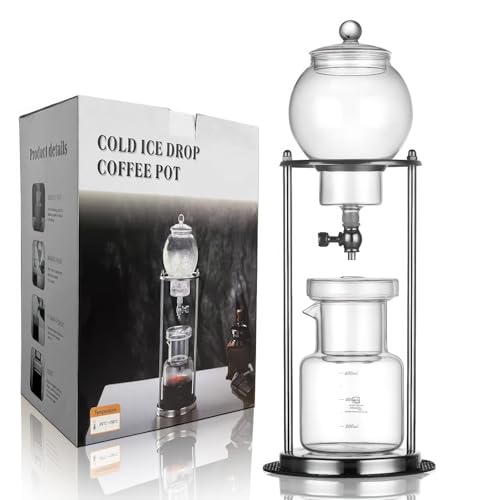
Type: Slow drip tower; Material: Glass; Capacity: 20oz. HANWUDI emphasizes easy adjustment of drip speed and straightforward operation for beginners. The product claims to fully extract flavor at low temperature, yielding fresh iced coffee with balanced acidity and pronounced fruit, nut, and chocolate aromas. The lower capacity suits individuals or small households and the sealed carafe below is intended to lock in aroma. This model balances convenience and flavor extraction for those new to slow-drip brewing.
Hario “Mizudashi” Cold Brew Tea Maker (As Coffee Server)

Type: Immersion pitcher with mesh filter; Material: Heatproof glass; Capacity: 1200ml. Although sold as a tea maker, the Mizudashi tea pitcher shares the same glass-and-filter design useful for cold brew coffee. It stores easily in the refrigerator and features Hario’s signature heatproof glass. The larger capacity may be preferable for households needing more batch volume. Use the same immersion principles: coarse grind, cold water, refrigerated extraction time adjusted to taste.
Buying Guide: Choosing The Right Japanese Cold Brew Coffee Maker
Selecting the best Japanese cold brew coffee maker depends on brewing style, capacity needs, materials, and desired flavor profile. Below are key considerations and comparison perspectives to guide a purchase.
Brewing Method: Immersion Vs. Slow Drip
- Immersion (e.g., Hario Mizudashi): Grounds steep in water for hours, typically refrigerated. Pros: simple, low-maintenance, consistent yield for batch brewing. Cons: longer steep times and possible sediment if filter is coarse.
- Slow Drip/Tower (e.g., Yama, Hemli, HANWUDI): Water drips slowly through grounds, offering precise control over extraction. Pros: clarity of flavor, lower perceived acidity, more control of extraction rate. Cons: typically more fragile, requires setup and monitoring of drip rate.
Material And Durability
- Glass (borosilicate or heatproof): Offers neutral flavor contact and visual appeal; hand-blown glass can be fragile but often higher quality. Consider storage and handling to avoid damage.
- Plastic/Tritan (not in selected list): More durable and lighter, but some users prefer glass for flavor neutrality. If portability matters, Tritan variants elsewhere can be suitable.
Capacity And Household Size
- Smaller towers (20–32oz) fit single users or couples and reduce waste. Larger immersion pitchers (1000–1200ml) suit families or offices. Match capacity to consumption frequency and refrigerator space.
Filtration And Cleanup
- Fine Mesh Filters: Reduce sediment but may slow drainage during serving. Removable baskets ease cleanup.
- Drip Towers: Require cleaning of multiple components and careful assembly; consider ease of disassembly and dishwasher compatibility.
Flavor Goals And Extraction Control
- Low Acidity, Smooth Body: Slow-drip systems with adjustable valves can yield clearer, less acidic brews preferred for delicate single-origin beans.
- Rich, Bold Cold Brew: Immersion methods with finer grind or extended steep time provide a stronger concentrate for iced coffee or milk-based drinks.
Design And Aesthetics
- Japanese-style makers often prioritize minimalist design and natural materials. Consider whether the brewer will be used as a functional appliance or a display piece on a countertop or table.
Practical Considerations
- Storage And Fridge Fit: Measure refrigerator shelves and door compartments to ensure the pitcher or tower fits comfortably.
- Assembly And Learning Curve: Towers provide control but require patience to dial in drip rate and grind size. Immersion units are beginner-friendly and consistent.
- Cleaning Frequency: If daily brewing is planned, favor designs with fewer parts and simple cleaning steps.
Multiple Comparison Perspectives
- Performance vs. Convenience: Towers excel at flavor nuance; immersion pitchers excel at ease of use.
- Cost of Ownership: Consider fragility and potential replacement parts (filters, valves) for towers versus the long-lived simplicity of a single glass carafe.
- Use Case: For specialty tasting and presentation, towers are preferable. For regular household batch brewing, immersion pitchers are efficient.