Pretend coffee makers encourage role play, fine motor skills, and social interaction in young children. Below is a quick comparison of five highly relevant play coffee makers available on Amazon, followed by short product overviews and a practical buying guide to help choose the best option for your child.
| Product | Type | Best For |
|---|---|---|
| Casdon De’Longhi Toys Barista Coffee Machine | Realistic Electronic Toy | Older Preschoolers Who Enjoy Detailed Role Play |
| CASDON Morphy Richards Coffee Maker (Fillable) | Fillable, Water-Action Toy | Kids Who Like Hands-On Brewing Simulation |
| Casdon Morphy Richards Complete Kitchen Set | Appliance Playset | Children Wanting Multiple Appliances |
| Melissa & Doug Brew And Serve Wooden Coffee Set | Wooden Accessory Set | Classic, Durable Pretend Play |
| Fisher-Price Laugh & Learn Coffee Café | Interactive Toddler Learning Toy | Toddlers Needing Educational Play Features |
Casdon De’Longhi Toys Barista Coffee Machine

This electronic play coffee machine is modeled after a real De’Longhi la Specialista and includes moving parts, realistic sounds, and a magic coffee reveal. It supports role-play scenarios like making americanos and frothy cappuccinos, encouraging imaginative café play.
Features emphasize coordination and fine motor development through working buttons and interactive elements. The design targets children aged 3+ and aims to simulate a real barista experience while promoting social skills via shared play.
CASDON Morphy Richards Fillable Coffee Maker
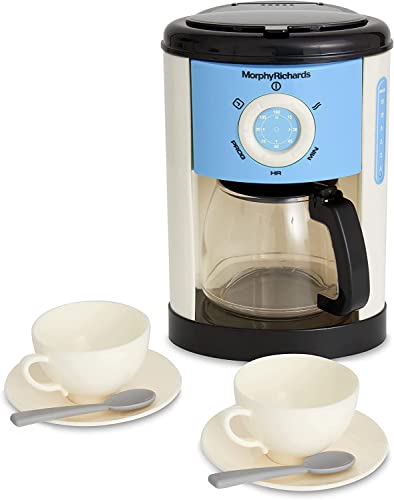
This fillable toy coffee maker offers a simple water-action brewing simulation. Kids can fill the chamber with water, watch it filter into the pot, and pour the “brew” into included cups. A clear water level indicator helps children learn measurement and process sequencing.
The hands-on mechanism supports cause-and-effect learning and fine motor control. The device is aimed at preschoolers who enjoy tactile, realistic play that mirrors real kitchen tasks without complex electronics.
Casdon Morphy Richards Complete Kitchen Set

This playset combines a coffee maker, kettle, toaster, and several accessories for more expansive role play. The coffee maker component is fillable and shows a water flow into the pot, complementing other appliance features like a pop-up toaster.
The set encourages multi-step play and cooperative scenarios such as hosting a breakfast or tea party. It supports development of social skills, sequencing, and practical life play through multiple, realistic appliance interactions.
Melissa & Doug Brew And Serve Wooden Coffee Set

This 11-piece wooden set includes a coffee maker, two mugs, coffee pods, sugar and creamer, a spoon, and a menu card. The dial turns and the lid opens and closes to simulate brewing and size selection.
Made from wood, this set emphasizes durability and simple imaginative play without electronics. It supports language development, role assignment, and fine motor skills through manipulation of small pieces.
Fisher-Price Laugh & Learn Coffee Café

This interactive toddler toy includes over 100 songs, sounds, and phrases across three Smart Stages levels. It ships with 10 pretend-play pieces such as cups, a milk pitcher, and play treats, and focuses on early learning topics like shapes, numbers, and sharing.
Designed for children 18+ months, this set prioritizes educational interaction and age-appropriate stimulation. The audio prompts and multiple play pieces make it suitable for early language and cognitive development.
Buying Guide: How To Choose A Kids Play Coffee Maker
When selecting a play coffee maker, consider the child’s age, play style, safety requirements, and educational goals. Below are key factors to weigh before purchasing.
Age Appropriateness
- Toddlers (18 months–3 years): Choose simple, robust toys with large parts and interactive sounds like the Fisher-Price Coffee Café to support early learning.
- Preschoolers (3–5 years): Fillable or electronic models with realistic mechanics, such as Casdon’s De’Longhi or Morphy Richards toys, suit older preschoolers comfortable with more complex role play.
Play Style And Realism
- Fillable Water-Action: Mimics real brewing and teaches cause-and-effect; requires more supervision and occasional water cleanup.
- Electronic With Sounds: Offers immersive role play via lights and noises; useful for sensory engagement but often runs on batteries.
- Wooden/Accessory Sets: Encourage imaginative storytelling and are durable for shared play without electronics.
Educational Value
- Look for toys that promote fine motor skills (buttons, dials, pouring), sequence learning (step-by-step brewing), and social skills (serving others, turn-taking).
- Electronic options with verbal prompts can support vocabulary and counting practice.
Safety And Durability
- Check for non-toxic paints, smooth edges, and pieces sized to reduce choking risk for younger children.
- Wooden sets typically offer longevity; plastic electronics provide features but can break if handled roughly.
- For fillable toys, ensure water compartments seal properly to avoid leaks and mold risk.
Storage And Cleanup
- Compact sets or toys with built-in storage help keep play areas tidy.
- Consider how easily parts can be cleaned—removable cups and simple surfaces are preferable.
Maintenance And Batteries
- Electronic toys will need batteries; check the type and expected runtime.
- Inspect moving parts periodically for wear and clean as recommended by the manufacturer.
Comparative perspective: choose wooden accessory sets for durability and open-ended play, fillable toys for realistic tactile experiences, and electronic models when sensory engagement and educational audio prompts are priorities. Match the toy’s complexity to the child’s developmental stage to maximize learning and enjoyment.