Looking For A Stovetop Espresso Maker That Can Brew Larger Quantities For Family Or Entertaining? Below Are Five Larger-Capacity Moka Pots And Stovetop Espresso Makers From Trusted Brands, With A Quick Comparison To Help You Choose.
| Product | Capacity | Material / Key Feature |
|---|---|---|
| Primula Classic Stovetop Espresso Maker | 6 Cups (Demitasse) | Cast Aluminum, Reusable Filter |
| Mongdio 12-Cup Stovetop Espresso Maker | 12 Cups (20 oz) | Food-Grade Cast Aluminum, Safety Valve |
| Bialetti Venus Induction 6-Cup | 6 Cups | 18/10 Stainless Steel, Induction Ready |
| GROSCHE Milano 6-Cup Moka Pot | 6 Cups | Anodized Aluminum, Silicone Gasket |
| Easyworkz Diego 4-Cup Stainless Steel | 4 Cups (6.8 oz) | 18/8 Stainless Steel, Induction Ready |
Primula Classic Stovetop Espresso Maker

The Primula Classic Is A Cast Aluminum Moka Pot Designed To Produce Six Demitasse/Espresso Servings Quickly. It Uses A Reusable Filter And Has A Flip-Top Lid With A Heat-Resistant Knob And Handle For Safer Pouring.
Operation Is Traditional: fill The Lower Chamber With Water, Add Ground Coffee To The Basket, Assemble And Heat. The Cast Aluminum Body Promotes Even Heat Distribution, Which Can Improve Consistency Across Multiple Servings.
Mongdio 12-Cup Stovetop Espresso Maker

The Mongdio 12-Cup Model Is The Largest Option Here, Offering Approximately 20 Ounces Of Brew Capacity. Constructed From Food-Grade Cast Aluminum, It Emphasizes Fast, Even Heating And Includes A Built-In Safety Valve To Regulate Pressure.
Available In Multiple Sizes, This 12-Cup Version Targets Users Who Need To Serve Several Cups In One Cycle. The Design Includes A Heat-Resistant Handle And A Pour Spout For Easier Serving, And The Unit Is Designed For Simple Rinsing And Maintenance.
Bialetti Venus Induction 6-Cup

The Bialetti Venus Is A Stainless Steel Stovetop Espresso Maker Built For All Hob Types, Including Induction. Made From 18/10 Stainless Steel, It Combines Traditional Moka Operation With A Material That Offers Improved Durability And Rust Resistance Over Aluminum Pots.
Bialetti’s Venus Uses The Same Moka Brewing Principle: fill The Boiler Up To The Safety Valve, Add Ground Coffee Without Pressing, Then Heat Until The Pot Gurgles. Stainless Construction Tends To Retain A Different Thermal Profile Than Aluminum, Which Can Affect Extraction And Flavor.
GROSCHE Milano 6-Cup Moka Pot

The GROSCHE Milano Uses Anodized Aluminum Construction And Is Offered In A 6-Cup Size That Targets Household Use. It Features A Silicone Gasket And Standard Moka Components To Deliver A Strong, Concentrated Brew That Works Well With Milk-Based Drinks.
This Model Is Designed For Gas, Electric, And Some Glass-Top Stoves. While It Can Heat Slowly On Induction Due To Nonmagnetic Materials, The Milano Focuses On Consistent Extraction And Ease Of Use For The Typical Moka Workflow.
Easyworkz Diego 4-Cup Stainless Steel
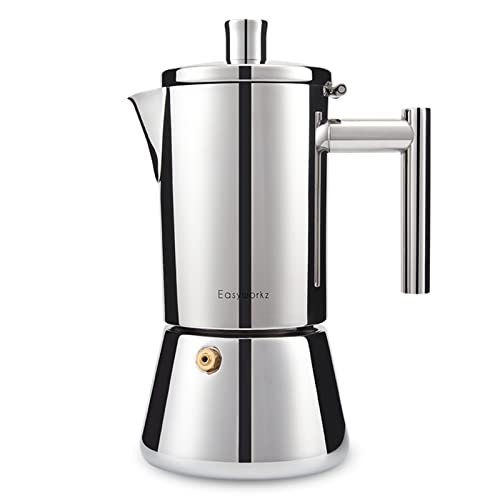
The Easyworkz Diego Is Constructed From 18/8 Stainless Steel With A Heavy-Gauge Magnetic Base For Induction Compatibility. Rated To Brew Four Espresso Cups (~6.8 oz), It Emphasizes Durability, Heat-Resistant Handles, And Dishwasher-Friendly Cleaning.
Stainless Steel Changes Heat Transfer Compared To Aluminum, Which May Require Minor Adjustments To Brew Time And Heat Level. The Diego Targets Users Who Want Induction Support Without Sacrificing The Moka-Style Brew Method.
Buying Guide For Large Stovetop Espresso Makers
Choosing A Larger Stovetop Espresso Maker Requires Balancing Capacity, Material, Heat Source Compatibility, And Practical Maintenance. Below Are Key Factors To Consider Before Purchase.
Capacity And Intended Use
- Number Of Servings: Consider How Many Demitasse Cups You Need Per Brew. Models Range From 3–12 Cups; 6–12 Cups Are Best For Serving Multiple People.
- Batch Consistency: Larger Chambers May Need Slightly Different Grind Or Heat Settings To Maintain Even Extraction Compared To Small Pots.
Material: Aluminum Vs Stainless Steel
- Aluminum: Heats Quickly And Generally Produces Traditional Moka Character. Lightweight But Can React With Acidic Coffee Over Time And Is Not Always Dishwasher-Safe.
- Stainless Steel: More Durable, Corrosion-Resistant, And Often Induction-Ready. It Heats Differently, Which May Require Adjusted Brew Times.
Stove Compatibility
- Induction: Choose A Magnetic Stainless Steel Base Or Use An Adapter Plate For Aluminum Pots.
- Gas/Electric/Glass: Most aluminum and stainless models are compatible; glass-top stoves may heat aluminum more slowly.
Safety Features And Build Quality
- Safety Valve: Look For A Reliable Pressure Relief Valve Especially On Larger Pots To Regulate Pressure Safely.
- Handles And Knobs: Heat-Resistant, Secure Handles Improve Pouring Control For Larger Volumes.
- Gaskets And Filters: Replaceable Gaskets And Reusable Filters Extend Service Life And Performance.
Cleaning And Maintenance
- Hand Wash Vs Dishwasher: Aluminum Is Usually Hand Wash Only; Stainless Steel May Be Dishwasher-Safe—check manufacturer guidance.
- Descaling And Residue: Regular Rinsing And Occasional Vinegar Soaks Help Remove Coffee Oils And Maintain Flavor Integrity.
Flavor And Brewing Variables
- Grind Size: Use A Medium-Fine Grind For Moka Pots; Too Coarse Can Under-Extract, Too Fine Can Over-Extract Or Cause Excess Pressure.
- Heat Control: Moderate Heat Produces Better Extraction; High Heat Can Lead To Bitter Or Scalded Notes.
- Water Level: Fill To The Safety Valve Mark For Consistent Volume And Pressure.
Comparison Perspectives
- Capacity Vs Speed: Larger Pots Brew More Coffee But May Require Longer Heat Cycles; factor that into morning routines.
- Material Choice Impact: Aluminum Models Typically Deliver The Classic Moka Profile Faster; stainless steel offers longevity and induction use.
- Portability And Use Case: If You Often Entertain Or Brew For Multiple People, A 6–12 Cup Pot Is Practical; For Solo Use, Smaller Units Save Space.