Choosing A Moka Pot For Induction means prioritizing materials and base design that work with magnetic cooktops. Below is a quick comparison of five induction-compatible moka pots selected for durability, compatibility, and brewing performance.
| Product | Material | Capacity |
|---|---|---|
| Bialetti – Moka Induction | Aluminum Upper / Stainless Steel Boiler | 6 Cups (280 ml) |
| Bialetti Moon Exclusive Induction | 18/10 Stainless Steel | 6 Espresso Shots (235 ml) |
| Easyworkz Diego Stainless Steel | 18/8 Stainless Steel (Magnetic Base) | 6 Cups (300 ml) |
| Collgene Stainless Steel Moka Pot | Food-Grade Stainless Steel | 6 Cups (300 ml) |
| LAOION Stainless Steel 4 Cup | Premium Stainless Steel | 4 Cups (200 ml) |
Bialetti – Moka Induction, 6 Cups

Design And Compatibility: The Bialetti Moka Induction combines an aluminum upper chamber with a stainless steel boiler engineered for induction hobs. The mixed-material approach preserves the classic Moka profile while enabling magnetic cooktop use.
Key Features: Made In Europe by Bialetti, includes the patented safety valve and follows the traditional Moka brewing method. Instructions: fill boiler to the safety valve, add ground coffee to the filter, and stop heating when gurgling begins.
Who It Fits: Users seeking the traditional Moka aesthetic with direct induction compatibility and heritage brand recognition. The hybrid construction aims to balance flavor characteristics of an aluminum upper with induction practicality.
Bialetti Moon Exclusive Induction Stainless Steel

Construction And Finish: Built from 18/10 stainless steel for durability and an unmistakable polished look. Full stainless design provides even heat distribution on induction, gas, and electric cooktops.
Capacity And Use: Rated in espresso shots (6-cup = about 7.9 oz). Easy to operate: fill base with water, add ground coffee to the basket, and remove from heat when gurgling begins.
Suitability: Ideal for buyers who prefer all-stainless designs for longevity, dishwasher-safe options, and consistent performance on induction surfaces.
Easyworkz Diego Stainless Steel Moka Pot 6 Cup

Materials And Build: Constructed from 18/8 stainless steel with a heavy-gauge magnetic base suited to induction cooktops. Features heat-resistant hollow insulated lid and ergonomic handle for safe handling.
Performance Notes: The base is specifically described as magnetic stainless steel to ensure induction compatibility. Dishwasher safe and easy to disassemble for cleaning.
Who Should Consider: Those wanting a durable, polished stainless option with practical safety features and explicit induction support for everyday use.
Stainless Steel Moka Pot Espresso Maker 6 Cups – Collgene

Construction And System: Food-grade stainless steel with a wear-resistant chrome finish and a design optimized for gas, induction, and electric cooktops. Uses pressure extraction to replicate concentrated espresso-style brew.
Capacity And Usage: 6-cup capacity (10 oz/300 ml) designed for faster brewing times and consistent extraction. Heat-resistant construction is intended for high-temperature durability.
Best For: Buyers prioritizing robust stainless steel construction, induction compatibility, and a larger 6-cup yield for entertaining or daily brewing.
LAOION Stovetop Espresso Maker 4 Cup Stainless Steel
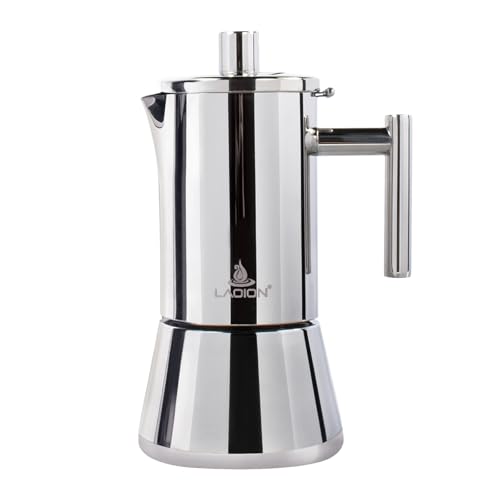
Design Highlights: Premium stainless steel construction with a compact 4-cup capacity (200 ml). Marketed for compatibility across gas, electric, and induction stovetops.
Use Case: Suitable for individuals or couples who prefer smaller batches, easy handling, and a stainless finish for longevity and easy cleaning.
Practical Considerations: The smaller size reduces brewing time and is convenient for limited counter space or intermittent coffee drinkers who want induction compatibility.
Buying Guide: Choosing The Right Induction-Compatible Moka Pot
Material And Induction Compatibility: Induction cooktops require a magnetic base. Stainless steel (especially with a magnetic ferritic base) is inherently induction-friendly. Some moka pots use an aluminum upper with a stainless steel boiler to combine traditional flavor with induction support.
Base Construction: Look for a clearly stated magnetic base or full stainless steel construction. Claims like “compatible with induction” should refer to a magnetic bottom rather than only listing stovetops generically.
Capacity And Serving Size: Moka pot “cups” typically refer to espresso shots, not standard mugs. Choose capacity based on servings: 3–4 cups for singles/couples, 6 cups for small groups or multiple drinks.
Heat Distribution And Brewing Control: Stainless steel models often provide more even heat transfer on induction surfaces. Hybrid aluminum/stainless models can preserve the classic extraction profile—consider whether you prioritize flavor nuance or induction efficiency.
Handle, Lid, And Safety Valve: Heat-resistant handles and knobs reduce burn risk. Ensure the safety valve is present and accessible for maintenance. Replaceable gaskets and filters extend lifespan.
Cleaning And Maintenance: Stainless steel options are generally easier to clean and are often dishwasher safe. Aluminum tops may require hand washing and careful drying to avoid oxidation.
Build Quality And Warranty: Look for reputable brands and products made with food-grade stainless steel (18/10 or 18/8) and clear warranty or support information. European-made models often emphasize traditional manufacturing standards.
Brewing Style And Flavor Preference: If you prefer the classic Moka Express flavor, hybrid models emulate that profile. Full stainless designs tend to yield a cleaner, more neutral extraction. Consider which taste profile matches your preference.
Size, Weight, And Storage: Consider countertop space and portability needs. Smaller pots heat faster and are easier to store; larger pots suit households or entertaining.
Compatibility With Induction Models: Verify that your specific induction cooktop brand and model supports small-diameter cookware. Very small moka bases may not activate some induction zones efficiently.
Additional Features: Look for replaceable parts, gasket availability, and whether the product includes user instructions for optimal brewing on induction hobs.