Finding a Moka pot that works reliably on an induction cooktop involves checking construction, base compatibility, and capacity. Below is a concise comparison of five induction-ready Moka pots so you can match features to your kitchen and brewing needs.
| Product | Material | Capacity | Induction Ready |
|---|---|---|---|
| Bialetti – Moka Induction | Aluminum Upper / Stainless Steel Boiler | 4 Cups (5.7 oz) | Yes |
| Bialetti Moon Exclusive | 18/10 Stainless Steel | 6 Espresso Shots (7.9 oz) | Yes |
| Easyworkz Diego | 18/8 Stainless Steel | 4 Cups (6.8 oz) | Yes |
| SIXAQUAE Moka Induction | Borosilicate Glass Top + 304 Stainless Base | 6 Cups (240 ml) | Yes |
| GROSCHE Milano Steel | Stainless Steel | 6 Espresso Cup Option | Yes |
Bialetti – Moka Induction, Moka Pot, 4 Cups
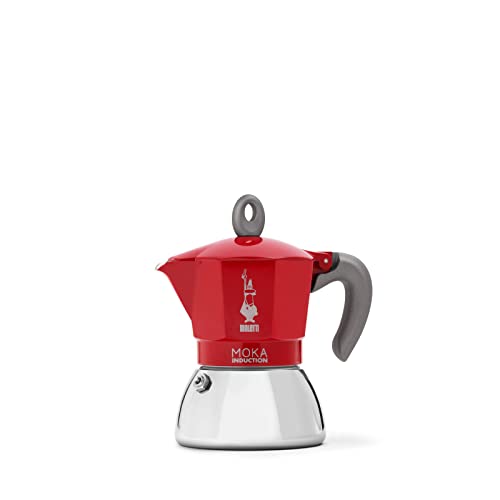
This model is specifically engineered to bring the classic aluminum Moka design to induction hobs by pairing an aluminum upper chamber with a stainless steel boiler. The hybrid construction preserves the traditional extraction characteristics while ensuring magnetic compatibility for induction cooktops. Bialetti markets this as made in Europe by the inventor of the original Moka Express, with a safety valve and standard fill/use instructions. The product is suitable for users who want the familiar flavor profile of an aluminum Moka with the practicality of induction readiness.
Bialetti Moon Exclusive Stainless Steel Moka Pot, 6 Shots

Constructed from 18/10 stainless steel, the Moon Exclusive is designed for durability and full compatibility with all stovetops including induction. The 6-shot capacity reference follows the typical Moka metric of espresso shots rather than mug volumes. Use instructions are conventional: fill the boiler to the safety valve, add ground coffee without tamping, and remove from heat when gurgling begins. The stainless construction offers corrosion resistance and a modern aesthetic that integrates with induction cooktops.
Easyworkz Diego Stainless Steel Induction Moka Pot, 4 Cup
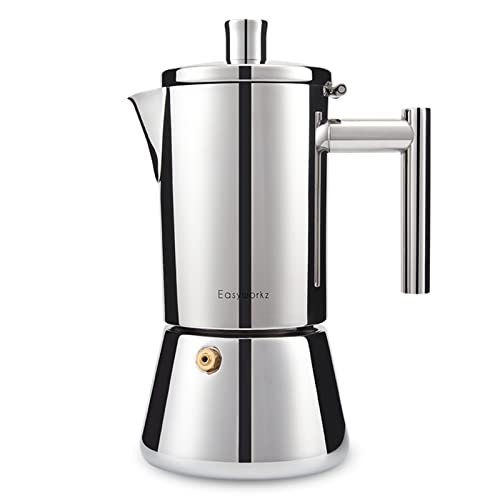
Easyworkz Diego is made from 18/8 stainless steel with a heavy-gauge magnetic base to ensure induction compatibility. Design features include a heat-resistant hollow insulated lid and handle grip for safer handling. Claimed dishwasher safety and easy disassembly make maintenance straightforward. The 4-cup capacity is listed as 6.8 fl oz, and manufacturer recommendations include using a fine grind and about 16g of coffee for optimal extraction. The heavy base supports even heating on induction surfaces.
SIXAQUAE Moka Induction, Glass-Top & Stainless Steel, 6 Cup

SIXAQUAE combines borosilicate glass for the top chamber with 304 stainless steel
GROSCHE Milano Steel Stovetop Espresso Maker, 6 Cup

GROSCHE Milano Steel is a stainless steel Moka pot designed for multiple stove types including induction. The product marketing highlights premium stainless steel construction, a matte speckle finish option, and compatibility with electric, gas, and even camping stoves. The stainless body favors durability and even heating. The Milano model positions itself for users seeking a robust, induction-capable stovetop espresso maker suitable for daily use and multi-cup brewing.
Buying Guide: How To Choose A Moka Pot For Induction
Choosing the right Moka pot for an induction stove requires attention to material, base design, capacity, and user priorities. Below are essential factors to compare.
- Material And Magnetism: Induction hobs require magnetic bases. Stainless steel
- Construction Quality: Look for 18/10 or 18/8 stainless steel for corrosion resistance and longevity. Multi-layer bases (stainless + aluminum core) improve heat distribution.
- Base Thickness & Heat Distribution: Thicker, multi-layer bases reduce hotspots and give steadier extraction on induction. Heavy-gauge magnetic bases are preferable.
- Capacity & Serving Size: Moka “cups” refer to espresso shots; confirm ounces per model to match needs (single, 4-cup, 6-cup, etc.).
- Handle & Lid Safety: Heat-resistant handles and insulated lids improve safety on high-heat induction surfaces.
- Maintainability: Dishwasher-safe stainless models ease cleaning; aluminum parts typically require hand washing to preserve finish.
- Visual Monitoring: Glass-top models let you watch extraction but consider thermal shock and sturdiness for regular induction use.
- Compatibility Workarounds: If you own a classic aluminum Moka, an induction adapter/heat diffuser plate provides compatibility but may alter heat transfer and brew time. Adapters can protect an aluminum base on gas as well.
- Brewing Technique: Start with medium-low heat, remove from induction when gurgling begins, and use a fine espresso grind without tamping. These steps help prevent over-extraction and bitter flavors.
- Warranty And Brand Support: Consider brands with established Moka heritage for replacement parts like gaskets and filters.
Comparison Perspectives
- Flavor Preference: Aluminum-top designs tend to produce the classic Moka profile; stainless steel can yield a slightly different extraction character. Hybrids aim to balance both.
- Durability vs. Tradition: Stainless steel offers durability and induction compatibility out of the box; aluminum models preserve tradition but may require adapters or hybrid construction for induction.
- Monitoring vs. Practicality: Glass-top options give extraction visibility but trade some ruggedness compared to full stainless builds.
- Heat Management: Multi-layer bases smooth heat on induction, making it easier to control brewing temperature and timing.