Grinding beans just before brewing is one of the easiest ways to improve coffee flavor. This guide compares five grind-and-brew coffee makers and a compact espresso grinder-brew option to help you choose the best fit for your routine, capacity, and flavor preferences.
| Model | Type | Key Feature |
|---|---|---|
| BLACK+DECKER 12-Cup Mill And Brew | Drip Grind & Brew | Integrated grinder + brew strength selector |
| Cuisinart DGB-400 12-Cup | Drip Grind & Brew | 12-cup capacity, 1-4 cup setting |
| Cuisinart DGB-450 10-Cup | Drip Grind & Brew | Compact 10-cup with built-in grinder |
| Cuisinart DGB-550BKP1 12-Cup | Drip Grind & Brew | Grind-off option, 24-hour programmability |
| Hausmojo GrindPro 20Bar | Espresso With Grinder | Built-in burr grinder, 20 bar pump for espresso |
BLACK+DECKER Mill And Brew
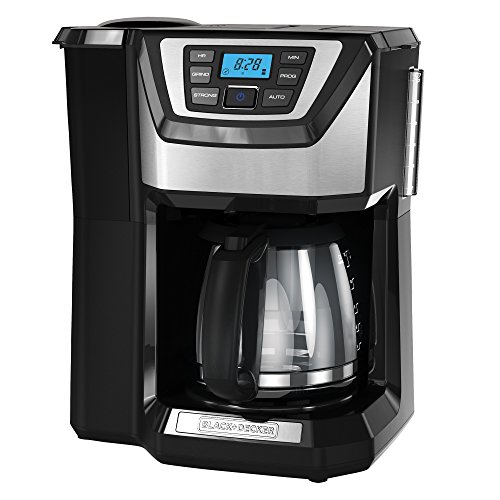
The BLACK+DECKER 12-Cup Mill and Brew combines an integrated grinder and programmable drip brewer. The grinder can be turned off to accept pre-ground coffee, offering flexibility for different routines. A brew strength selector provides regular, bold, and strong settings so you can adapt extraction intensity. The machine supports up to 12 cups, features a reusable filter, and a Sneak-A-Cup function to pour mid-cycle. This model targets households that want a straightforward, full-capacity grind-and-brew solution with basic strength control.
Cuisinart DGB-400 12-Cup

The Cuisinart DGB-400 is a 12-cup automatic grind-and-brew coffeemaker that emphasizes convenience. It includes a 1-4 cup setting for smaller batches and an auto-shutoff for safety. The listing references consulting the user guide before first use, highlighting the importance of initial setup for optimal grinder and brew alignment. This unit suits users focused on simplicity, programmable brewing, and capacity without advanced customization features.
Cuisinart DGB-450 10-Cup

The Cuisinart DGB-450 provides a slightly smaller 10-cup capacity while retaining integrated grinding. The product references the user manual for proper initial setup, which helps align grind coarseness with the brew cycle. A 10-cup model can be advantageous for mid-size kitchens or households that prioritize counter space while still wanting the freshness benefits of whole-bean brewing.
Cuisinart DGB-550 12-Cup

The Cuisinart DGB-550BKP1 focuses on programmability with 24-hour scheduling and a 12-cup glass carafe with ergonomic handle and dripless spout. It grinds whole beans immediately before brewing for freshness and includes a grind-off option to brew pre-ground coffee. The combination of scheduling, capacity, and grind flexibility makes it suitable for households that value both automation and the ability to switch between beans and grounds.
Hausmojo GrindPro Espresso Machine

The Hausmojo GrindPro is a semi-automatic espresso machine with a built-in metal conical burr grinder and 20 grind settings. It uses a 20 bar Italian pump and low-pressure pre-infusion to extract espresso with crema. A powerful steam wand (1350W) supports microfoam for milk drinks. This unit differs from drip grind-and-brew machines by delivering concentrated espresso shots and built-in grinding precision, aimed at users seeking café-style espresso at home with a compact, integrated grinder.
Buying Guide: How To Choose A Grind-And-Brew Coffee Maker
Choosing the right grind-and-brew coffee maker depends on capacity, grind control, brew style, and routine. Below are the primary considerations to compare models objectively.
1. Brew Style And Desired Coffee Type
- Drip Coffee Makers (BLACK+DECKER, Cuisinart models): Best for carafe-style coffee, serving multiple people, and programmable morning routines.
- Espresso Machines With Grinders (Hausmojo): Designed for shots, lattes, and milk-based drinks; requires different grind fineness and extraction technique.
2. Grinder Type And Control
- Burr vs Blade: Burr grinders produce more consistent particle sizes, improving extraction and flavor. Look for explicit burr or conical burr listings if consistency matters.
- Adjustable Settings: Multiple grind settings let you tune for drip versus espresso. Basic integrated grinders may offer limited coarseness ranges.
- Grind-Off Option: Useful if you want to brew pre-ground coffee without grinding.
3. Capacity And Household Needs
- 12-Cup Models: Good for families or offices; check carafe design for pouring and warming plate temperature control.
- 10-Cup Models: Save counter space while still supporting shared brewing.
- Single-Serve/Compact Options: Consider smaller devices for travel, RVs, or single users.
4. Programmability And Convenience
- 24-Hour Programmability: Useful for setting a ready time and automating morning routines.
- 1-4 Cup Settings: Improve extraction when brewing smaller volumes by adjusting water-to-coffee ratio.
- Sneak-A-Cup / Pause Features: Let you pour mid-brew without major heat loss or mess.
5. Cleaning, Maintenance, And Durability
- Removable Grinder Parts: Easier cleaning reduces oil buildup and stale flavors.
- Filter Type: Reusable vs paper filters impact maintenance and flavor oils retained in coffee.
- User Guides: Follow manufacturer instructions for first use and maintenance to preserve grinder alignment and brewing quality.
6. Flavor And Extraction Considerations
- Fresh Grinding: Grinding immediately before brewing preserves volatile aromatics and oils that define coffee flavor.
- Grind Consistency: Better consistency yields more even extraction and predictable results.
- Brew Strength Controls: Strength selectors allow adjusting concentration without changing dose or grind drastically.
7. Comparison Perspectives
- Household Routine: If you prioritize hands-off mornings, pick a programmable 12-cup grind-and-brew with a reliable auto-start.
- Specialty Coffee Focus: For more control over grind and extraction, a separate burr grinder paired with a dedicated brewer or an espresso machine with an integrated burr grinder is preferable.
- Space And Budget Constraints: Compact 10-cup models or single-serve grind-and-brew units save space; consider serviceability and part replacement availability.
Evaluating these factors against the features of each machine—grinder consistency, brew type, capacity, programmability, and cleaning—will guide you to the model that best produces the perfect grind for your coffee routine.