Choosing the right commercial coffee maker for a restaurant or catering operation requires balancing capacity, speed, durability, and ease of maintenance. The table below summarizes five well-matched products from restaurant supply and commercial coffee categories chosen for cafes, restaurants, catering, and high-traffic environments.
| Product | Type | Capacity / Feature | Brand |
|---|---|---|---|
| SYBO SR-CP-100B Commercial Grade Percolator | Percolator / Urn | 100 Cups (16 L) / Stainless Steel | SYBO |
| NUPANT Commercial Coffee Urn 100 Cup | Percolator / Urn | 100 Cups (15 L) / 3-Part Filter / Keep Warm | NUPANT |
| SYBO 12-Cup Commercial Pour Over With 3 Warmers | Drip Brewer | 12 Cups / 3 Warmers / 3 Decanters | SYBO |
| BUNN CSB2B Speed Brew Elite 10-Cup | Fast Pour-Over / Tank Heated | 10 Cups / Internal Hot Water Tank | BUNN |
| BUNN 55200 CSB3T Speed Brew Platinum Thermal 10-Cup | Fast Pour-Over / Thermal | 10 Cups / Stainless Steel Tank / Assembled in USA | BUNN |
SYBO SR-CP-100B Commercial Grade Stainless Steel Percolate Coffee Maker
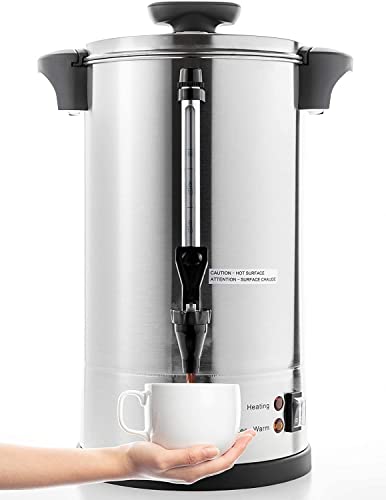
This 16 L (100-cup) percolator/urn is designed for catering and high-volume service. Constructed from food-grade 304 stainless steel, the unit includes an internal stainless filter basket that eliminates the need for paper filters. Interior coffee level markings simplify refill monitoring. A heavy-duty spigot supports frequent dispensing in busy settings. Manufacturer notes a typical brew time of about 60 minutes for a full load, making it a practical option for events, buffets, and behind-the-bar service where continuous hot coffee is required.
NUPANT Commercial Coffee Urn 100 Cup/15L Coffee Dispenser

The NUPANT urn emphasizes extraction and keep-warm control. Its upgraded 3-part filter increases extraction area by roughly 30% compared to single-layer baskets, which is intended to deliver richer flavor from coarse or medium grinds. The unit brews 15 L (100 cups) within 40–60 minutes and automatically switches to a keep-warm mode at about 88°C to maintain serving temperature without overheating. The two-way spout accommodates standard pots for easy transfer when serving or decanting is needed.
SYBO 12-Cup Commercial Coffee Maker With 3 Warmers

This 12-cup commercial drip brewer integrates three lower warmers and three glass decanters to support simultaneous brewing and serving across multiple stations. It operates as a pour-over drip machine requiring no plumbing or special wiring. A single on/off indicator light shows operating status. The manufacturer claims a full 12-cup brew in under 10 minutes and a drip-free carafe design that reduces counter mess during pour. Suitable for small to medium-sized foodservice operations, break rooms, or satellite beverage stations.
BUNN CSB2B Speed Brew Elite 10-Cup Coffee Maker
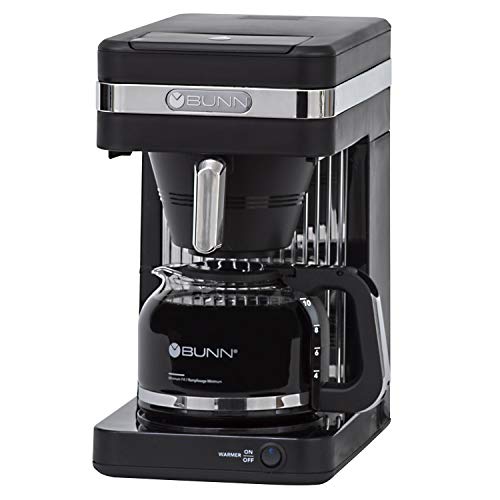
BUNN’s Speed Brew design uses an internal commercial-grade stainless steel hot water tank that keeps approximately 70 oz of water hot and ready. The pour-in bowl features a visible water level indicator for straightforward fill measurements. This architecture enables near-instant brewing at the flip of a lid, reducing wait time between batches—an advantage in countertop areas where speed matters. The model combines a matte black finish with stainless accents for a professional appearance that fits many service counters.
BUNN 55200 CSB3T Speed Brew Platinum Thermal 10-Cup

This model extends the Speed Brew concept with a thermal carafe and stainless-steel components. The always-hot tank design supports rapid brewing cycles and consistent extraction volumes for repeated batches. The unit is noted as designed and assembled in the USA and retains BUNN’s user-friendly pour-in refill method. Thermal retention improves off-peak serving without continuous heating on a hotplate, which may help flavor retention and energy use in certain front-of-house scenarios.
Buying Guide: How To Choose A Restaurant Supply Coffee Maker
Selecting the right coffee maker for a restaurant or catering environment requires evaluating operational needs, space, and service workflows. Below are key considerations to compare models and make an informed purchase.
Capacity And Brew Velocity
- High-capacity urns (100 cups / 15–16 L) such as percolators are best for large events, buffets, or churches where bulk batch brewing and long service windows are required.
- Countertop brewers (10–12 cups) suit cafes, small restaurants, and satellite stations where faster batch turnover and multiple warmers or decanters are useful.
- Match the brew time to service patterns—fast-brew tank systems reduce downtime between batches.
Brewing Method And Flavor Control
- Percolators / Urns extract differently than pour-over or drip systems and may emphasize strength; filter design matters for clarity and taste.
- Speed-brew/tank systems preheat water for consistent extraction temperatures and faster cycle starts.
- Consider grind size recommendations from manufacturers; some urns perform best with medium grind to avoid over-extraction or clogging.
Durability And Materials
- 304 Food-Grade Stainless Steel is standard for long-term commercial use; look for heavy-gauge construction, reinforced spigots, and corrosion resistance.
- Glass decanters are common for smaller commercial brewers; thermal carafes preserve heat without hotplates.
Service Workflow And Dispensing
- Decide between direct-dispensing urn spouts vs. carafes that staff refill—both affect queue flow and portion control.
- Multiple warmers or simultaneous-brew units allow staging of fresh and ready-to-serve pots for busy shifts.
Safety, Cleaning, And Maintenance
- Easy-to-clean filter baskets and removable parts save labor time. Units that avoid paper filters reduce consumable costs.
- Auto keep-warm modes with sensible temperature caps help prevent scorching while maintaining serving temperature.
- Assess spigot robustness and replaceable components for heavy-use settings.
Energy Use And Heat Management
- Thermal carafes and insulated tanks can reduce energy used by continuous hotplates.
- Consider ventilation and counter heat load in small kitchens or service stations.
Points Of Comparison
- Capacity vs. Speed: Larger urns handle volume but often brew slower than tank-based pour-over systems.
- Flavor vs. Convenience: Filter design and brewing method affect taste; choose the method that matches customer expectations.
- Durability vs. Cost: Heavy-duty stainless construction and commercial-grade components typically increase initial cost but lower lifecycle repairs.
When comparing products, prioritize the metrics that impact daily operations: how many cups per hour you need, how often staff can monitor brewing, and how the machine integrates into your service workflow. Objective comparison of capacity, brew time, build quality, and maintenance demands will identify the best restaurant supply coffee maker for your specific operation.