The following selection focuses on coffee makers designed to minimize plastic contact with hot water and brewed coffee. Below is a quick summary of the five models reviewed, followed by individual product details and a comprehensive Buying Guide.
| Product | Brand | Key Safe-Material Feature |
|---|---|---|
| SimplyGoodCoffee 8-Cup Automatic Drip | Simply Good Coffee | Stainless-steel body, glass carafe, removable dishwasher-safe parts |
| COSORI Pour Over Coffee Maker | COSORI | Borosilicate glass carafe, double-layer 304 stainless filter |
| Cuisinart 14-Cup PerfecTemp | Cuisinart | Stainless-steel housing and temperature control with glass carafe |
| BLACK+DECKER 12-Cup Thermal Programmable | BLACK+DECKER | Vacuum-sealed stainless-steel thermal carafe |
| KRUPS Drip Coffee Maker, Glass | KRUPS | Compact design with glass carafe and minimal plastic exposure |
SimplyGoodCoffee 8-Cup Automatic Drip Brewer

This brewer features a stainless-steel exterior and a glass carafe with mixing tube, which reduces heated plastic contact inside the brew path. The unit reaches the industry-recommended brewing temperature range of 195°F–205°F, supporting optimal extraction.
- Materials: Stainless housing, glass carafe, removable parts (dishwasher safe).
- Performance: Brews up to 8 cups in about 6 minutes; 40-minute hot plate timer.
- Controls: One-button operation plus optional Bloom feature for better saturation.
For buyers prioritizing limited plastic contact, the glass carafe and stainless body are meaningful. Verify which internal components contact hot water directly if you require fully metal/ceramic water paths.
COSORI Pour Over Coffee Maker With Stainless Filter

The COSORI model is designed to emulate manual pour-over brewing while avoiding disposable paper filters and pods. It uses a double-layer 304 stainless-steel filter and a borosilicate glass decanter, so brewed coffee does not sit in plastic materials.
- Materials: 304 stainless filter, borosilicate glass carafe rated for heat resistance.
- Function: Fine mesh allows oils and flavor compounds through while reducing grounds.
- Use Cases: Suitable for home, camping, or hiking where low-plastic brewing is desired.
This is a strong option for people who want a metal filter and glass serving vessel to avoid plastic taste or contact. Consider cleaning frequency since metal filters retain oils longer than paper filters.
Cuisinart 14-Cup PerfecTemp Glass Carafe Machine

The Cuisinart DCC-3200NAS offers a large-capacity programmable brewer with a stainless-steel exterior and glass carafe. It features brew strength control and adjustable warming plate temperature settings.
- Materials: Stainless-steel housing, glass carafe; check water path materials for internal plastics.
- Features: 24-hour programmability, 1–4 cup setting, regular/bold brew strength.
- Thermal Management: Adjustable carafe warming temperatures to avoid overheating the glass.
For households seeking a larger brewer with reduced plastic exposure, Cuisinart provides solid stainless and glass touchpoints. If internal polymer components are a concern, request manufacturer details about water-wetted parts before purchase.
BLACK+DECKER 12-Cup Thermal Programmable Coffee Maker
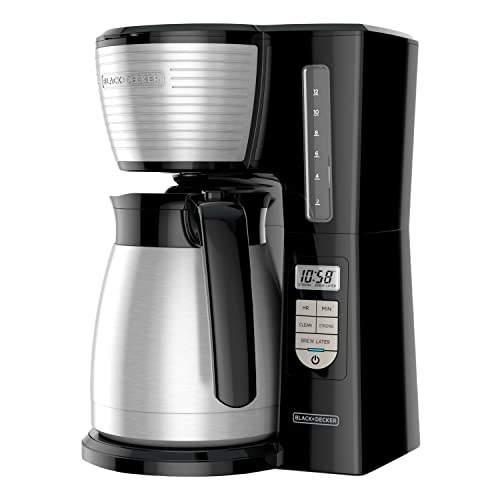
This model emphasizes heat retention with a 4-layer vacuum-sealed thermal carafe made with stainless-steel interior and exterior layers. The design aims to keep coffee hot without a hotplate that can degrade flavor.
- Materials: Stainless-steel thermal carafe reduces prolonged exposure to plastic when serving.
- Extraction: Vortex technology promotes even water flow for optimized flavor.
- Controls: Programmable features and brew strength selector for customization.
Thermal carafes limit warm-plate contact and the need for plastic-lined serving vessels. If minimizing plastic exposure during storage and serving is a priority, a stainless thermal carafe is beneficial.
KRUPS Drip Coffee Maker With Glass Carafe

The KRUPS compact drip maker includes a glass carafe and a small footprint for kitchens with limited counter space. Its simple construction tends to minimize non-essential plastic components.
- Materials: Glass carafe and streamlined design; check product specs for internal tubing materials.
- Convenience: Pause & Brew function and a keep-warm period post-brew.
- Sizing: Best for singles or couples who prefer smaller batch brewing to limit coffee sitting time.
KRUPS is a practical pick if you want less plastic overall and a smaller brewer. Confirm whether the water reservoir or internal valves are plastic if you prefer metal or glass-only water paths.
Buying Guide: Choosing A Low-Plastic, Safe Coffee Maker
This buying guide highlights material, performance, and maintenance factors when selecting a coffee maker to minimize plastic exposure and ensure safe brewing.
Materials And Contact Points
- Glass Carafe vs Thermal Steel: Glass carafes avoid plastic contact during serving; stainless-steel thermal carafes reduce exposure and keep coffee hot without a hot plate.
- Filter Type: Stainless-steel mesh filters remove the need for paper and pod plastics but require frequent cleaning.
- Housing And Water Path: Look for stainless-steel or ceramic water contact points. Many machines still use plastic reservoirs or tubing—check manufacturer specs for “BPA-free” claims and full material disclosures.
Brewing Temperature And Extraction
- Optimal Temperature: Models that reach 195°F–205°F support better extraction. Consistent temperature reduces the need to reheat, which could increase leaching risk from heated plastics.
- Even Saturation: Features like bloom functions or showerhead designs improve extraction without adding plastic parts.
Capacity And Use Case
- Single-Serve vs Carafe: Single-serve brewers can reduce waste but often use more plastic unless designed for grounds with metal filters. Carafe machines are preferable for serving multiple cups with a single compromise in materials.
- Size Matching Needs: Choose a capacity that avoids leaving brewed coffee sitting for long periods, reducing potential taste changes or degradation.
Cleaning, Maintenance, And Longevity
- Dishwasher-Safe Parts: Glass and stainless parts that are dishwasher safe simplify maintenance while avoiding plastic breakdown from repeated heating.
- Filter Care: Metal filters capture oils and require regular cleaning to prevent rancidity; paper filters avoid that but introduce waste and different flavor profiles.
- Descaling: Regular descaling protects internal components and water flow; follow manufacturer guidance to avoid damaging metal or glass parts.
Safety And Certifications
- BPA-Free Labels: Useful but not exhaustive—confirm which internal parts are covered.
- Manufacturer Transparency: Prefer brands that disclose materials in water contact zones and provide component diagrams.
Comparison Perspectives
- Minimal Plastic Exposure: Prioritize glass carafes plus stainless filters (COSORI, KRUPS, SimplyGoodCoffee).
- Thermal Serving With Less Plastic: Choose vacuum-sealed stainless carafes if you want hot coffee without a heated plate (BLACK+DECKER thermal).
- Large Batch Convenience: Larger programmable units with stainless exteriors and glass carafes provide capacity with reduced plastic contact (Cuisinart).
When selecting, weigh materials, brewing performance, and ease of cleaning relative to how often you brew and how sensitive you are to plastic contact. For absolute certainty about internal materials touching hot water, request detailed specifications from the manufacturer.