Buying a secondhand espresso machine can save money while delivering café-style drinks at home. Below is a quick comparison of five widely available compact and semi‑automatic machines that show up often on resale markets. The table summarizes each model’s core strengths so you can match features to your needs.
| Model | Key Features | Best For |
|---|---|---|
| De’Longhi Stilosa | 15‑bar pump, manual steam wand, compact | Small kitchens, basic espresso & cappuccino |
| CASABREWS CM5418 | 20‑bar pump, pressure gauge, 34oz tank | Value buyers wanting stronger extraction control |
| Gevi 20‑Bar | 20‑bar pump, NTC temp control, stainless steel | Durability-conscious buyers, countertop presence |
| QJA 20‑Bar Touch | 20‑bar pump, LED touchscreen, large tank | Users who want programmable settings |
| Breville Bambino | Thermojet heating, automatic steam wand, 54mm portafilter | Buyers seeking compact prosumer performance |
De’Longhi Stilosa Manual Espresso Machine
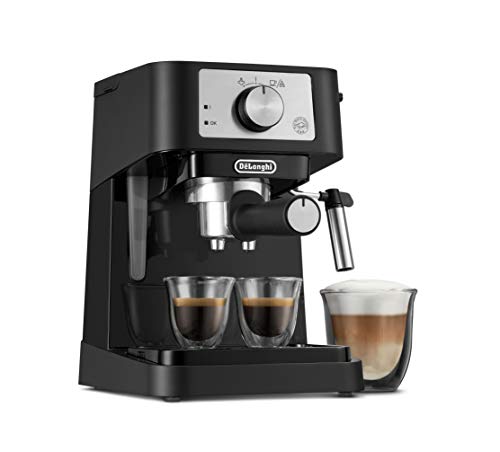
The De’Longhi Stilosa is a compact semi‑automatic unit built for simple home use. It features a 15‑bar pump, a manual milk frother steam wand, and includes a tamper. The contemporary compact design makes it suitable for limited counter space and easier storage when purchased secondhand.
When assessing a used Stilosa, check the condition of the steam wand and portafilter seal, inspect the boiler area for limescale buildup, and confirm that the pump maintains steady pressure during extraction. Replacement parts are widely available, which can be an advantage for used units.
CASABREWS CM5418 Espresso Machine

The CASABREWS CM5418 provides a 20‑bar Italian pump, a built‑in pressure gauge, and a 34oz removable tank. These features help when buying used because the pressure gauge allows verification of pump performance during an in‑person test.
Inspect a secondhand CM5418 for boiler scaling and test the pressure gauge while pulling a shot. The stainless steel housing aids longevity, but check the steam wand nozzle and water tank seals for wear. The pre‑infusion and higher pressure profile make it appealing for buyers seeking stronger extraction.
Gevi Commercial 20‑Bar Espresso Maker

The Gevi model emphasizes a 20‑bar pump, NTC temperature control, and pre‑infusion features. Its stainless steel construction can indicate better durability for a used unit, and the compact footprint works for most kitchens.
When evaluating a used Gevi, verify the temperature control responsiveness and inspect internal tubing for signs of wear. The removable froth nozzle on the steam wand is a positive for cleaning. Confirm that the pre‑infusion and pressure systems engage consistently during test extractions.
QJA Espresso Machine With Touchscreen

The QJA offers a 20‑bar pump, an LED touchscreen with programmable brewing time, and a large 57.5oz removable tank. The touchscreen and programmable settings are useful but may be more prone to electronic faults in older units.
For secondhand purchases, test the touchscreen functions, programmable presets, and pre‑impregnation cycles. Inspect the removable tank for mold or staining and the steam wand nozzle for clogging. Electronics can be harder to repair, so verify all controls work before buying.
Breville Bambino Espresso Machine BES450BSS
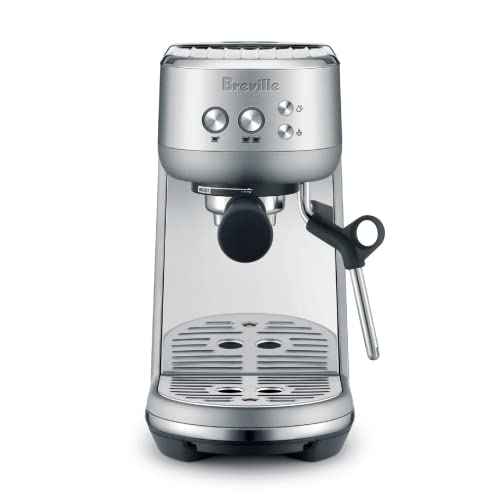
The Breville Bambino is a compact prosumer machine with a Thermojet heating system that reaches optimal temperature very quickly and an automatic steam wand for consistent microfoam. It uses a 54mm portafilter suited to more precise dosing.
When buying used, check the portafilter basket condition, steam wand function, and that the heating system still reaches temperature quickly. Breville parts and service are generally accessible, making it a practical choice if you want higher build quality in a compact machine.
Buying Guide For Secondhand Espresso Machines
Buying used requires focused inspection and informed decisions. The guide below lists the most important factors to evaluate and compare when considering a secondhand espresso machine.
1. Pump Pressure And Extraction
Check Pump Performance: Machines with a documented 20‑bar or 15‑bar pump are common. During a test pull, look for steady pressure and a rich crema. A pressure gauge (when present) can prove pump health.
2. Heating System And Temperature Stability
Heat Up Time And Control: Faster systems (Thermojet, thermoblock) reduce waiting time. Verify the machine reaches and maintains brewing temperature; inconsistent heat leads to under‑ or over‑extraction.
3. Steam Wand And Frothing Capability
Steam Performance: Test steam output and wand articulation. Removable nozzles and easy‑to‑clean wands are preferable, especially on used machines where buildup is possible.
4. Structural Condition And Materials
Housing And Internal Components: Stainless steel housings usually outlast plastic. Inspect for corrosion, cracked fittings, or brittle silicone tubing. External dents or discoloration can indicate rough handling.
5. Water Tank And Seals
Tank Hygiene And Seals: Removable tanks should be free of stains, odors, and mold. Ensure seals and gaskets are intact; these are common wear items that affect pressure and steam functions.
6. Electronics And Controls
Functionality Check: For units with touchscreens or programmable settings, verify every option works. Electronic faults are typically pricier to repair than mechanical issues.
7. Portafilter, Baskets, And Group Head
Wear On Brewing Components: Check the portafilter for deformations and the baskets for clogging. Examine the group head and its gasket for cracks or excessive wear.
8. Descale History And Maintenance
Service Records: Ask the seller about descaling frequency and any professional servicing. Machines with documented maintenance histories are less risky purchases.
9. Spare Parts And Serviceability
Availability Of Replacement Parts: Models from known brands often have easier access to parts and service guides. Consider future repairability when choosing a used machine.
10. Test Run And Taste Test
Practical Testing: Whenever possible, request a live demonstration or pull a shot yourself. Taste the espresso for balance, body, and crema. Test the steam wand with cold milk to assess frothing ability.
Comparison Perspectives
- Budget Oriented: Compact 15‑bar machines offer simplicity and lower repair costs but less extraction control.
- Performance Focused: 20‑bar machines with pressure gauges, pre‑infusion, and better temperature control provide greater extraction consistency.
- Durability And Service: Stainless steel construction and widely supported brands reduce long‑term maintenance challenges for used purchases.
- Feature Priority: Decide if programmability, built‑in grinder, or automatic steaming matters more than raw build quality when selecting a used model.
Use this checklist and comparison lens to evaluate any secondhand espresso machine. Prioritize testing core systems—pump, temperature, and steam—before completing a purchase to ensure the machine meets your brewing expectations.