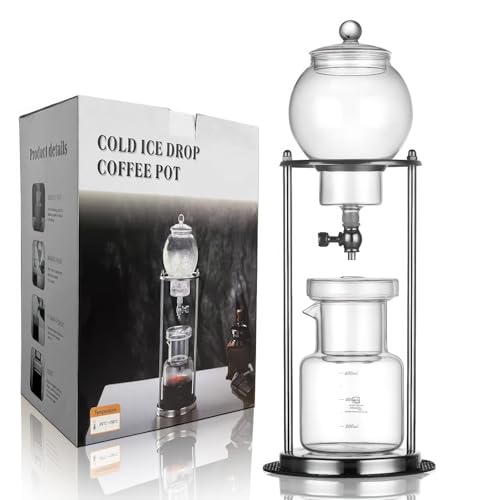
Best Slow Brew Coffee Maker for Cold Drip and Cold Brew
Slow brew coffee makers deliver a different flavor profile than hot-brew methods, emphasizing smoothness, low acidity, and full-bodied extraction. The following table summarizes five top cold-drip and slow-brew coffee towers and devices selected for performance, materials, and ease of use.
Brand: Yama Glass. This classic slow-drip tower is designed to produce acid-free, full-bodied cold brew via an ice water reservoir and precision drip system. The unit’s 32 oz capacity yields approximately 6–8 cups of concentrate depending on dilution.
The Yama system emphasizes a faster extraction than immersion-style cold brew: manufacturer details state a 3–4 hour drip time for optimal flavor versus the 16–24 hour immersion steep. The design is focused on extracting full profile compounds with controlled drip rate and a wooden curved frame for stability.
Considerations: assembly and careful grind size are important to maintain consistent drip. The unit is glass and wood, so handle care and cleaning are necessary to preserve components.
Brand: Hemli. This Japanese-style drip tower is hand-blown from borosilicate glass and highlights a 5-hour brew cycle for a smooth, less acidic cup. The product features an aerating coil intended to enhance body and reduce bitterness.
The Hemli emphasizes material quality and finished cup texture. Hand assembly is required, and the manufacturer recommends specific setup steps to reach the stated 5-hour extraction window. The design aims to capture subtle flavor notes by slowing contact time and keeping temperature low.
Considerations: glass components improve clarity of brew and aesthetics but increase fragility. The aerating coil is unique for mouthfeel but may require additional cleaning attention.
Brand: Nispira. A vintage-style cold brew maker set in a wooden frame, this model includes the glassware, filter, and an adjustable valve to control drip speed. The system targets a 6–8 cup yield and is positioned for straightforward assembly.
This Nispira model highlights simplicity and a classic aesthetic. The adjustable valve allows users to dial in extraction rate, which affects strength and flavor clarity. Included filter and brief instructions aim to reduce the learning curve for new users.
Considerations: wood frame and glass parts require careful handling. The included instruction set is brief, so users seeking precise extraction metrics may need to experiment with grind size and drip rate adjustments.
Brand: HANWUDI. The HANWUDI tower focuses on low-temperature slow extraction to avoid bitterness and preserve aromatic compounds like fruit, nut, and chocolate notes. The primary body is heat-resistant glass with a sealed carafe to retain aroma.
Operation is manual: add grounds and water, then adjust the drip speed to begin brewing. The manufacturer positions this unit as accessible for beginners while delivering typical cold-drip flavor characteristics through controlled extraction.
Considerations: size is smaller at 20 oz so it suits single-serve or small household use. Glass construction requires careful placement and cleaning to maintain seal integrity and aroma retention.
Brand: MHW-3BOMBER. This unit emphasizes a stable, uniform drip rate using an exhaust valve to balance internal pressure, which the manufacturer says improves extraction consistency. The filter employs a high-density screen to isolate fine particles and improve clarity.
Constructed from PCTG, the unit is described as lightweight, tough, and heat resistant. The design targets reliable performance with easier cleaning compared to fragiler glass towers and focuses on achieving a predictable extraction profile.
Considerations: material choice increases durability but changes aesthetic compared with glass. The precision valve and high-density filter are advantages for repeatable results and low sediment.
Buying Guide: How To Choose A Slow Brew Coffee Maker
Purpose and Serving Size: Determine whether you want single-serve concentration, small-batch (20–32 oz), or larger yields. Capacity directly impacts brew time, grind amount, and storage needs for concentrate.
Extraction Method: Cold-drip towers use a controlled drip to extract flavors in a shorter time than immersion cold brew. Drip systems typically yield cleaner, less acidic coffee in 3–8 hours; immersion requires longer steeping (12–24 hours) and produces different body.
Material And Durability: Glass and borosilicate glass offer visual clarity and neutral flavor contact but are fragile. PCTG or durable plastics add toughness and lighter weight. Choose based on your tolerance for breakage and desired aesthetic.
Valve And Drip Control: Precision valves allow repeatable drip rates. For consistent flavor, opt for models with reliable and adjustable valves or exhaust systems that stabilize flow. Stable drip rate equals more predictable extraction.
Filter Type And Sediment Control: High-density metal or paper filters reduce fines. Dual-mesh or high-precision screens minimize sediment and clarify the cup. Consider whether you prefer a paperless approach or additional filtration.
Aroma Retention And Sealing: Carafes with tight seals preserve aromatic compounds for storage. If you plan to make concentrate and refrigerate, check for a sealable collection vessel.
Cleaning And Maintenance: Removable parts, dishwasher-safe materials, and simple filter access make routine cleaning easier. Glass towers may require delicate cleaning; plastic systems may be more forgiving.
Brewing Time And Workflow: Cold-drip systems can range from ~3 to 8 hours depending on design. Evaluate how brew time aligns with your routine. Shorter drip cycles are convenient but may require precise grind and valve adjustments.
Flavor Profile And Roast Match: Slow drip favors clarity and acidity control. Lighter roasts can yield floral and fruit notes while medium-to-dark roasts provide more body. Match grind size and drip speed to roast and flavor goals.
Price, Replacement Parts, And Warranty: Consider availability of replacement valves, filters, or glass components. Durable materials and accessible parts reduce long-term ownership cost. Verify manufacturer support and warranty where applicable.
Precision vs. Simplicity: High-precision valves and aerating components increase control but add variables; simpler valves may suffice after experimentation.
Capacity vs. Freshness: Make larger batches for convenience but remember concentrate freshness and refrigerator storage.