Stainless steel espresso makers combine durability, heat compatibility, and a classic brewing method. Below is a concise comparison of five selected stainless steel espresso makers chosen for varied use cases—stovetop Moka pots and countertop machines—so you can match features to your routine.
| Product | Type | Notable Feature |
|---|---|---|
| Bialetti New Venus Induction | Stovetop Moka Pot | 18/10 Stainless Steel, Induction Compatible |
| Gevi Commercial Espresso Machine | Countertop Pump Machine | 20-Bar Pump, Stainless Steel Housing |
| Easyworkz Diego Stovetop Moka Pot | Stovetop Moka Pot | 18/8 Stainless Steel, Heat Resistant Handle |
| LuxHaus Moka Pot | Stovetop Moka Pot | Upgraded Metal Hinge, 6-Cup Capacity |
| Bialetti Moon Exclusive Induction | Stovetop Moka Pot | 18/10 Stainless Steel, Classic Moka Design |
Bialetti – New Venus Induction, 6 Cups

This stovetop Moka pot is built in 18/10 stainless steel, designed for durability and induction cooktop compatibility. The product description highlights it as the original induction coffee maker with a unique design that marries tradition and innovation. It recommends filling the bottom chamber with water, adding ground coffee to the filter, closing the pot, and heating until it gurgles—then removing from heat.
Key functional points include a full stainless construction for longevity and the typical Moka brewing process, producing concentrated Italian-style coffee suitable for espresso-based drinks or straight consumption.
Gevi Commercial Espresso And Coffee Maker, 20 Bar

The Gevi unit is a countertop pump espresso machine with a 20-bar pump, NTC temperature control, pre-infusion, and a pressure gauge. The manufacturer emphasizes optimal flavor extraction and the ability to craft various café-style beverages, from espresso to cappuccino and macchiato.
Designed with a full stainless steel housing, the machine aims to combine aesthetic durability with compact countertop presence. The steam wand and removable froth nozzle support milk texturing and simplified cleaning, making this machine suitable for users seeking more control and a broader drink range than a traditional Moka pot.
Easyworkz Diego Stovetop Espresso Maker, 4 Cups
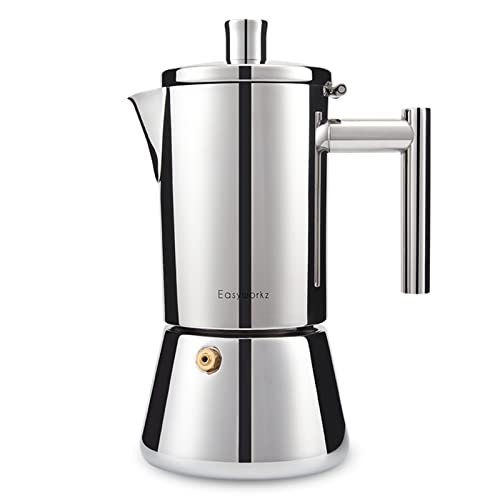
Made from 18/8 stainless steel with mirror polishing, this 4-cup Moka pot emphasizes an elegant, heat-resistant design. Features include a hollow insulated lid and a heat-resistant handle for safer handling, and a magnetic stainless steel base suitable for induction cooktops.
The manufacturer suggests using 16g of finely ground coffee with water for best results. This pot is dishwasher-safe and easy to disassemble for cleaning, appealing to users who want a durable, everyday stovetop brewer with induction support.
LuxHaus Moka Pot – 6 Cup Stovetop Espresso Maker

The LuxHaus Moka pot highlights design durability changes such as an upgraded metal hinge replacing plastic, which addresses a common wear point in stovetop pots. It produces six espresso-sized servings (2 oz each), with a total capacity of 12 oz.
Packaging is positioned for gifting and the stainless construction supports typical stovetop brewing. This model suits households wanting a larger-capacity Moka pot with targeted improvements to hardware longevity.
Bialetti Moon Exclusive Induction, 4 Espresso Shots

Another Bialetti stainless steel Moka pot, the Moon Exclusive is crafted from 18/10 stainless steel and marketed for durability and classic style. It makes four espresso-sized servings totaling 5.7 oz and is compatible with all stovetops, including induction.
The manufacturer notes the distinction between Moka “cups” and standard mugs and reiterates the simple brewing method: fill with ground coffee, close, heat, and remove when gurgling. This pot aims to deliver concentrated Italian-style coffee for straight drinking or use in milk-based drinks.
Buying Guide: Choosing A Stainless Steel Espresso Maker
Decide on type first: stovetop Moka pots offer simplicity and compactness, producing concentrated coffee similar to espresso but without steam-pump extraction. Countertop pump machines
- Material Grade: Look for 18/10 or 18/8 stainless steel
- Cooktop Compatibility: If you use an induction cooktop, confirm the base is magnetic or explicitly labeled induction compatible.
- Capacity: Moka pot “cups” are espresso shots; choose capacity based on shots per brewing cycle. Countertop machines have a water reservoir size to consider for frequency of use.
- Pressure & Temperature Control: For true espresso-style extraction, a pump machine with 15–20 bar
- Milk Frothing: If you prefer lattes or cappuccinos, choose a model with a reliable steam wand or removable frother. Consider ease of cleaning for frothing attachments.
- Durability Features: Metal hinges, quality handles, and solid-thread fittings extend service life. Check for replaceable parts and user-accessible maintenance.
- Ease Of Cleaning: Dishwasher-safe components or simple disassembly are helpful. Removable water tanks and froth nozzles simplify maintenance on pump machines.
- Extraction Control: Pre-infusion, programmable brewing time, or pressure gauges offer more control over extraction and flavor profile on pump machines.
- Space & Countertop Footprint: Compact machines fit small kitchens; Moka pots are ideal for travel or limited bench space.
Comparison perspectives:
- Daily Home Use: Stainless Moka pots like the Bialetti Venus or Moon provide straightforward, low-maintenance brewing for consistent strong coffee.
- Variety & Café Drinks: Countertop 20-bar machines such as the Gevi offer milk steaming, programmed settings, and pressure control for a wider beverage range.
- Durability & Maintenance: Look for 18/10 steel, metal hinges, and replaceable parts to maximize lifespan under frequent use.
- Value For Purpose: Match purchase to desired drink types—Moka pots excel for intense espresso-like shots; pump machines are better for authentic espresso and milk-based beverages.
Using These Items Effectively:
- For Moka pots: use a fine grind (slightly coarser than espresso), avoid overpacking the filter, and remove from heat at the first gurgle to prevent bitterness.
- For pump machines: preheat the group head and steam wand, follow recommended tamp pressure, and perform routine descaling and cleaning for consistent performance.