Stainless steel moka pots are durable, induction-friendly, and offer a clean brewing experience. Below is a concise comparison of five well-reviewed stainless steel models selected for build quality, stovetop compatibility, and user-focused features.
| Product | Brand | Capacity |
|---|---|---|
| Bialetti Moon Exclusive | Bialetti | 6 Espresso Shots (235 ml) |
| Bialetti Venus Induction | Bialetti | 6 Cups (235 ml) |
| Easyworkz Diego 12-Cup | Easyworkz | 12 Cups (520 ml) |
| LuxHaus 6 Cup Stainless | LuxHaus | 6 Espresso Cups (180 ml espresso / 12 oz total) |
| WALDWERK 10oz Oak Handle | WALDWERK | 10 oz (Approx. 300 ml) |
Bialetti Moon Exclusive Induction

Construction: Made from 18/10 stainless steel for long-term durability. The material resists corrosion and retains a polished appearance with regular care.
Performance: Produces concentrated Italian-style coffee; 6-cup model yields 7.9 oz (235 ml) of espresso-style servings. Designed for all stovetops including induction.
Usability: Simple fill-and-brew operation: fill boiler, add ground coffee, heat until gurgle, then turn off. The design emphasizes consistent extraction and ease of cleaning.
Bialetti Venus Induction Coffee Maker

Construction: Built from 18/10 stainless steel and explicitly designed for induction compatibility without adapters.
Design & Tradition: Blends a classic moka silhouette with modern stainless materials. Promoted as a Made-in-Italy option that merges tradition and innovation.
Operation: Standard moka method—fill, pack lightly, and heat until gurgling. The Venus targets users wanting a stainless-steel alternative to traditional aluminum pots with familiar brewing steps.
Easyworkz Diego 12-Cup Moka Pot
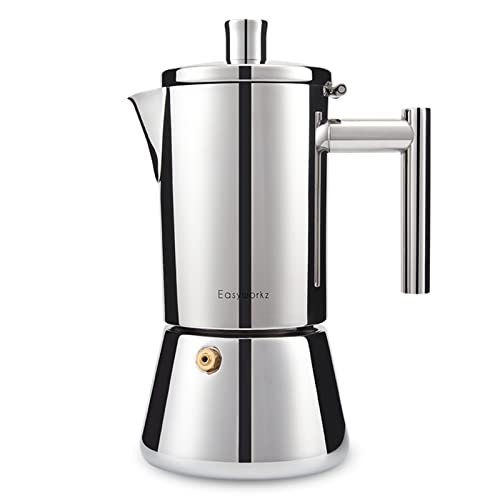
Capacity & Build: Large 12-cup capacity (approx 17.5 oz/520 ml) made from 18/8 stainless steel with a heavy-gauge magnetic base for induction use.
Features: Heat-resistant hollow insulated lid and handle for safer handling. Dishwasher-safe claims and mirror-polished finish aim at ease of cleaning and aesthetics.
Notes: Suited for larger households or those who want multiple espresso servings in one cycle. Manufacturer suggests specific coffee-to-water ratios for best extraction.
LuxHaus 6 Cup Stainless Moka Pot

Design Improvements: Upgraded metal hinge in place of plastic for increased durability. Packaged with a magnetic gift box for presentation or storage.
Capacity: Six espresso-size cups (about 2 oz espresso cups each), total capacity listed as roughly 12 oz, supporting typical moka extraction volumes.
Materials & Use: Marketed as 100% stainless, compatible with standard stovetops and suitable for users prioritizing a robust hinge and gift-ready packaging.
WALDWERK Stainless Steel Moka Pot

Materials: Made from 304 stainless steel to avoid aluminum contact and reduce potential leaching, promoting a “toxic-free” brewing surface.
Handle: Solid oak wood handle instead of plastic for an elevated aesthetic and reduced heat conduction at the grip.
Compatibility: Advertised for use on induction, gas, ceramic, and electric stoves. Emphasizes natural materials and stovetop versatility.
Buying Guide: How To Choose The Right Stainless Steel Moka Pot
When selecting a stainless steel moka pot, consider the following factors to match your brewing habits and kitchen setup.
Material Quality
- Grade Of Stainless Steel: Look for 18/10 or 304 stainless steel for corrosion resistance and longevity.
- Avoid Mixed Metals: Fully stainless models prevent exposure to aluminum. Some classic designs use aluminum; confirm material spec if avoiding aluminum.
Stovetop Compatibility
- Induction-Ready Base: Ensure the pot has a magnetic base or is explicitly labeled for induction if you use an induction cooktop.
- Versatility: Most stainless models work on gas, electric, ceramic, and induction—verify compatibility in product details.
Capacity & Serving Size
- Understand ‘Cup’ Definitions: Moka “cups” typically refer to small espresso servings (~1.5–2 oz), not standard coffee mugs.
- Choose Capacity Based On Use: 2–4 cups for solo use, 6 cups for small households, 10–12 cups for entertaining or multiple servings.
Safety & Usability
- Safety Valve: A reliable safety valve is essential to release excessive pressure; check it’s present and accessible for cleaning.
- Handles & Lids: Heat-resistant handles and hinged or secure lids reduce burn risk. Wooden or insulated handles can improve comfort.
- Ease Of Cleaning: Removable gaskets, strainers, and dishwasher-safe claims can simplify maintenance—confirm specific care instructions.
Design, Finish & Durability
- Finish: Polished stainless offers a refined look, while brushed finishes can hide scratches.
- Hinges & Hardware: Metal hinges and solid fasteners typically outlast plastic components.
Performance Considerations
- Extraction Consistency: Stainless steel heats differently than aluminum; preheating water or adjusting heat can affect flavor and reduce bitter notes.
- Grind Size & Dose: Fine espresso grind without tamping is standard; follow manufacturer recommendations for best yield and taste.
Comparison Perspectives
- Material vs. Tradition: Aluminum moka pots have historic lineage, but stainless steel offers modern benefits like induction compatibility and reduced reactivity.
- Capacity vs. Convenience: Larger pots brew more coffee per cycle but require more storage and cleaning; match size to brewing frequency.
- Feature Trade-Offs: Wooden handles and metal hinges add durability and style but may increase cost; prioritize features based on daily use.