Stovetop espresso makers in stainless steel offer durability, induction compatibility, and a clean flavor profile. Below is a quick comparison of five well-reviewed stainless steel moka pots selected for build quality, induction compatibility, and capacity.
| Product | Brand | Capacity | Key Strength |
|---|---|---|---|
| Bialetti Venus 6-Cup | Bialetti | 6 cups (7.9 oz) | Induction-ready 18/10 stainless steel |
| Easyworkz Diego 4-Cup | Easyworkz | 4 cups (6.8 oz) | 18/8 stainless, insulated handle |
| LuxHaus 6-Cup | LuxHaus | 6 espresso cups (12 oz total) | Upgraded metal hinge, gift packaging |
| Bialetti Moon 4-Cup | Bialetti | 4 cups (5.7 oz) | 18/10 stainless, compact design |
| London Sip Large | The London Sip | 16.9 oz (large) | Large capacity, double-filter design |
Bialetti Venus 6-Cup Stainless Steel

Build And Compatibility: The Bialetti Venus is made from 18/10 stainless steel, designed for durability and an induction-ready base to work on all stovetops.
Performance: The Venus uses classic moka pot brewing: fill, add coffee, and heat until gurgling. The manufacturer notes it blends tradition with innovation to deliver a consistent Italian-style coffee.
Practical Notes: The model emphasizes longevity and a distinctive design. The operation is straightforward and suited for daily use for households that require an induction-compatible moka pot.
Easyworkz Diego 4-Cup Moka Pot
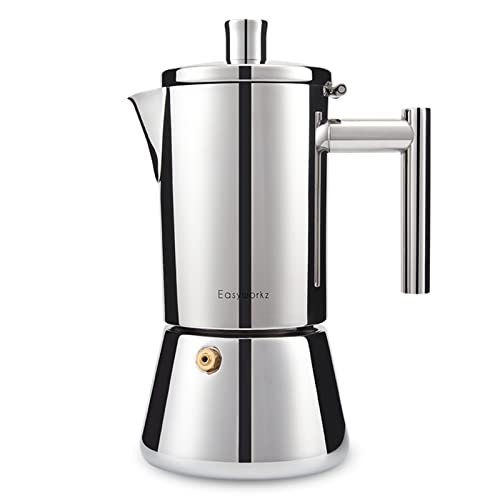
Materials And Design: Constructed from 18/8 stainless steel with a heavy-gauge magnetic base, this pot is specified as suitable for gas, induction, and electric cooktops. It features a heat-resistant insulated lid and handle.
Capacity And Brewing: Rated for 4 espresso cups (~6.8 fl oz), the maker is intended to deliver a strong, concentrated brew. The listing recommends using a 16 g fine grind for optimal extraction for the 4-cup size.
Maintenance: The product is described as easy to disassemble and dishwasher safe, while the polished, mirror-finish exterior emphasizes corrosion resistance.
LuxHaus 6-Cup Stainless Moka Pot

Construction And Upgrades: The LuxHaus model highlights a full stainless steel body and an upgraded metal hinge in place of plastic to improve longevity.
Capacity: Designed to produce 6 espresso-size cups (typically 2 oz demitasse servings), the total listed capacity is 12 oz which suits households sharing multiple small servings.
Packaging And Use: Marketed as a presentable option, it ships in a stylish box and uses standard moka pot operation. The metal hinge aims to reduce common failure points on budget models.
Bialetti Moon 4-Cup Stainless Moka Pot

Materials And Durability: The Bialetti Moon Exclusive is constructed from 18/10 stainless steel and positioned as a compact, durable moka pot compatible with all stovetops.
Serving Size And Use: A 4-cup moka pot yields four espresso servings (about 5.7 oz total). The description clarifies moka “cup” sizes refer to espresso shots rather than full mugs.
Operation: Instructions mirror traditional moka brewing: fill the lower chamber with water, add ground coffee, heat until gurgle, then remove from heat. The focus is on a concentrated Italian-style coffee suitable as a base for milk drinks.
London Sip Large Stainless Moka Pot

Capacity And Purpose: The London Sip large stainless steel model emphasizes high capacity (16.9 oz) for households or small gatherings seeking multiple servings from a single brew.
Filtration And Taste: The product description highlights a double-filter design to reduce fines and deliver a cleaner cup. Stainless construction aims to avoid any metallic aftertaste associated with cheaper aluminum pots.
Design Notes: Marketed as a premium stainless alternative to traditional aluminum moka pots, it targets users who prioritize flavor fidelity and larger batch brewing.
Buying Guide: How To Choose A Stainless Steel Stovetop Espresso Maker
Material And Health Considerations: Stainless steel (18/10 or 18/8) resists corrosion and avoids the metallic taste reported with some aluminum pots. Look for food-grade stainless and solid construction to reduce off-flavors and extend lifespan.
Induction Compatibility: If you use an induction cooktop, verify the base is magnetic. Many stainless models advertise induction readiness; aluminum models typically won’t work without an adapter.
Capacity And Serving Size: Moka “cup” counts refer to espresso-size servings. Match capacity to your typical serving needs—2–4 cups for individual use, 6+ for family or entertaining.
Design And Durability: Check for reinforced hinges, solid-threaded connections, and robust handles. Metal hinges and heavy-gauge bases reduce common failure points. Inspect safety valve presence and accessibility for cleaning.
Brewing Control: Consider features that affect extraction: weight and thickness of the base influence heat distribution and brewing speed. Slower, steady heating typically yields a more balanced extraction, while rapid heating can cause overheating and bitter flavors.
Maintenance And Cleaning: Stainless models are often dishwasher safe, but hand washing preserves gaskets and valves longer. Look for models with accessible gaskets and replacement parts availability.
Flavor And Filtration: Some makers use dual filters or finer screens to reduce coffee fines in the cup. If you prefer a cleaner espresso-style cup, consider models with finer filtration or double-filter systems.
Portability And Use Cases: For camping or travel, smaller stainless pots are durable and lightweight. For daily home use, larger capacities or premium construction may be more practical.
Price Versus Longevity: Higher upfront cost for a well-built stainless model can yield longer service life and consistent performance. Evaluate long-term replacement part availability (gaskets, filters) as part of total cost of ownership.
Comparison Perspectives:
- Performance vs Capacity: Smaller pots heat faster and suit single users; larger pots serve groups but require more careful heat control.
- Induction vs Gas/Electric: Confirm base compatibility; induction-ready stainless models provide broader stovetop flexibility.
- Durability vs Lightweight: Thicker, heavier bases improve heat distribution but increase weight; thin-walled pots heat quickly but can overheat and wear faster.
- Flavor Cleanliness vs Traditional Character: Stainless avoids metallic taste and can produce a cleaner cup; some drinkers prefer the historic character of certain aluminum designs despite trade-offs.