Finding the right coffee pot for a wood stove requires attention to materials, heat tolerance, and ease of use. Below is a concise comparison of five durable stovetop coffee makers that work well on wood or camp stoves, followed by detailed product sections and a practical buying guide.
| Product | Type | Key Feature |
|---|---|---|
| COLETTI Bozeman Percolator Coffee Pot | Percolator | No aluminum or plastic, glass view top |
| APOXCON Coffee Percolator Pot | Percolator | 8-cup stainless steel, glass knob, wood handle |
| WALDWERK Stainless Steel Moka Pot | Moka Pot / Espresso | 304 stainless steel, oak wood handle, induction compatible |
| GROSCHE Milano Moka Pot | Moka Pot | 6-cup capacity, durable stone finish |
| Granite Ware Coffee Boiler, 3-Quart | Boiler / Large Pot | Enamel-coated steel, rapid heat absorption |
COLETTI Bozeman Percolator Coffee Pot — NO Aluminum or Plastic [9 cup]

The COLETTI Bozeman Percolator is built from pure stainless steel with a glass view top, making it suitable for wood stove or open-fire brewing. Its design purposefully excludes aluminum and plastic, which is helpful when using inconsistent or high heat from wood stoves.
Features to note include a glass view top for monitoring the brew, robust stainless steel construction for durability, and a simple design that handles outdoor and indoor use. The product is described as dishwasher safe for easier cleanup when at home.
APOXCON Coffee Percolator Pot Stainless Steel (8 Cup)
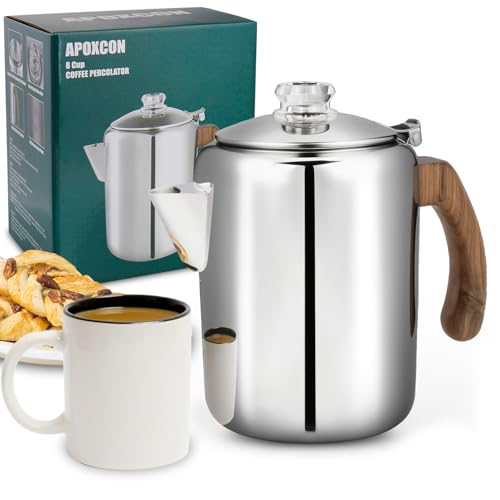
The APOXCON 8-cup percolator emphasizes heavy-duty stainless steel and a treated solid wood handle for safer pouring on high heat stoves like wood-burning cookstoves. The glass knob helps monitor brewing progress without removing the lid.
Key listed features: compatibility with all stovetops, heat-resistant glass knob, and a drip-free spout. The durable construction reduces the risk of warping or damage when exposed to intense or uneven heat common with wood stoves.
WALDWERK Stainless Steel Moka Pot (10oz) With Oak Handle

The WALDWERK Moka Pot is made from 304 stainless steel, marketed as toxic-free and free of aluminum or plastic. It features a real oak wood handle and compatibility with induction, gas, ceramic, and electric stoves.
This moka pot is compact and suitable for stovetop espresso-style brewing on a wood stove when the flame can be controlled. The solid wood handle reduces heat transfer at the pour point, and the all-stainless build resists corrosion from high heat cycles.
GROSCHE Milano Moka Pot, Stovetop Espresso Maker (6 Cup)

The GROSCHE Milano moka pot produces six espresso-sized servings and has a heavy-duty stone finish marketed as more durable than normal paint. It is designed for gas and electric stoves and can be used on propane camping stoves.
For wood stoves, this moka pot works when placed over a stable, moderate heat area. The stone finish may provide additional surface durability against scratches and soot associated with wood-fired cooking environments.
Granite Ware Coffee Boiler, 3-Quart – Stovetop Or Campfire Coffee Pot
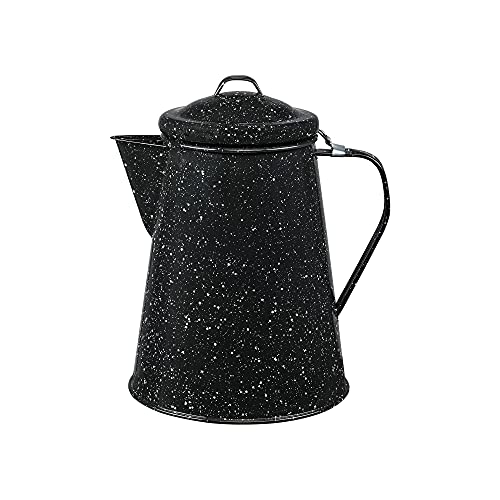
The Granite Ware Coffee Boiler is an enameled steel pot built for large-volume brewing and rapid heat absorption. Its speckled enamel surface resists sticking and is easy to clean after campfire or wood-stove use.
With a 3-quart capacity accommodating around 12 cups, this boiler is ideal for serving groups. The inner carbon steel core is described as promoting even heat distribution—useful when working with the fluctuating heat of a wood stove.
Buying Guide: Choosing A Coffee Pot For A Wood Stove
When selecting a coffee pot for use on a wood stove, prioritize material, heat management, capacity, and maintenance. Below are important considerations and comparison perspectives to guide your choice.
Material And Heat Tolerance
- Stainless Steel: Resists warping and corrosion under uneven, high heat from wood fires; common in percolators and moka pots.
- Enamel-Coated Steel: Provides a durable, easy-clean surface for campfire use; watch for chipping with rough handling.
- Aluminum: Heats quickly but can react with high heat or acidic coffee; many wood-stove users prefer stainless or enamel to avoid flavor or durability issues.
Handle And Safety
- Wood Or Heat-Resistant Handles: Wood or treated handles reduce risk of burns when removing pots from hot grates or flames.
- Glass Knobs/Viewing Tops: Help monitor brewing without lifting lids, but glass must be rated for heat to avoid cracking.
Compatibility And Stability
- Flat Bottoms: A flat, wide base improves contact with cookstove grates or stovetop plates and reduces tipping risk.
- Size Relative To Stove: Choose a pot small enough to sit securely in the safe heating zone but large enough for the desired batch size.
Brewing Method And Flavor
- Percolators: Produce bold, robust coffee and scale well for groups; they tolerate high heat and simple maintenance.
- Moka Pots: Offer espresso-style concentrated coffee; perform well on steady moderate heat but require attention to avoid over-extraction with intense flames.
- Boilers/Big Pots: Best for large batches or communal settings; simpler equipment, but less control over flavor nuances.
Durability And Maintenance
- Dishwasher-Safe vs. Hand Wash: Dishwasher-safe items are convenient at home, but hand washing is often typical after wood-stove or campfire use.
- Repairability: Fewer fragile parts (simple percolator rings, metal filters) means easier long-term maintenance when using wood heat.
Portability And Use Case
- Camping And Travel: Select compact, sturdy pots with minimal fragile parts and easy cleaning if you plan to move between campsites and wood stoves.
- Home Cabin Use: Consider larger capacity and comfort features like wooden handles and glass knobs for repeated daily use.
Multiple Comparison Perspectives
- Safety Perspective: Prioritize wood-handles and heat-resistant knobs to prevent burns and accidental spills when dealing with fluctuating wood-stove temperatures.
- Flavor Perspective: Choose percolator or moka depending on desired strength—percolators for bold, moka for concentrated espresso-style shots.
- Practicality Perspective: For groups, boilers or larger percolators reduce the need for repeated brews; for solo or small households, compact moka pots save fuel and time.